
Review · COMMUNIST HISTORY TOURS
Sofia: Communist Walking Tour
History is written on Sofia’s streets. This three-hour Communist Walking Tour connects government buildings, monuments, parks, and stark postwar architecture with the story of Bulgaria from 1944 to 1989. I like the clear, balanced look at both the gains and damage of the period, and I like the way guides such as Daniel, Vasil, Martin, and Stefan bring the subject down to everyday life. The main drawback is the long walk, which can feel demanding in summer heat or winter darkness.
You’ll see major sites tied to the former Bulgarian Communist Party, state surveillance, Soviet influence, and the end of the old system. The tour costs $21 per person, a fair price for three hours with an English-speaking local guide, though it does not include food, drinks, or hotel transport.
In This Review
- Five details worth knowing before you book
- Why this Sofia history walk is worth three hours
- Starting beside the Palace of Justice
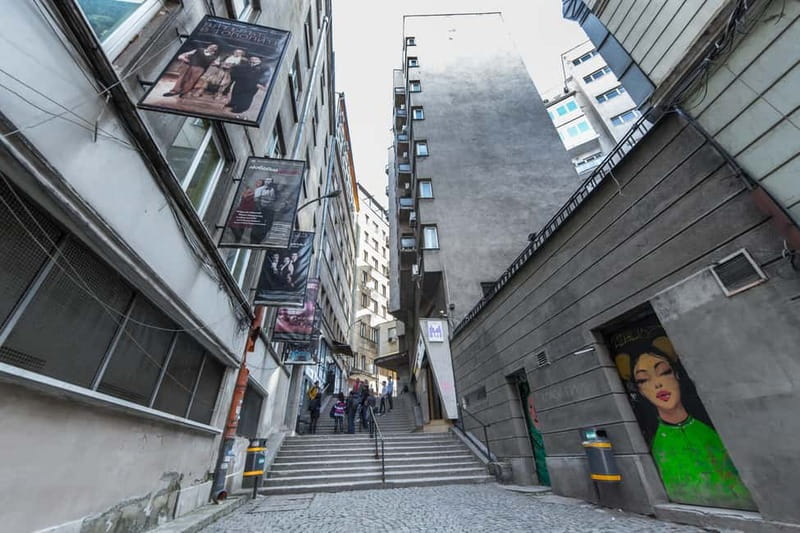
- Hotel Rila and the architecture of the planned city
- St. Nicholas and the changing place of religion
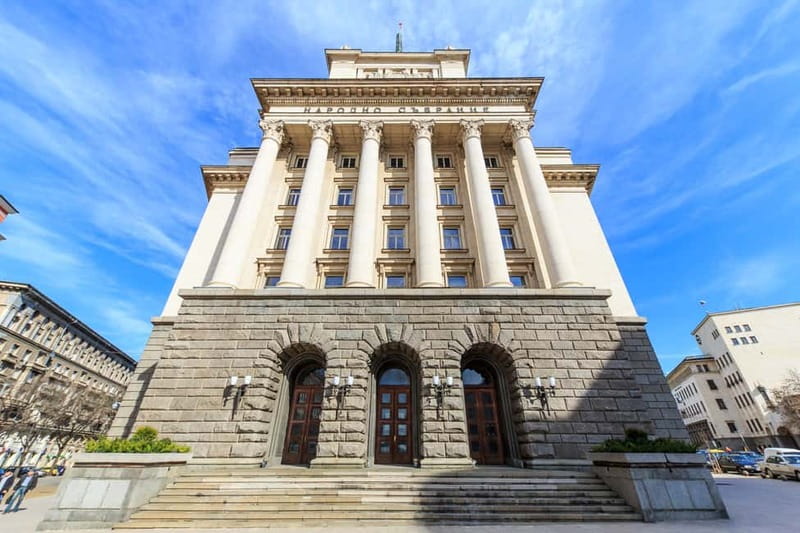
- The National Assembly and the machinery of power
- Malko Tarnovo and the less visible side of the regime
- The Archives and the evidence left behind
- City Garden and the rhythm of everyday life
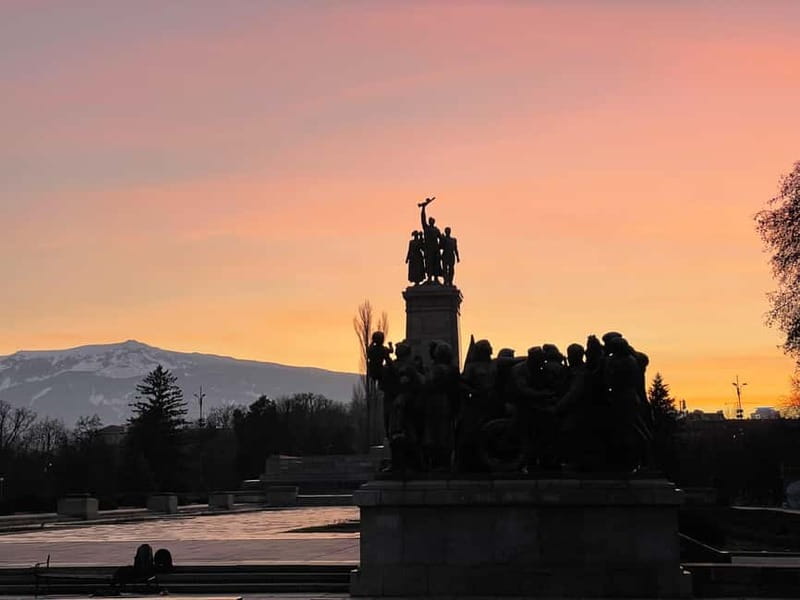
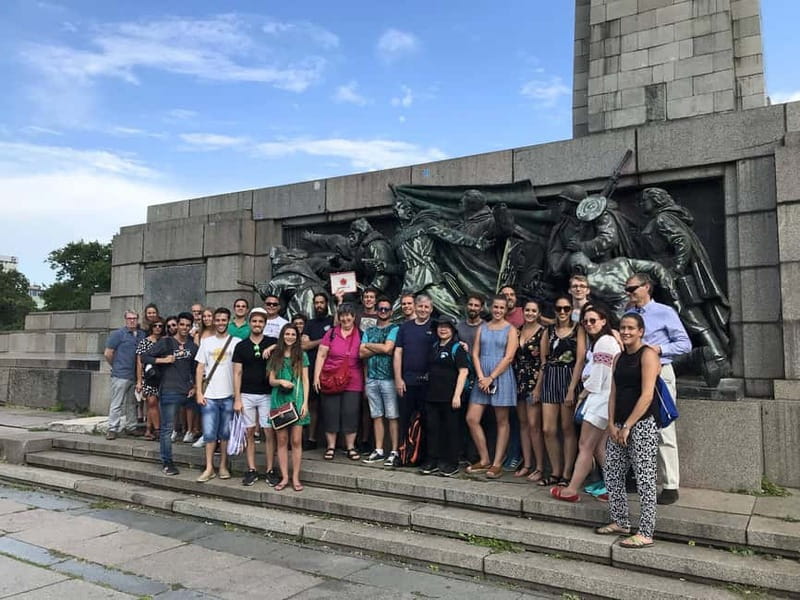
- Knyazheska Garden and the Soviet Army Monument
- The memorial to communist victims
- National Palace of Culture and the end of the walk
- How much walking should you expect?
- Is $21 a fair price?
- Who will get the most from this tour?
- Should you book the Sofia Communist Walking Tour?
- FAQ
- Where does the Sofia Communist Walking Tour begin?
- Where does the tour end?
- How long does the tour last?
- How much does the tour cost?
- What language is the tour conducted in?
- What is included in the price?
- Are food and drinks included?
- Is hotel pickup or drop-off provided?
- Is the tour suitable for wheelchair users?
Five details worth knowing before you book
- The tour begins at the Palace of Justice, outside the large white building with two lion statues on Vitosha Boulevard.
- Personal stories are central, including accounts of food, housing, work, religion, culture, and daily routines under communism.
- The route covers both official monuments and places of repression, including a former secret police investigation facility and a memorial to victims of the regime.
- The Soviet Army Monument is part of the discussion, giving you a chance to consider why the site remains controversial in modern Sofia.
- The walk ends near the National Palace of Culture, with the Berlin Wall section also listed as a finish point.
- Physical fitness matters, since the tour is not wheelchair accessible and is not recommended for people with mobility limitations.
Why this Sofia history walk is worth three hours
Sofia can feel like several cities placed on top of one another. Roman remains, medieval churches, Ottoman traces, royal-era buildings, socialist blocks, and modern cafés all share the center. This tour helps you read one of those layers, the communist period, without pretending that it was simple.
Bulgaria’s communist era began in 1944, after the Second World War, and lasted until 1989. The guide explains the events that brought the system to power, the role of the Soviet Union, and the reasons the system later weakened and fell.
The strongest part is the balance. You are not given a cartoon version of communism as either a golden age or a period of unbroken misery. The discussion covers expanded industry, employment, education, housing, and social security, while also addressing censorship, political control, shortages, surveillance, restricted religion, and the limits placed on personal choice.
That balance came through repeatedly in the guiding. Daniel was praised for presenting both sides, while Vasil was noted for an objective and interactive approach. Stefan received especially strong approval for explaining the subject without turning the walk into a dull lecture.
You can ask questions as you go. That matters here, because many parts of the story are still connected to present-day Bulgaria. The guide does not stop in 1989. You also hear how the old system shaped attitudes toward work, government, property, religion, public space, and national identity.
More Communist History Tours in Sofia
- Communist Walking Tour of Sofia
★ 5.0 · 690 reviews - Sofia: Museum of Socialist Art and Buzludzha Monument Tour
★ 4.9 · 86 reviews - From Sofia: The Rose Valley & Buzludzha Monument Day Tour
★ 4.8 · 77 reviews
Starting beside the Palace of Justice
Meet outside the Palace of Justice at bul. Vitosha 2. It is the large white courthouse with two lion statues in front, so it should be easy to identify in central Sofia.
This is a practical meeting point because Vitosha Boulevard is one of the city center’s main pedestrian areas. Arrive with comfortable shoes, water, and enough time to find the group. Hotel pickup is not included, so you make your own way to the start.
The courthouse also sets a useful tone. This is not only a sightseeing walk around old buildings. The tour looks at authority, law, political control, and the way public institutions functioned under the former system.
The route is conducted in English by a live local guide. Several guides named in the feedback, including Daniel, Vasil, Martin, Dino, Niki, Nikola, Ivo, and Stefan, were praised for clear English, humor, patience, and strong command of the subject. The exact guide depends on the departure.
Hotel Rila and the architecture of the planned city
The Hotel Rila is one of the early architectural stops. It offers a useful introduction to the practical side of communist Sofia, where buildings were designed to serve a state vision rather than simply satisfy private owners or individual taste.
You will look at the building as part of the wider city, not just as a hotel. Architecture becomes evidence here. Size, placement, materials, and the relationship to surrounding streets all help explain how the authorities wanted Sofia to look and function.
The stop is also a reminder that communist architecture was not one single style. Some buildings carry the grand, formal look associated with the 1950s, while later structures became more functional and severe. Sofia’s Stalinist architectural ensemble receives special attention, giving you a visual way to understand the difference.
If you enjoy architecture, this part will add depth to your walk around the center. If you prefer personal stories to buildings, the guide’s explanation of how people used these spaces is what keeps the stop engaging.
St. Nicholas and the changing place of religion
The medieval Orthodox Church of St. Nicholas the Wonderworker provides a striking contrast to the newer political architecture around it. The church dates from the 13th century, and its presence helps show that communist Sofia was built over a much older religious and cultural city.
Religion is one of the tour’s main subjects. The guide explains how the state viewed religious institutions and how religious practice continued under a system that promoted atheism and placed limits on organized faith.
This stop is valuable because it keeps the story from becoming only a parade of party buildings and monuments. You see how older Bulgarian traditions survived beside a government ideology that aimed to reshape public life.
You should not expect a long interior visit or a formal church tour. The emphasis is on the church’s place in the story of Sofia and on the tension between historic religion and communist policy.
More Walking Tours in Sofia
- Sofia: City Monuments Guided Walking Tour with Audio Guide
★ 4.5 · 825 reviews - Sofia Highlights 2 Hour Sightseeing Walking Tour
★ 5.0 · 442 reviews - Guided Walking Tour of Sofia
★ 5.0 · 143 reviews - Private city walking tour of Sofia
★ 5.0 · 141 reviews
The National Assembly and the machinery of power
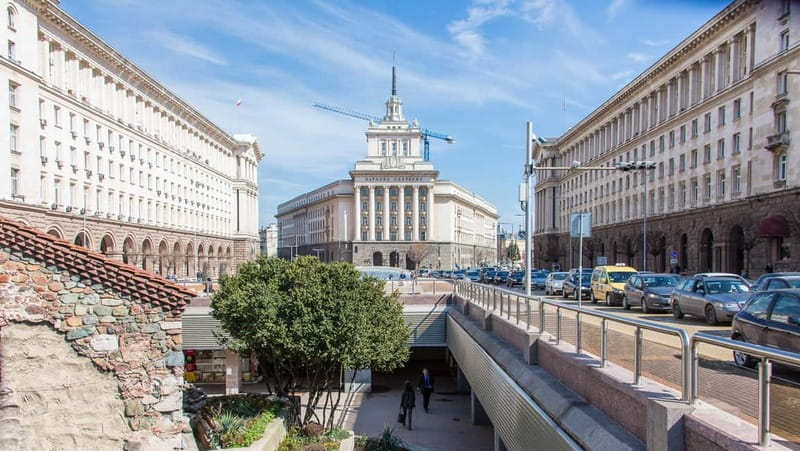
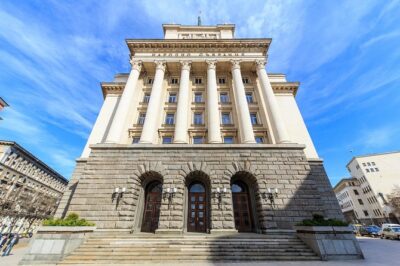
At the National Assembly of Bulgaria, the focus shifts to political authority. The building gives the guide a place to explain how the communist state was organized and how Bulgaria’s relationship with the Soviet Union affected government and public policy.
The stop helps you separate the idea of a parliament from the way political power actually worked during the period. The guide discusses ideology, party control, and the difference between official institutions and real decision-making.
This is also where the tour connects national events with ordinary life. Decisions made by the party affected factories, schools, housing, employment, cultural expression, and the availability of everyday goods.
The building itself may not offer a dramatic visual experience compared with a monument or memorial. Its value comes from the explanation. Pay attention to the political context, since it makes later stops easier to understand.
Malko Tarnovo and the less visible side of the regime
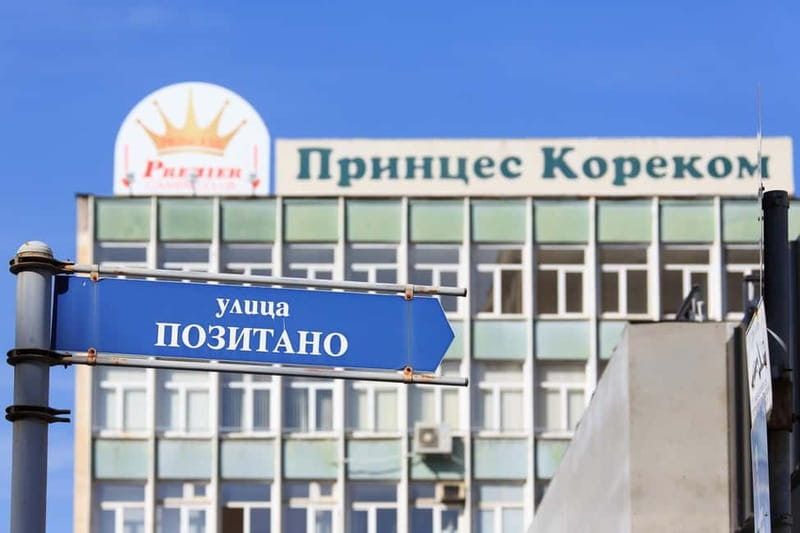
The stop on ulitsa Malko Tarnovo brings attention to a more secretive part of communist rule. The area is associated with a former state security investigation facility, giving the guide a chance to explain surveillance, interrogation, and the pressure placed on people suspected of political disloyalty.
This is one of the most sobering points on the route. The building may not look dramatic from the street, but that is part of the lesson. State control was not always displayed in monumental form. It could operate behind ordinary walls, through files, informants, questioning, and fear.
The guide also explains how this affected daily behavior. People had to think carefully about what they said, whom they trusted, and how openly they discussed politics. The subject can be uncomfortable, but it is essential if you want to understand the period beyond its grand buildings.
The Archives and the evidence left behind
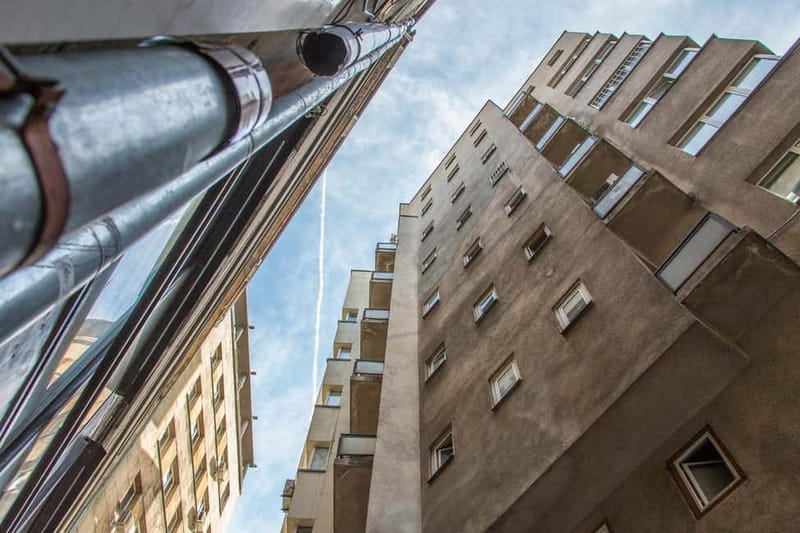
The State Agency Archives adds another layer to the discussion. Archives are where a country stores its official memory, including records of government, institutions, and the security system.
At this point, the guide can explain why historical records matter after a political system collapses. Documents can clarify what happened, but they can also raise difficult questions about access, responsibility, privacy, and how a society deals with people who served the former state.
You will not be taking part in an archive visit or handling documents. The stop is viewed from the route, with the guide using it to explain how the past is recorded and contested.
For me, this is the kind of detail that makes the tour more useful than a simple monument circuit. You are not only looking at what remains in stone and concrete. You are also thinking about the paperwork, institutions, and personal decisions that made the system work.
City Garden and the rhythm of everyday life
The City Garden gives the group some open space after the more formal city-center stops. Here, the conversation turns strongly toward everyday life.
Expect discussion of housing, industry, the economy, culture, food, work, and family routines. The guide explains what the communist system promised, what it delivered, and where daily life could be frustrating or restrictive.
Housing is a particularly useful topic. The state built large numbers of apartments and assigned housing in ways that offered security to some families, but waiting, bureaucracy, and limited choice were also part of the experience. Industrial development created jobs and changed cities, yet state-run production was not always efficient and shortages could affect household life.
Culture also receives attention. The guide looks at what people could read, watch, listen to, and say in public. This is where personal anecdotes make the subject easier to grasp. Several guides were praised for describing not only dates and leaders but also what it felt like to live through the period.
You will likely spend time standing while the guide speaks. One guide was praised for choosing benches and shaded areas when possible, especially during hot weather. Still, the route is outdoors, so a hat, water, and sensible clothing are wise.
Knyazheska Garden and the Soviet Army Monument
The second half brings you toward Knyazheska Garden and the controversial Monument of the Soviet Army. This is one of the clearest places to see how Bulgaria’s public memory remains divided.
The monument reflects the Soviet role in Bulgaria’s postwar political order. For some, it represents liberation from fascism and the defeat of Nazi Germany. For others, it symbolizes the arrival of a system that removed political freedom and kept Bulgaria within the Soviet sphere.
The guide does not reduce the argument to a slogan. You get the historical background and the present-day debate, including why monuments connected to the Soviet period can prompt strong reactions.
The site is also visually striking, but the real value is the discussion around it. A photograph will show you the monument. The guide helps you understand why the monument remains politically charged.
The memorial to communist victims
The Memorial to the Victims of the Communist Regime in Bulgaria changes the mood again. After discussing party power, industry, housing, and public ideology, the tour gives space to those who suffered under the regime.
This is an important counterweight to the discussion of social benefits and economic development. A balanced tour should not confuse material improvements with political freedom, and this memorial makes that distinction clear.
The stop may be emotionally heavier than the earlier architecture. Give yourself time to listen and reflect. The guide’s role is to explain the broader context while helping you understand that Bulgaria’s experience was lived by individuals, families, and communities.
National Palace of Culture and the end of the walk
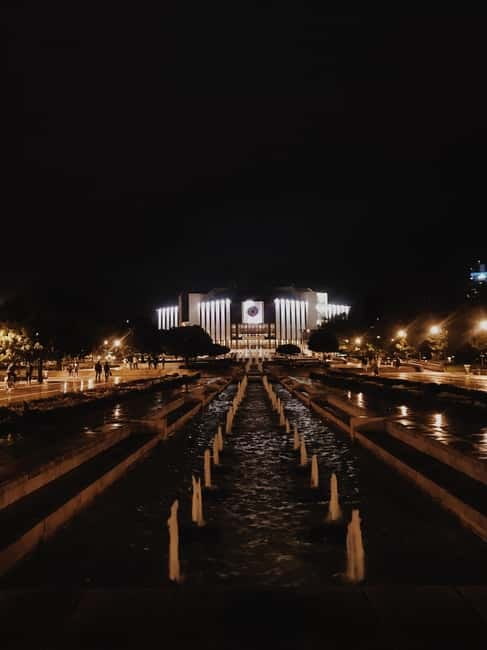
The National Palace of Culture is the final major landmark. Its scale reflects the confidence and ambition of the later communist state, when large public buildings were used to display national achievement and ideological power.
By this stage, you can compare several kinds of communist-era places: government buildings, hotels, archives, security sites, monuments, gardens, memorials, and cultural institutions. The National Palace of Culture helps bring those threads together.
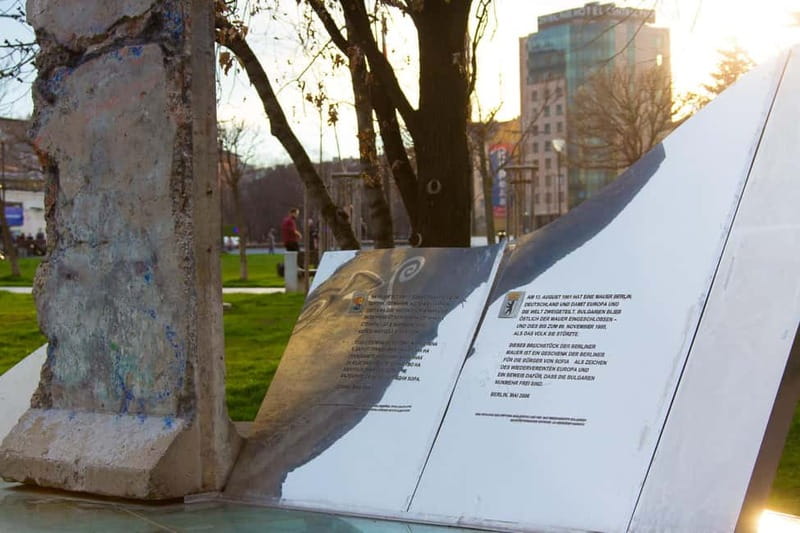
The published route says the walk ends in front of the National Palace of Culture, while the finish details also identify a section of the Berlin Wall. Treat the NDK area as the practical endpoint and confirm the exact final spot with your guide on the day.
Ending here is useful for sightseeing. You are not left in a remote part of Sofia, and the location gives you a natural point from which to continue exploring the city.
How much walking should you expect?
The official duration is three hours, and the tour covers several central locations on foot. One account described the experience as lasting about three and a half hours, so do not schedule a tight appointment immediately afterward.
The route is not recommended for people with limited mobility and is not wheelchair accessible. Children must be accompanied by an adult, and unaccompanied minors are not allowed.
Timing can affect comfort. In summer, one participant advised choosing morning hours because the heat can make the walk harder. In winter, an earlier start may help because darkness arrives before some poorly lit sites can be seen clearly.
The guide may pause in shade, near benches, or in sheltered places when possible, but conditions vary. Wear supportive shoes and check the forecast before you set out.
Is $21 a fair price?
At $21 per person, the tour sits at a reasonable price for a three-hour guided walk with a local English-speaking guide. You are paying for interpretation, not admission tickets or transport.
That distinction matters. Sofia’s communist-era sites are often seen from public streets and parks, so you could visit many of them independently. The value comes from understanding what you are looking at and how the locations connect.
A good guide also saves you research time. The tour covers World War II, religion, industry, the economy, housing, culture, repression, and present-day Bulgaria in one continuous story. Several guides were praised for answering questions and keeping the group involved rather than delivering a dry speech.
Food, drinks, hotel pickup, and hotel drop-off are not included. Plan a café stop before or after the walk, and bring water if the weather is warm.
Free cancellation is available up to 24 hours before the start for a full refund. You can also reserve now and pay later, which helps if your Sofia plans are still moving around.
Who will get the most from this tour?
I would choose this walk if you want more than attractive buildings and famous churches. It suits people interested in political history, architecture, Cold War Europe, modern Bulgaria, and the way national memory shapes public spaces.
It is especially useful if you have visited communist-era cities such as Prague, Budapest, Bratislava, Riga, Vilnius, or Gdansk and want to compare their experiences with Bulgaria’s. The tour shows both familiar patterns and local differences.
You do not need a university background in history. The strongest comments came from people who found the explanations clear and easy to follow, even when they arrived knowing little about Bulgarian communism.
I would think twice if you dislike long walking tours, outdoor standing, political discussion, or emotionally difficult subjects. You may also prefer a morning departure in summer and an earlier time in winter.
Should you book the Sofia Communist Walking Tour?
Yes, I would recommend it for most first-time visitors who want to understand Sofia beyond its postcard sights. The route is long, but the subject is handled with humor, personal stories, and a clear effort to present more than one side.
The 4.9 rating from 1,106 reviews reflects unusually strong satisfaction, especially with the guides. Daniel, Vasil, Martin, Dino, Niki, and Stefan were all singled out at different times for their clear explanations, warmth, and ability to answer questions.
Book it if you want context for the rest of your Sofia visit. Skip it only if mobility is a concern or if you need a short, low-effort introduction. For $21, this is a useful way to see the city’s communist landmarks and understand how that era still affects Bulgaria.
FAQ
Where does the Sofia Communist Walking Tour begin?
It begins outside the Palace of Justice at bul. Vitosha 2 in central Sofia. Look for the large white building with two lion statues in front.
Where does the tour end?
The main route ends in front of the National Palace of Culture. A section of the Berlin Wall is also listed as a finish point, so confirm the exact final meeting spot with the guide.
How long does the tour last?
The advertised duration is three hours. One account described the walk as lasting about three and a half hours, so allow extra time if your schedule is tight.
How much does the tour cost?
The price is $21 per person.
What language is the tour conducted in?
The tour is conducted in English with a live local guide.
What is included in the price?
A local guide is included.
Are food and drinks included?
No. Food and drinks are not included.
Is hotel pickup or drop-off provided?
No. You must make your own way to the Palace of Justice and arrange your own return from the National Palace of Culture area.
Is the tour suitable for wheelchair users?
No. The tour is not wheelchair accessible and is not recommended for people with mobility impairments. Participants should have a moderate level of physical fitness.
Recently added around Sofia
- Veliko Tarnovo & Arbanasi Full day tour★ 5.0 · 5 reviews
- Private Winter Day Trip to the Rila Mountain★ 4.5 · 3 reviews
- Sofia Hidden Gems: Small-Group Walking Tour with Tram Ride★ 5.0 · 7 reviews
- Private transfer from Sofia to Plovdiv or vice versa★ 5.0 · 8 reviews
- Zemen Monastery, Boyana Church and National History Museum Tour★ 5.0 · 2 reviews
- Catacomb Tour in Sofia guided by a Local★ 4.5 · 3 reviews
- Tour to Koprivshtitsa and the Buzludzha monument incl the Seuthes Thracian Tomb★ 3.5 · 3 reviews
- From Sofia: The gorges of Trun and Dragovski stone trail★ 5.0 · 6 reviews
Communist History Tours, compared.
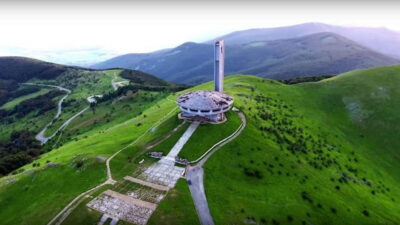
Museum of Socialist Art and Buzludzha Monument Tour
Read our review →
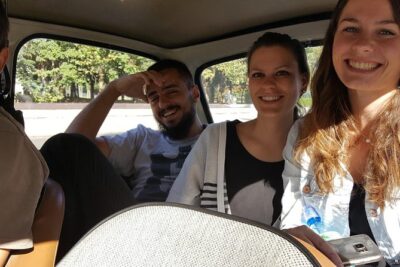
Sofia Communist History 2-Hour Tour in a Classic Trabant
Read our review →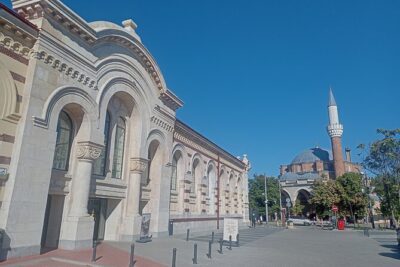
Sofia Food & Tasting Tour with Communist-Era Tram Ride
Read our review →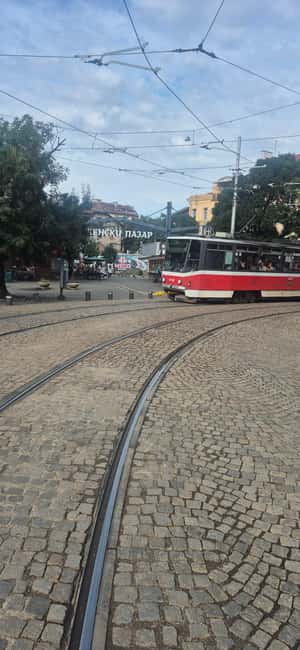
5-Stop Food & Culture Tour by Communist-Era Tram
Read our review →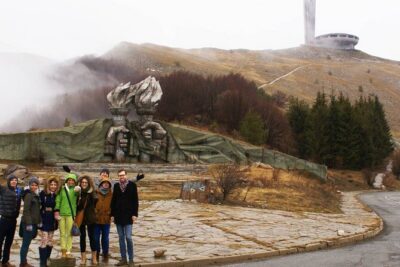
Buzludzha Monument and The Rose Valley Day Tour From Sofia 13 hrs
Read our review →
Buzludzha Monument & Museum of Aviation Day Trip
Read our review →Browse the lists this tour appears in