
Review · SELF-GUIDED TOURS
Sofia: City Monuments Guided Walking Tour with Audio Guide
Sofia reveals its layers on foot. This two-hour city walk links more than 20 monuments, churches, archaeological remains, and public buildings, while a personal audio guide lets you hear the commentary without crowding around a speaking guide. I especially like the seven-language audio system and the chance to enter several temples rather than simply photograph them from outside. The final stop at the Presidency, timed for the changing of the guard, adds a memorable finish.
I also like the relaxed pace and the amount of ground covered for $17. Guides such as Alex, Toni, Antonina, Gabriella, and Stephy have been praised for keeping groups together, answering questions, and allowing time for photographs. The main compromise is simple: this is an overview, not a detailed study of each monument, and a few people found the pace a little rushed near the end.
In This Review
- Key points at a glance
- Starting beside Ivan Vazov National Theater
- From the Russian Church to the Tsar Liberator
- Alexander Nevsky Cathedral and the Unknown Soldier
- St. Sophia Church and Sofia’s earlier layers
- Serdica’s amphitheater and Eastern Gate
- The unnamed central stops and the value of variety
- Sofia Synagogue and the city’s religious mix
- St. George Rotunda and the Presidency
- How the audio guide changes the experience
- Pace, weather, and physical demands
- Is $17 good value?
- Who should book this Sofia walk?
- Should you book it?
- FAQ
- How long does the Sofia monuments walking tour last?
- Where does the tour begin?
- Where does the tour finish?
- Which languages are available on the audio guide?
- Which languages can the live guide speak?
- Does the tour enter any buildings?
- Is the tour suitable for wheelchair users or people with mobility impairments?
Key points at a glance
- More than 20 central sights: See Sofia’s major churches, monuments, ruins, civic buildings, and religious landmarks in one compact route.
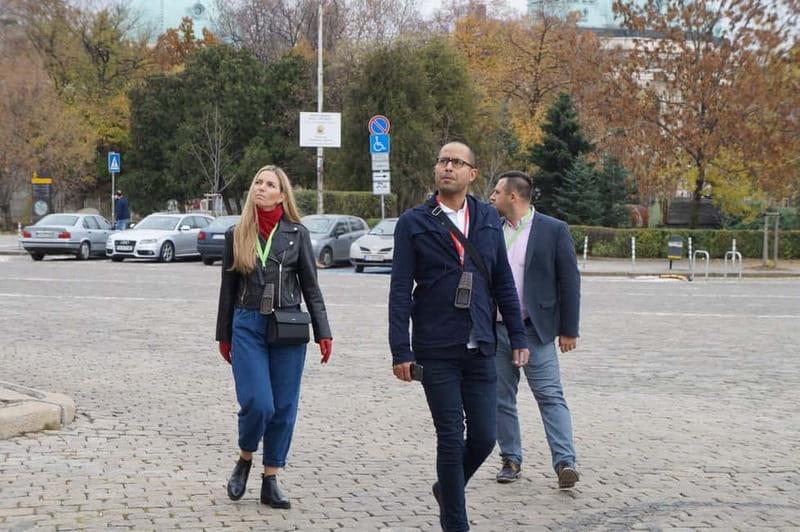
- Audio commentary in seven languages: Choose English, Italian, Spanish, Russian, German, French, or Bulgarian.
- Several interiors included: The route enters places such as Alexander Nevsky Cathedral, St. Sophia Church, and the St. George Rotunda Church.
- A quiet way to hear the story: Headphones make the commentary easier to follow beside busy roads and open squares.
- Presidential guard finale: The walk ends at the Presidency, where you may film the changing of the guard.
- Good first-day value: At $17 for two hours, this is an efficient introduction to central Sofia, especially for short visits.
Starting beside Ivan Vazov National Theater
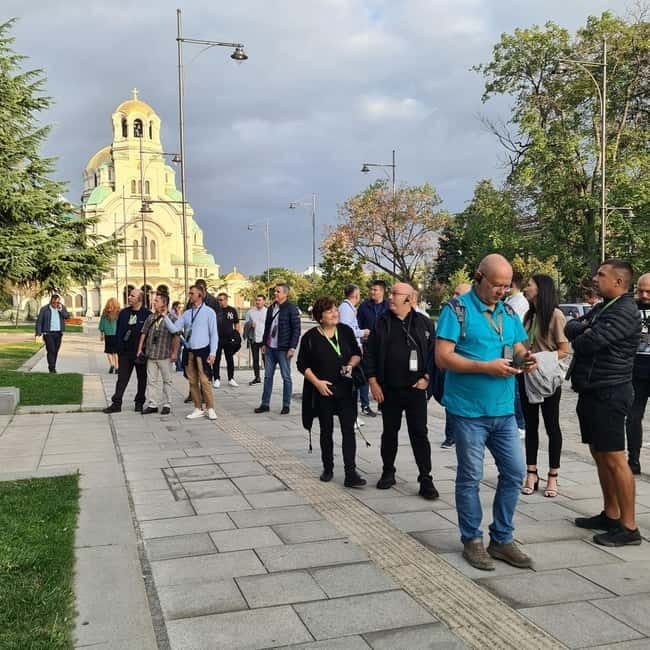
The meeting point is near the main entrance of the Ivan Vazov National Theater. Look for the staff holding the audio guides, and arrive ready for a city walk rather than a bus excursion. The route stays in central Sofia, so the appeal is seeing the city at street level, with the changing mix of grand buildings, places of worship, and archaeological remains.
The host or guide explains how to use the device and headphones before setting off. This matters more than it may sound. The system is designed so you can hear the commentary from as far as 200 meters away, allowing the group to spread out while taking photographs or looking around.
This setup also changes the feel of the walk. You are not required to stand shoulder to shoulder with the guide in a noisy square. You can look up at a facade, move closer to a monument, or take a photograph while the explanation continues in your ears.
The live guide speaks English, Russian, or Bulgarian. The recorded audio adds Italian, Spanish, German, and French. The guide remains important for directions, timing, and practical help, but the device carries most of the historical explanation.
More Self-Guided Tours in Sofia
- Rila Monastery and 7 Rila Lakes Self-Guided Shared Trip from Sofia
★ 5.0 · 280 reviews - Sofia: Rila Monastery & Boyana Church – Audio guided tour
★ 4.6 · 91 reviews - From Sofia: Plovdiv with audio guide + free pick-up
★ 4.9 · 48 reviews
From the Russian Church to the Tsar Liberator
The early part of the route introduces Sofia through some of its most recognizable landmarks. The Russian Church, formally known as the Church of St. Nicholas the Miracle-Maker, is a short visit, but it gives you an early taste of the city’s religious architecture and decorated interiors.
The tour then pauses at a viewpoint for photographs before reaching the Monument to the Tsar Liberator. These brief stops are not designed for a long lecture. Instead, they help you understand the shape of central Sofia and give you a chance to take in the setting before moving on.
This is a useful pattern throughout the walk. You receive the main facts, see the site in context, and keep moving. I find that approach helpful on a first visit, though you should not expect enough time to study every inscription or architectural detail.
Alexander Nevsky Cathedral and the Unknown Soldier
Alexander Nevsky Cathedral is the route’s major architectural stop. The tour goes inside, giving you time to look around while the audio explains the building and its place in Bulgarian history. Its scale can be difficult to appreciate from a quick street photograph, so the interior visit adds real value.
The scheduled stop is about 13 minutes, enough for a focused look rather than a slow, unhurried visit. You may want to return later if the cathedral becomes a personal favorite. The audio guide gives you a framework, but a separate visit would allow more time for quiet observation.
Nearby, the Monument of the Unknown Soldier adds a more solemn note. The stop is short, but it connects the grand cathedral district with Bulgaria’s public memory and national ceremonies.
A practical tip: keep the headphone volume comfortable and stay alert when crossing streets. The audio system lets you spread out, but it can also make you less aware of nearby traffic and group instructions.
St. Sophia Church and Sofia’s earlier layers
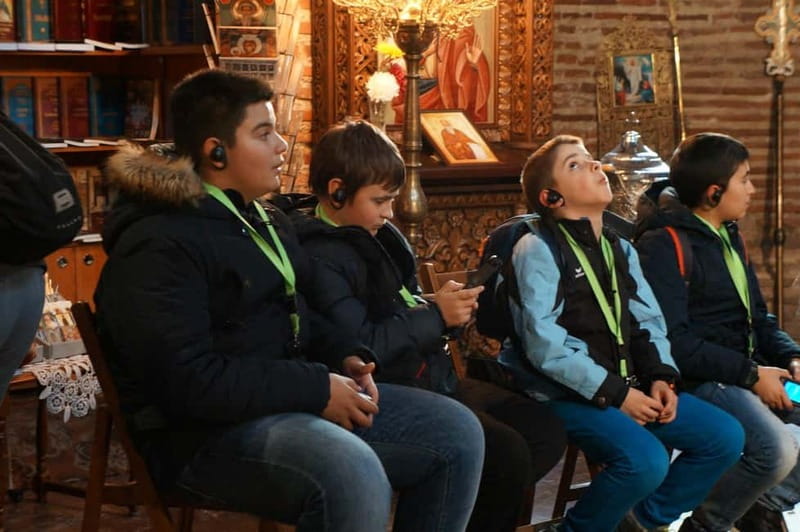
St. Sophia Church is another interior stop, with around six minutes set aside for sightseeing. The building is especially useful for understanding that Sofia is not simply a modern capital filled with nineteenth- and twentieth-century monuments. The city center rests on much older foundations.
The audio commentary helps connect the church to the archaeological remains visited later. You will hear the story as you move, then see how different periods of Sofia sit close together. The route does not treat each place as an isolated attraction. It shows you how religious buildings, civic spaces, and ancient ruins share the same central streets.
The schedule is tight here. If you enjoy church interiors, you may wish you had longer. Still, the stop gives you enough time to enter, orient yourself, and learn why the building matters.
More Walking Tours in Sofia
- Sofia: Communist Walking Tour
★ 4.9 · 1,106 reviews - Communist Walking Tour of Sofia
★ 5.0 · 690 reviews - Sofia Highlights 2 Hour Sightseeing Walking Tour
★ 5.0 · 442 reviews - Guided Walking Tour of Sofia
★ 5.0 · 143 reviews
Serdica’s amphitheater and Eastern Gate
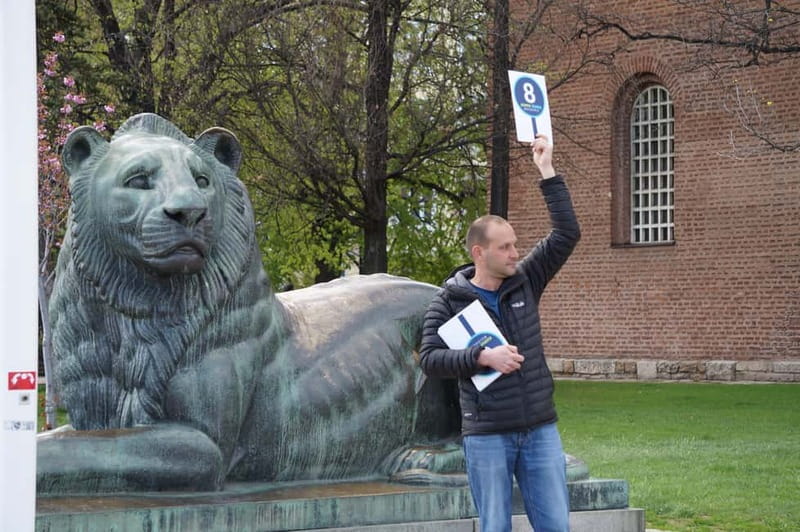
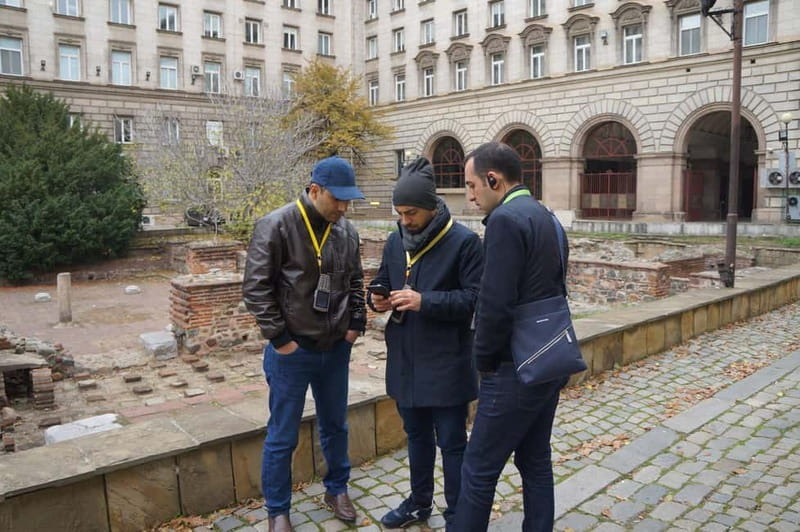
The route next reaches the Amphitheater of Serdica and the Eastern Gate of Serdika, located at underpass level. These stops give the walk its strongest archaeological element.
The Eastern Gate is particularly effective because it appears within the modern city rather than at the end of a separate archaeological excursion. Sofia’s ancient past is encountered as part of an ordinary urban walk, with present-day streets and buildings close by.
The amphitheater stop lasts about five minutes, while the Eastern Gate receives a shorter explanation. That timing tells you what kind of tour this is. You will see the key remains and learn their place in the city’s story, but you will not spend half an hour examining masonry or reconstruction plans.
For a first introduction, I like this balance. You gain a sense of how old Sofia is without losing the route’s momentum. If ancient cities are your main interest, plan time after the walk to revisit the archaeological areas at your own speed.
The unnamed central stops and the value of variety
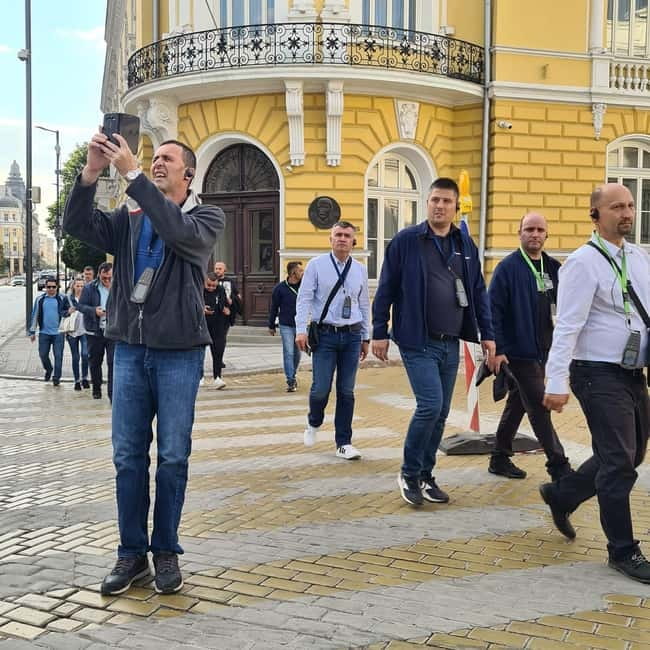
Several itinerary points are listed simply as sightseeing stops, with no individual landmark name supplied. In practice, these short pauses form the connecting middle of the route, taking you through additional central attractions and cultural monuments before the visit to the Sofia Synagogue.
That unnamed section is worth understanding before you book. The tour promises more than 20 sights, but not every one receives a long, formal stop. Some are likely viewed from public spaces, while others are explained as you walk. The strength is variety and coverage. The limitation is that the experience can feel like a quick survey if you want long visits at every location.
One short stop includes an additional interior visit. Since the exact site is not specified in the information available, you should treat it as part of the route’s general collection of religious and historic buildings rather than plan around it.
The guides help make this section work. Alex was praised for explaining the audio controls and answering questions about Sofia, while Joanna and Nickola were noted for keeping a comfortable pace and allowing breaks in hot weather. These details matter because the route involves repeated stops, starts, and street crossings.
Sofia Synagogue and the city’s religious mix
The Sofia Synagogue receives a brief sightseeing stop of about three minutes. Even a short look is valuable because it adds another religious tradition to a route already featuring Orthodox churches and older Christian sites.
This variety is one of the tour’s best features. You are not shown a single version of Sofia. Instead, the walk places churches, a synagogue, monuments, ancient remains, and government buildings within the same compact city center.
Do not expect a full interior visit here based on the stated itinerary. The stop is listed as sightseeing rather than a visit inside. The audio guide supplies the context, while the guide keeps the group moving toward the final section.
St. George Rotunda and the Presidency
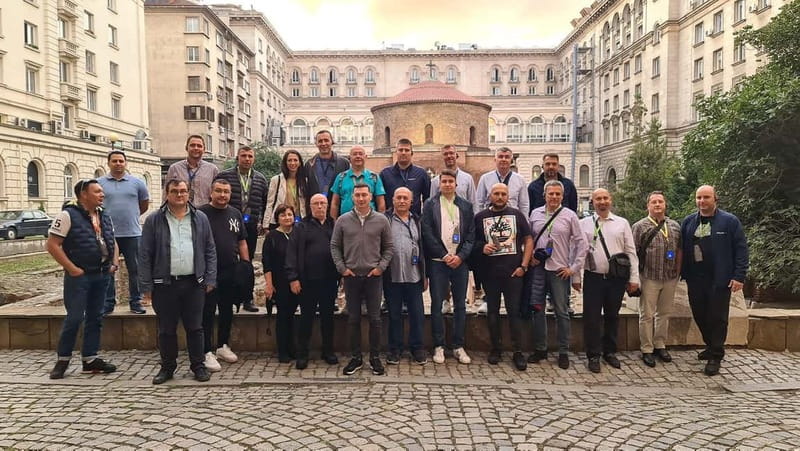
The St. George Rotunda Church is one of the most rewarding stops because the tour enters the building and allows about eight minutes for the visit. Its setting among modern structures gives you one of Sofia’s clearest examples of old and new occupying the same city block.
The stop is short, but the contrast is memorable. You move from open streets and large public buildings into a much older religious space, then continue toward the Presidency.
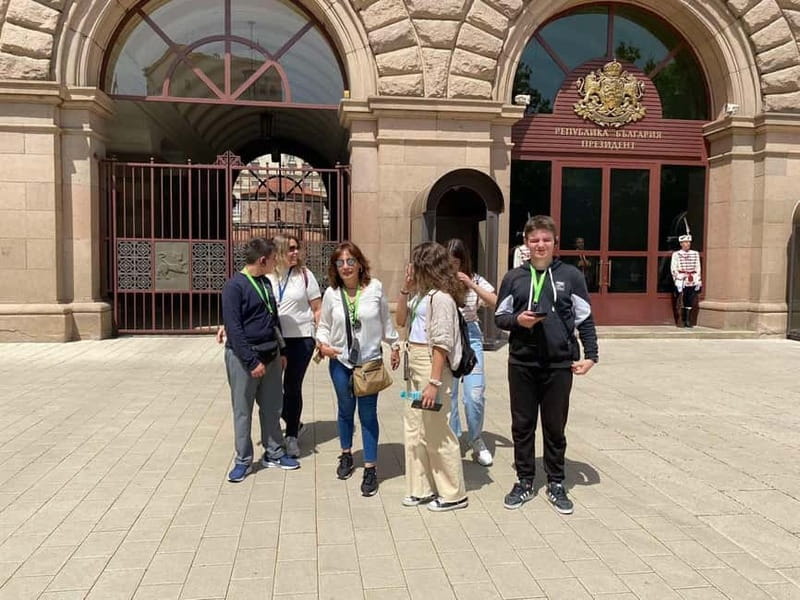
At the Presidential Palace, the tour pauses for photographs and sightseeing. The walk ends here, with the opportunity to film the changing of the presidential guard. Timing matters. The guard ceremony may not match every starting time, so check availability and the exact schedule when booking rather than assuming it will always be taking place.
This ending gives the route a clear final moment. You finish not at a random street corner, but beside one of Sofia’s principal government buildings, with an organized public ceremony as a possible bonus.
How the audio guide changes the experience
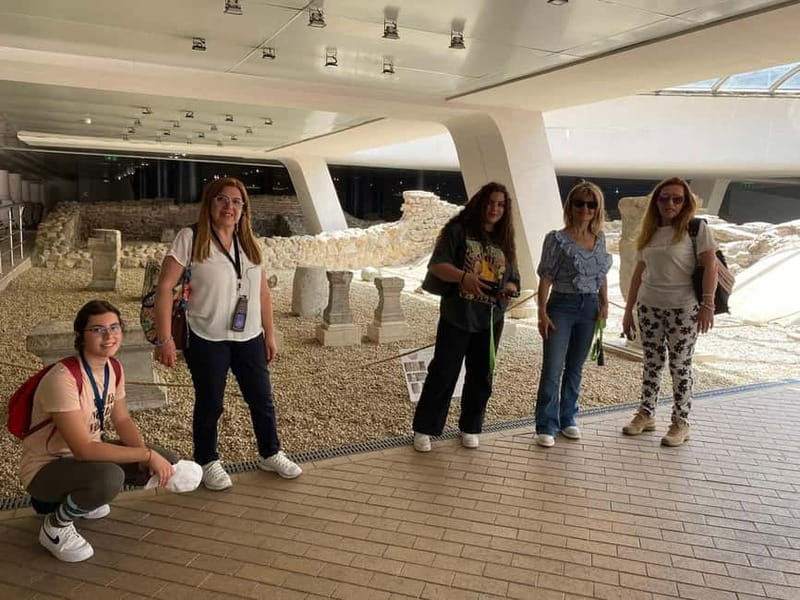
The audio system is the central idea behind this tour, and it works best for people who prefer quiet, self-directed listening. You can stand back from the guide, take photos, and still hear the explanation. The recorded material also avoids the common problem of trying to catch every word in a crowded square.
The system is not perfect. At some stops, the guide presses the next description as the group moves on. If you are still listening, the change can interrupt the explanation. One person also found it frustrating when the audio ended before the group left a location.
There is another tradeoff. Because you are listening through headphones, the walk can feel less social than a traditional guided tour. A live guide who speaks throughout would offer more spontaneous stories and interaction. Here, the guide mainly leads the route, handles the equipment, and adds information or answers questions.
I would choose this format if clear audio in your own language matters more than constant conversation. If you prefer lively storytelling from a guide at every corner, this may feel a little quiet.
Pace, weather, and physical demands
The stated duration is two hours, and that is about right for the planned route. You cover a lot of central Sofia, with many short stops and several entries into religious buildings.
The pace is generally described as relaxed. Guides have adjusted for hot weather, stopped in shade, and allowed time for photos. Even so, the number of sights can make the final part feel tiring, especially in summer or if you have already been walking all day.
Wear comfortable, low-heeled shoes. High heels are not allowed, and shorts and short skirts are also prohibited. These clothing rules matter because the tour enters temples. Bring clothing that covers your knees, particularly if you want to avoid any uncertainty at church entrances.
The experience is not suitable for wheelchair users or people with mobility impairments. Baby strollers are also not allowed. The route’s many stops, temple entrances, and city-center walking make this a poor choice for anyone who needs step-free access or frequent seating.
Is $17 good value?
At $17 per person, this is a strong value for a first look at Sofia. You receive a live host or guide, headphones, an audio guide in seven languages, access to several religious interiors, and a route covering more than 20 sights.
The value is greatest if you have only a short time in the city. In two hours, you can identify the places you want to revisit, learn the basic story of Sofia, and get a practical sense of how the center fits together.
The price does not buy a private tour or lengthy explanations at each stop. You are paying for efficient coverage, not a specialist-led study of Bulgarian art, archaeology, or religion. That is a fair exchange at this cost, as long as you set the right expectation.
The tour also offers free cancellation up to 24 hours before the start and a reserve-now, pay-later option. Those policies make it easier to fit the walk into a changing city schedule.
Who should book this Sofia walk?
I would recommend it for first-time visitors, solo visitors, business visitors with limited free time, and anyone who wants a clear introduction before exploring alone. The audio choices make it especially useful for groups with different language needs.
It also suits people who dislike crowding around a guide. You can spread out, photograph a monument, and keep listening. Several guides have been praised for patience, directions, and keeping the group comfortable.
I would hesitate if you want long interior visits, extensive discussion, or a fully accessible route. The tour covers many places quickly, and the audio format can feel slightly detached. For deeper study, use this as your orientation walk, then return to Alexander Nevsky Cathedral, St. Sophia, the Serdica remains, or the St. George Rotunda on your own.
Should you book it?
Book this tour if you want a low-cost, well-organized introduction to central Sofia with clear audio and a good mix of monuments. The interiors, ancient Serdica sites, and possible guard change give it more substance than a simple outside-only city stroll.
Skip it if your priority is slow sightseeing at a small number of sites or lively, continuous conversation with a guide. For most first visits, though, the two-hour route offers a sensible way to get oriented, especially when your time is short and you want to hear the story in your own language.
FAQ
How long does the Sofia monuments walking tour last?
The tour lasts two hours. Starting times vary, so check availability when selecting your date.
Where does the tour begin?
The meeting point is near the main entrance of the Ivan Vazov National Theater. Staff will be holding the audio guides.
Where does the tour finish?
The walk ends at the Presidential Palace of the Republic of Bulgaria.
Which languages are available on the audio guide?
The audio guide is available in English, Italian, Spanish, Russian, German, French, and Bulgarian.
Which languages can the live guide speak?
The live guide may speak English, Russian, or Bulgarian.
Does the tour enter any buildings?
Yes. The route includes visits inside several temples, including the Russian Church, Alexander Nevsky Cathedral, St. Sophia Church, and St. George Rotunda Church.
Is the tour suitable for wheelchair users or people with mobility impairments?
No. The activity is not suitable for wheelchair users or people with mobility impairments. Baby strollers are also not allowed.
More Audio Tours in Sofia
- Sofia Audio guide Tour offers available in 7 languages
★ 3.5 · 3 reviews - Audio Guide for Museum Paleontology and Historical Geology
★ 4.1 · 3 reviews - Nessebar: Audio Guide Tour Nessebar + visit to the Winery
★ 3.7 · 30 reviews - Plovdiv: Old Town Self-Guided Audio Tour
★ 3.6 · 24 reviews
Recently added around Sofia
- Veliko Tarnovo & Arbanasi Full day tour★ 5.0 · 5 reviews
- Private Winter Day Trip to the Rila Mountain★ 4.5 · 3 reviews
- Private transfer from Sofia to Plovdiv or vice versa★ 5.0 · 8 reviews
- Zemen Monastery, Boyana Church and National History Museum Tour★ 5.0 · 2 reviews
- Sofia Hidden Gems: Small-Group Walking Tour with Tram Ride★ 5.0 · 7 reviews
- Catacomb Tour in Sofia guided by a Local★ 4.5 · 3 reviews
- Tour to Koprivshtitsa and the Buzludzha monument incl the Seuthes Thracian Tomb★ 3.5 · 3 reviews
- From Sofia: The gorges of Trun and Dragovski stone trail★ 5.0 · 6 reviews
Self-Guided Tours, compared.
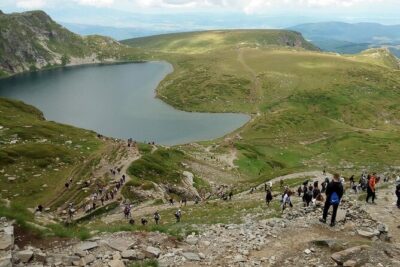
Rila Monastery and 7 Rila Lakes Self-Guided Shared Trip from Sofia
Read our review →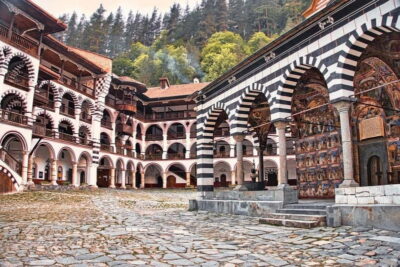
Rila Monastery & Boyana Church – Audio guided tour
Read our review →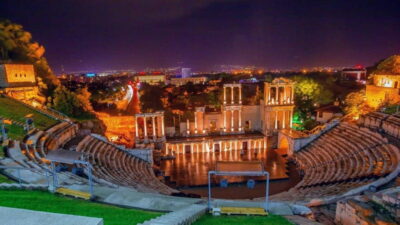
Rila Monastery and Boyana Church Self-Guided Day Trip from Sofia
Read our review →
Browse the lists this tour appears in