
Review · COMMUNIST HISTORY TOURS
Sofia: Communist History Walking Tour
Sofia wears its past in concrete and stone. This three-hour private walk uses the city center’s imposing buildings, monuments, department stores, and public transport to explain Bulgaria under communist rule. I like the way the tour connects major sights, from Borissova Garden to the former Communist Party headquarters, rather than treating history as a list of dates.
I especially like the stop at the National Palace of Culture, the Balkans’ largest congress hall, and the chance to ride a trolley bus with local passengers if you need help with walking. The final antiques market near Alexander Nevsky Cathedral also gives you a chance to handle and buy old communist-era objects. The main caution is price: at $140 per person, this private tour is costly for a three-hour walk, and one important detail needs checking, since one account found no dedicated Soviet memorabilia shops along the route.
- See the Monument to the Soviet Army at Borissova Garden and learn how it fits into Bulgaria’s postwar story.
- Ride a trolley bus if needed, using public transport as part of the historical experience rather than relying only on the pavement.
- Visit the National Palace of Culture, a huge late-communist project and the largest congress hall in the Balkans.
- Find a piece of the Berlin Wall, linked to the dramatic political changes of 1989.
- Walk Vitosha Boulevard to the former Communist Party headquarters and the elite shopping center TZUM.
- Finish at an antiques market beside Alexander Nevsky Cathedral, where communist relics may be available for purchase.
In This Review
- Why Sofia’s Communist Past Works Best on Foot
- Borissova Garden and the Monument to the Soviet Army
- The National Palace of Culture and a Piece of the Berlin Wall
- Vitosha Boulevard and the Former Party Headquarters
- TZUM, Sofia’s Elite Department Store
- Prince Alexander Square and the Former Dimitrov Mausoleum
- Communist Relics Near Alexander Nevsky Cathedral
- What $140 Per Person Gets You
- Who Should Book This Sofia Walk?
- Final Recommendation: A Strong History Tour at a Premium Price
- FAQ
- Where does the Communist History Walking Tour meet?
- How long does the tour last?
- What language is the tour conducted in?
- Is this a private tour?
- Is public transportation included?
- Does the tour visit the Monument to the Soviet Army?
- Does the tour include a visit to the Berlin Wall?
- Are food and drinks included?
Why Sofia’s Communist Past Works Best on Foot
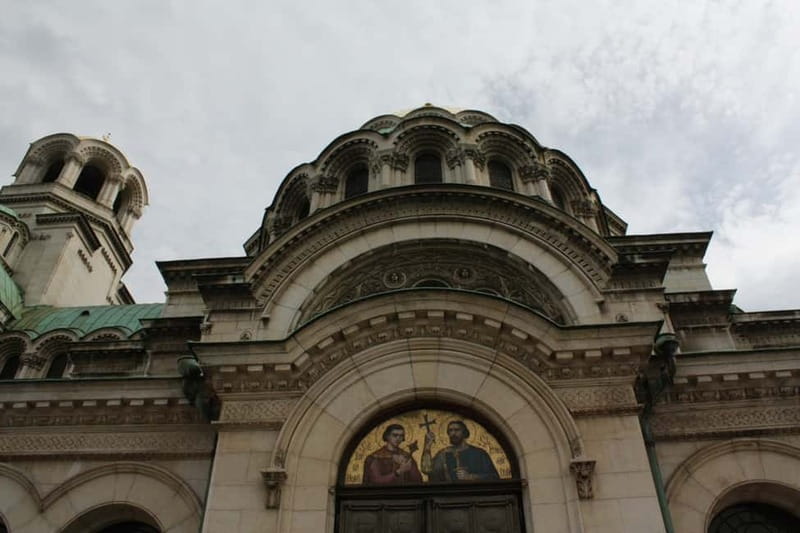
Sofia’s communist period is easiest to understand when you see how power shaped the city. Government buildings were oversized, public spaces were carefully arranged, and shopping centers reflected the divide between ordinary citizens and the political elite.
This private walk gives you an English-speaking guide for the full three hours. That matters because many of the most important clues are not flashy attractions. A plain facade, a broad square, or a former department store can mean much more when someone explains who used it and why it was built.
I also like the scale of the route. You are not confined to one museum or a single monument. Instead, you move through central Sofia and see how the communist era affected government, culture, transport, shopping, and public memory.
The tour is listed at $140 per person. For one person or a couple, that is a serious expense. For a private group that wants a focused history lesson, the price may make more sense, especially if you value questions, flexible pacing, and a guide who can explain Bulgaria’s several eras of occupation and rule.
A five-star assessment and repeated praise for the guide’s historical background suggest that the guiding is the main reason to book. One guide named Jordan was praised for explaining Bulgaria, Sofia, and its different periods of occupation, with special attention to communist rule. The walk was also described as the right length for covering the city without becoming an all-day ordeal.
Borissova Garden and the Monument to the Soviet Army
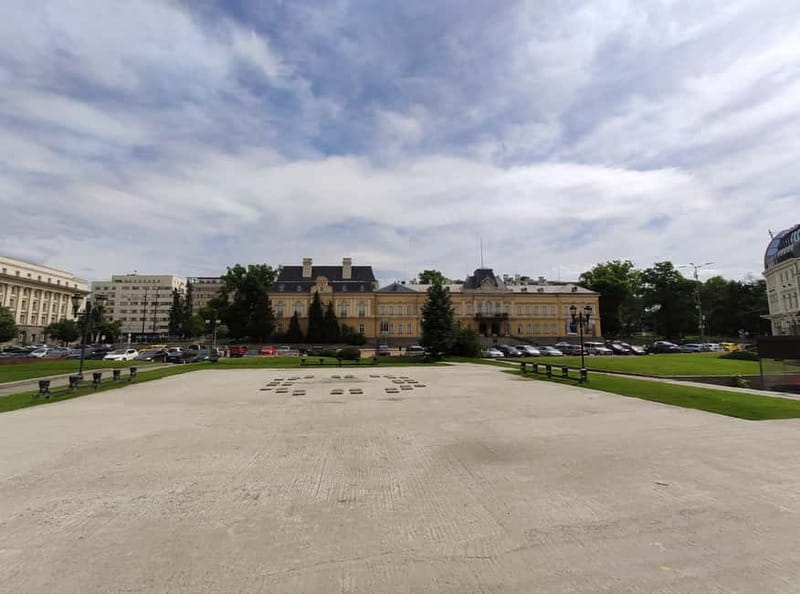
The route begins at the Tourist Information Center at bul. Tsar Osvoboditel 22. From there, you head toward Borissova Garden and the Monument to the Soviet Army, one of the tour’s key sights.
The monument is imposing by design. Its size and placement reflect the political message of the period, when Soviet influence shaped public life across Bulgaria. You will not simply be looking at a statue. You will be looking at a statement about military power, political loyalty, and the way governments use public space to tell their preferred version of events.
This is a good early stop because it gives you a visual starting point. Once you have seen the scale of the monument, later buildings and squares make more sense. The guide can place the structure within the larger communist period and explain how Sofia’s architecture carried official ideas into everyday life.
The tour is primarily a walking experience, but public transportation may be used if someone in your private group has walking problems. A trolley bus ride, if needed, is more than a practical shortcut. It gives you a brief look at a form of transport linked to an earlier era, while also letting you move through the city as local passengers do.
If you have limited mobility, mention it when booking or at the start. The advertised transport ticket is included when needed, but the tour still includes substantial walking and several outdoor stops.
More Communist History Tours in Sofia
- Sofia: Communist Walking Tour
★ 4.9 · 1,106 reviews - Communist Walking Tour of Sofia
★ 5.0 · 690 reviews - Sofia: Museum of Socialist Art and Buzludzha Monument Tour
★ 4.9 · 86 reviews
The National Palace of Culture and a Piece of the Berlin Wall
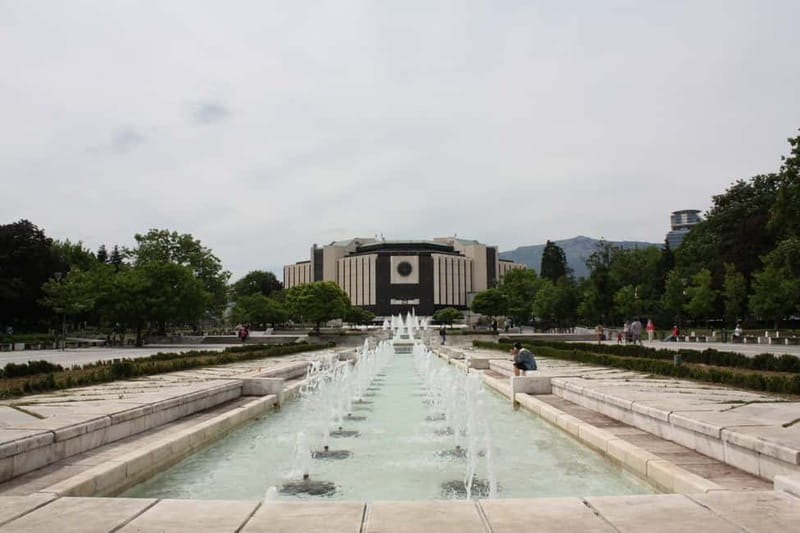
Next comes the National Palace of Culture, known as a major congress venue and the largest congress hall in the Balkans. Its scale reflects the ambitions of late communist Bulgaria. Buildings like this were intended to project confidence, order, and national importance.
I find this part useful because it shifts the focus from monuments to public culture. Communist governments did not shape only offices and party headquarters. They also built places for conferences, ceremonies, performances, and official gatherings.
The National Palace of Culture can feel overwhelming if you see it without context. With a guide, you can consider why such a large complex was created and what it says about the state’s priorities. The building helps show how architecture was used to present an image of strength and progress.
Nearby, you will see a piece of the Berlin Wall. The timing is especially striking: the wall fell only one day before the radical political changes that took place in Bulgaria in 1989.
That connection gives the tour a clear turning point. The Berlin Wall is not presented as a distant German event with no local meaning. It becomes part of the same chain of changes that helped end communist rule in Bulgaria.
You should expect interpretation rather than a large museum display. The value comes from the guide’s explanation and the setting around it. If you want a full exhibition about the fall of communism, this walk is not designed for that. If you want a concise link between European events and Bulgaria’s political shift, this stop is effective.
Vitosha Boulevard and the Former Party Headquarters
The route then follows Vitosha Boulevard, one of central Sofia’s best-known streets, toward the former headquarters of the Communist Party.
This section helps you compare public life under communism with the commercial Sofia you see today. Vitosha Boulevard is now associated with shops, cafes, and city life, but the route uses it to reach a building tied to political control.
The contrast is part of the lesson. Modern activity covers much of the old political system, yet the buildings remain. A guide can point out how the city changed after 1989 and how former centers of power fit into the present-day streetscape.
The former party headquarters is important even if you do not enter it. Its significance comes from what it represented: the institutional center of a one-party system. The building helps turn the tour from a collection of architectural sights into a story about how authority operated.
Because this is a private group, you can ask direct questions here. You might want to know how Bulgaria’s communist government differed from other Eastern Bloc governments, how the 1989 changes unfolded, or what happened to the old political symbols. The supplied information confirms that the guide discusses the communist period and Bulgaria’s wider eras of occupation, making this one of the better places to ask for context.
TZUM, Sofia’s Elite Department Store
The Central Department Store, commonly known as TZUM, offers a different view of communist society. It was the place where the elite would shop, and its presence on the route shows that access and status did not disappear under a system that officially promoted equality.
This is one of the more useful stops for understanding daily life. Political history can become abstract, but shopping is familiar. Who could buy imported goods, who had access to better products, and which stores carried status all reveal how the system worked in practice.
The building also shows how commerce was presented during the period. A major department store was not simply a place to purchase clothes or household goods. It could serve as a symbol of modernity and state capacity, even when ordinary shoppers faced limited choice or shortages.
You will probably appreciate this stop if you like social history more than military monuments. It connects architecture with class and privilege, and it gives you a way to think about the gap between official ideals and actual life.
The tour does not include food, drinks, or shopping costs. If you want to buy an item later at the antiques market, bring that expense into your budget. The price covers the guide and, if needed, a public transportation ticket, not souvenirs or refreshments.
More History Tours in Sofia
- Full-day Nis and Serbian History Tour from Sofia
★ 4.5 · 90 reviews - Sofia: History and Heritage – Small Group City Tour
★ 5.0 · 84 reviews - Sofia Communist History 2-Hour Tour in a Classic Trabant
★ 5.0 · 45 reviews - Rila Monastery and St. Ivan Cave History & Nature Trip from Sofia
★ 4.5 · 25 reviews
Prince Alexander Square and the Former Dimitrov Mausoleum
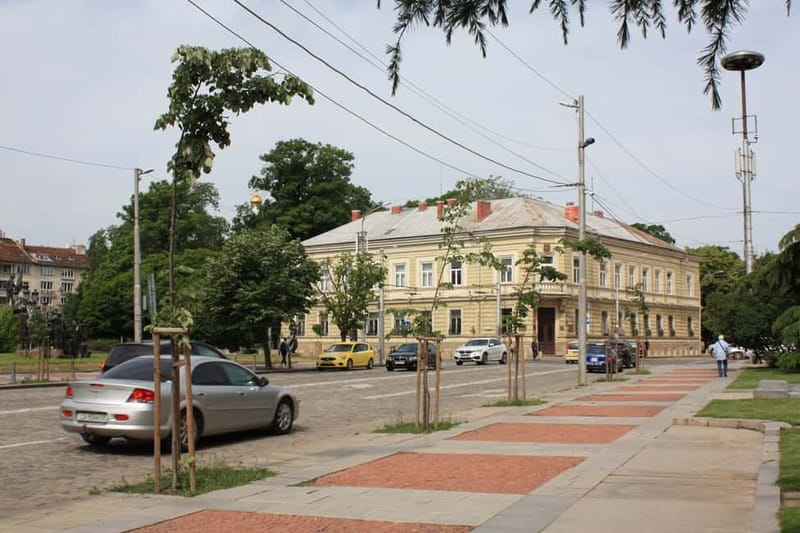
At Prince Alexander of Battenberg Square, the guide explains the site of the former Georgi Dimitrov Mausoleum.
The mausoleum was tied to Georgi Dimitrov, a major Bulgarian communist leader, and its location in the city center made it part of the official political stage. Its former site now works as a lesson in absence. The building is gone, but the place still helps explain how communist power once used monuments, ceremonies, and public gatherings.
This is a good example of why a walking tour can add value beyond a quick sightseeing circuit. You are not only seeing what remains. You are also learning to read what has been removed, renamed, or repurposed.
The square may feel less dramatic than the Monument to the Soviet Army or the National Palace of Culture. That is precisely why the explanation matters. Without context, you might pass through without knowing that a major political monument once occupied the space.
The guide’s role is especially important here. One of the strongest points in the available feedback was the quality of historical explanation, including Bulgaria’s communist era and its other periods of occupation. The tour works best when you treat this stop as a place to ask questions rather than simply photograph an empty site.
Communist Relics Near Alexander Nevsky Cathedral
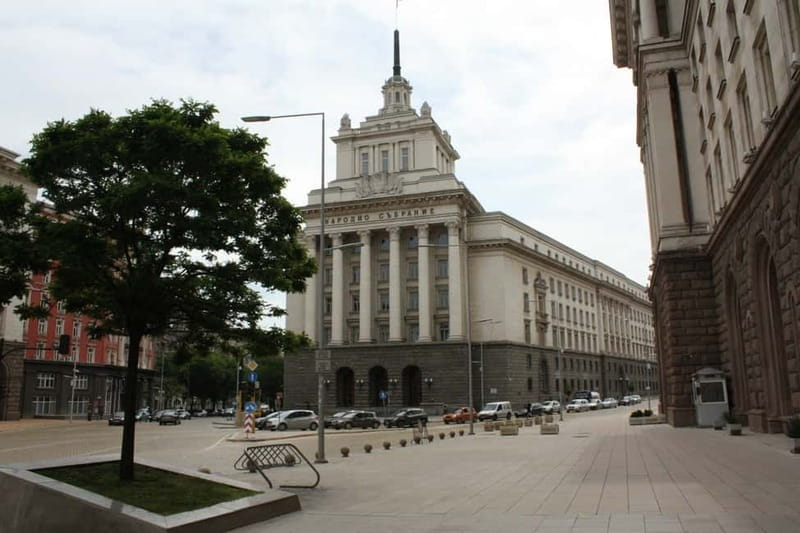
The walk ends at the antiques market outside Alexander Nevsky Cathedral. This is a practical and enjoyable finish because it brings the subject into the present.
You may find communist relics for sale, giving you a chance to take home a small physical reminder of the period. Objects can make history easier to remember, but shop carefully and ask questions if authenticity or age matters to you.
There is an important limitation here. One account specifically noted that there were no Soviet memorabilia stores to shop in. The advertised ending is an antiques market where communist relics may be available, not a guaranteed specialist shop. Availability can change, and the selection may be mixed.
That distinction is worth keeping in mind if shopping is your main reason for booking. The market is best treated as an optional final stop, not the core of the tour. The historical walk itself is the stronger reason to go.
Ending beside Alexander Nevsky Cathedral also gives you a useful location for continuing your sightseeing. The tour does not include hotel drop-off, food, or drinks, so you will make your own plans after the walk.
What $140 Per Person Gets You
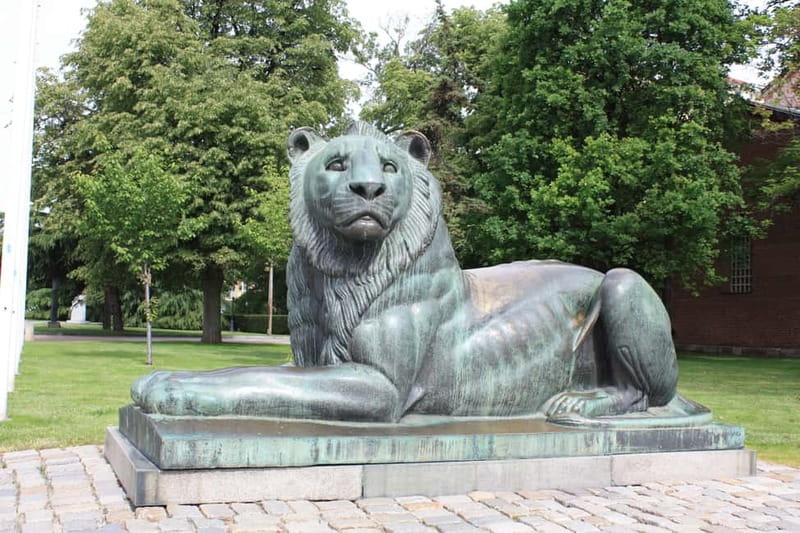
At $140 per person, this is not a budget walking tour. The price needs to be judged against the private format, the three-hour duration, and the guide’s expertise.
You are paying for:
- A private group rather than a large shared walk
- An English-speaking guide
- Three hours focused on Sofia’s communist period
- A connected route through monuments, government buildings, public spaces, and shopping sites
- A public transportation ticket if someone in the group needs it because of walking problems
The strongest value comes if you want a flexible conversation. A private guide can spend more time on the subjects that interest you, such as architecture, political change, daily shopping, or the 1989 transition.
The value is weaker if you only want to see the monuments quickly. Most of the locations are in the city center, and an independent visitor can walk past several of them. The guide’s explanation is the product.
The duration is well judged for a focused history tour. Three hours gives you enough time to cover the city center without turning the outing into a full-day commitment. One assessment called the length perfect and said the route covered the city well.
You can cancel up to 24 hours before the start for a full refund, and you can reserve now while paying later. Those terms help if your Sofia schedule is still changing, but they do not change the basic question: is a private history guide worth the price for your group?
Who Should Book This Sofia Walk?
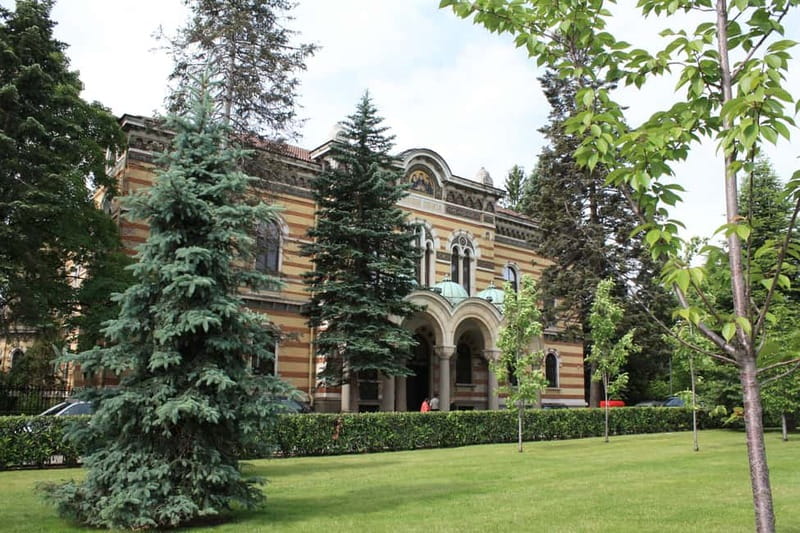
I would recommend this tour most strongly to you if:
- You want political and architectural context, not just landmark photos.
- You prefer a private group and an English-speaking guide.
- You are curious about how communism shaped shopping, transport, public buildings, and city squares.
- You have limited time in Sofia and want several related sights tied together.
- You enjoy asking questions about Bulgaria’s changing governments and occupations.
- You want the option of buying a small communist-era relic at the end.
I would think twice if you want a museum-heavy experience, a guaranteed specialist memorabilia shop, or a low-cost group walk. The route offers important outdoor sites, but it does not promise extensive interior visits or a dedicated collection of Soviet objects.
Wear comfortable shoes and allow for steady walking. If walking is difficult for someone in your group, raise that issue in advance, since a trolley bus and public transportation ticket may be used when needed.
Final Recommendation: A Strong History Tour at a Premium Price
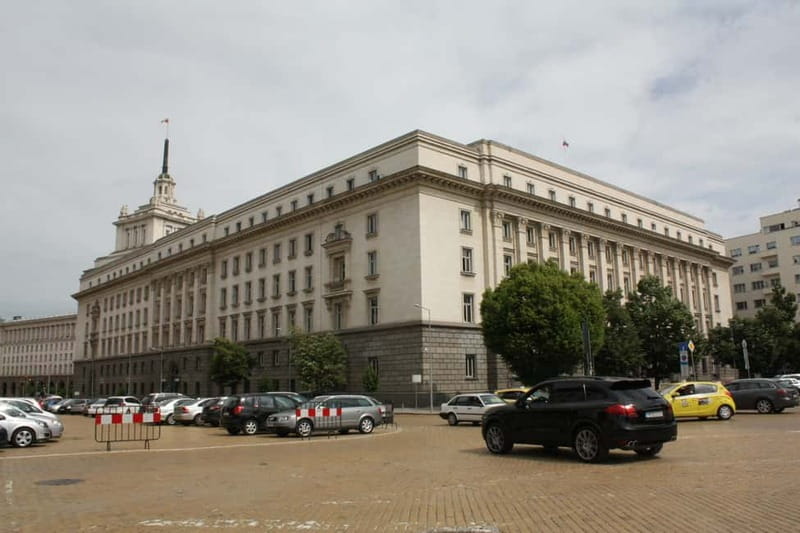
Book this tour if the private guide is the main attraction for you. The route covers the Monument to the Soviet Army, National Palace of Culture, Berlin Wall fragment, former party headquarters, TZUM, Dimitrov’s former mausoleum site, and the antiques market in a clear three-hour story.
I like its range. You see power, culture, transport, shopping, and public memory rather than only official monuments. The guide is also the key to the experience, with Jordan receiving specific praise for explaining Sofia and Bulgaria across several historical periods.
Skip it if $140 per person feels too high for an outdoor walk or if you mainly want guaranteed communist souvenirs. For a group that values context and a private conversation, this is a focused and worthwhile way to understand the political traces still visible in central Sofia.
FAQ
Where does the Communist History Walking Tour meet?
Meet at the Tourist Information Center at bul. Tsar Osvoboditel 22 in Sofia.
How long does the tour last?
The tour lasts three hours.
What language is the tour conducted in?
The tour is conducted in English by a live English-speaking guide.
Is this a private tour?
Yes. The activity is offered for a private group.
Is public transportation included?
A public transportation ticket is included if needed for someone with walking problems. The tour may use a trolley bus with local passengers.
Does the tour visit the Monument to the Soviet Army?
Yes. The route includes the Monument to the Soviet Army at Borissova Garden.
Does the tour include a visit to the Berlin Wall?
The route includes a piece of the Berlin Wall, connected with the political changes in Bulgaria in 1989.
Are food and drinks included?
No. Food and drinks are not included. Hotel pickup and drop-off are also not included.
More Walking Tours in Sofia
- Sofia: City Monuments Guided Walking Tour with Audio Guide
★ 4.5 · 825 reviews - Sofia Highlights 2 Hour Sightseeing Walking Tour
★ 5.0 · 442 reviews - Guided Walking Tour of Sofia
★ 5.0 · 143 reviews - Private city walking tour of Sofia
★ 5.0 · 141 reviews
Recently added around Sofia
- Veliko Tarnovo & Arbanasi Full day tour★ 5.0 · 5 reviews
- Private Winter Day Trip to the Rila Mountain★ 4.5 · 3 reviews
- Sofia Hidden Gems: Small-Group Walking Tour with Tram Ride★ 5.0 · 7 reviews
- Private transfer from Sofia to Plovdiv or vice versa★ 5.0 · 8 reviews
- Zemen Monastery, Boyana Church and National History Museum Tour★ 5.0 · 2 reviews
- Catacomb Tour in Sofia guided by a Local★ 4.5 · 3 reviews
- Tour to Koprivshtitsa and the Buzludzha monument incl the Seuthes Thracian Tomb★ 3.5 · 3 reviews
- From Sofia: The gorges of Trun and Dragovski stone trail★ 5.0 · 6 reviews
Communist History Tours, compared.
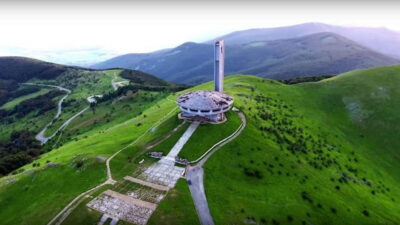
Museum of Socialist Art and Buzludzha Monument Tour
Read our review →

Sofia Communist History 2-Hour Tour in a Classic Trabant
Read our review →
Sofia Food & Tasting Tour with Communist-Era Tram Ride
Read our review →
5-Stop Food & Culture Tour by Communist-Era Tram
Read our review →
Buzludzha Monument and The Rose Valley Day Tour From Sofia 13 hrs
Read our review →Browse the lists this tour appears in