
Review · COMMUNIST HISTORY TOURS
Self-guided Tour in the Museum of Socialist Art
A quiet corner of Sofia tells a loud story. The Museum of Socialist Art offers a useful look at Bulgaria’s former People’s Republic through more than 70 socialist sculptures, political art, and archival footage. I like the freedom to visit during regular opening hours, and I like that the self-guided format lets you set your own pace without being tied to a group.
The main drawback is value. The admission fee is not included, and one supplied review describes the guide as a PDF of only two and a half pages, costing about €7.20 while museum admission was about €3. If your e-guide is similarly brief, the extra payment may not feel worthwhile.
In This Review
- Key points to know before you go
- Why socialist art matters in Sofia
- Arriving at 7 Lachezar Stanchev Street
- Walking among more than 70 socialist sculptures
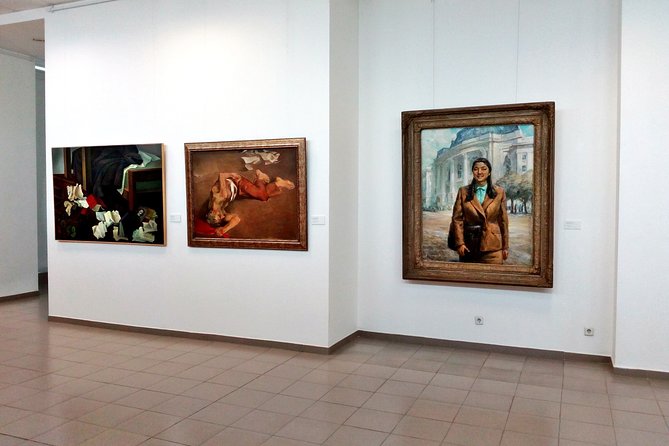
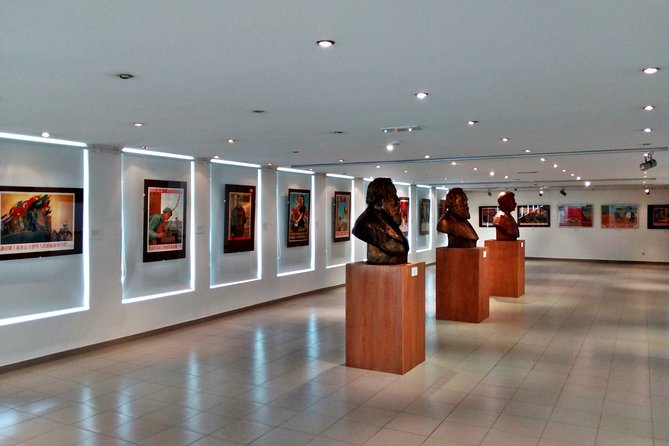
- Socialist realism and political messages
- Archival footage adds a different layer
- How the e-guide changes the visit
- The real cost: $8.33 plus admission
- Who will get the most from this visit
- A simple way to plan your visit
- Should you book the Museum of Socialist Art tour?
- FAQ
- Where does the self-guided tour start?
- Where does the activity end?
- What are the museum’s opening hours?
- Is the museum admission included?
- How long does the visit take?
- What does the self-guided package include?
- Can I cancel for a full refund?
Key points to know before you go
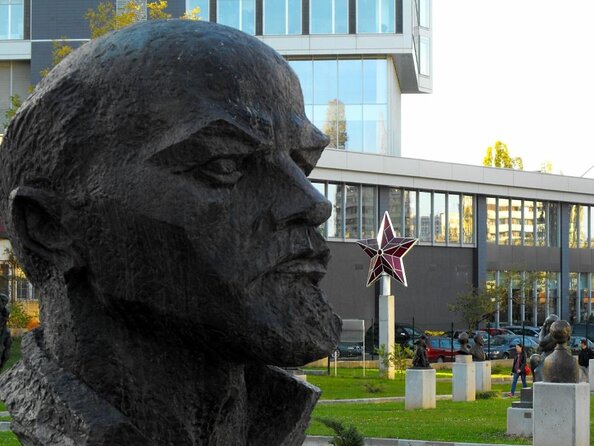
- More than 70 sculptures fill the museum grounds, giving you a clear sense of socialist public art.
- Archival footage and political works add context beyond the outdoor statues.
- Self-guided access lets you visit Tuesday through Sunday between 10:00 a.m. and 5:30 p.m.
- The e-guide works on all your devices, so you can read it at your own speed.
- Admission costs extra, and you pay the museum directly on arrival.
- The visit usually takes one to three hours, depending on how closely you study the works.
Why socialist art matters in Sofia
Art in Bulgaria’s socialist period was not simply decoration. It helped present the values and power of the People’s Republic of Bulgaria. Public sculpture, official portraits, and heroic scenes could shape how people saw the state, its leaders, workers, soldiers, and national identity.
That makes this museum useful even if you are not an art specialist. You can look at the figures, poses, symbols, and subjects, then ask what each work was trying to say. The museum gives you a chance to consider how art can support political ideas, not just express private feelings.
The subject also adds a missing piece to a first visit to Sofia. The city has churches, Roman remains, grand government buildings, and lively modern districts. This museum shifts your attention to the twentieth century and to the years when Bulgaria was governed as a socialist state.
I would not treat the visit as a quick collection of old statues. The real value comes from noticing the relationship between art and political ideology. A worker shown as strong and idealized, or a political figure presented with solemn authority, tells you something about the society that commissioned the work.
More Communist History Tours in Sofia
- Sofia: Communist Walking Tour
★ 4.9 · 1,106 reviews - Communist Walking Tour of Sofia
★ 5.0 · 690 reviews - Sofia: Museum of Socialist Art and Buzludzha Monument Tour
★ 4.9 · 86 reviews
Arriving at 7 Lachezar Stanchev Street
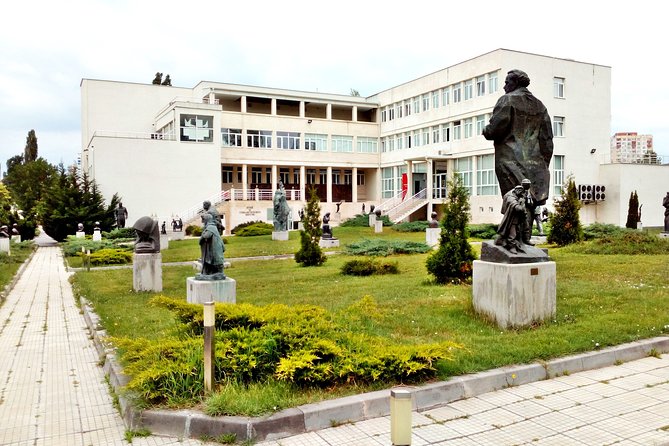
The meeting point is the Museum of Socialist Art at g.k. Iztok, ul. Lachezar Stanchev 7, 1756 Sofia. The activity begins and ends at the same location, which keeps the plan simple. You are not being moved between several sites, and you can leave when you have seen enough.
The museum is open Tuesday through Sunday from 10:00 a.m. to 5:30 p.m. The stated operating period runs through June 17, 2026. Since Monday is not included, check your calendar carefully before paying for a visit.
The regular hours suit an independent schedule. You might go in the morning before other sightseeing, or use the museum as a quieter stop during the afternoon. The visit is listed as lasting roughly one to three hours, but your actual time will depend on how much attention you give the sculptures, exhibition material, and footage.
You receive a personalized e-guide that can be loaded onto all your devices. That is handy if you prefer to read from a phone, tablet, or another device. It also means you do not have to follow a guide’s pace or wait for a fixed departure time.
Walking among more than 70 socialist sculptures
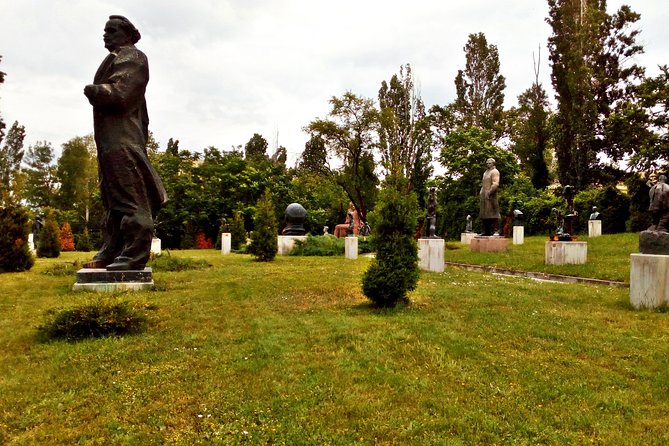
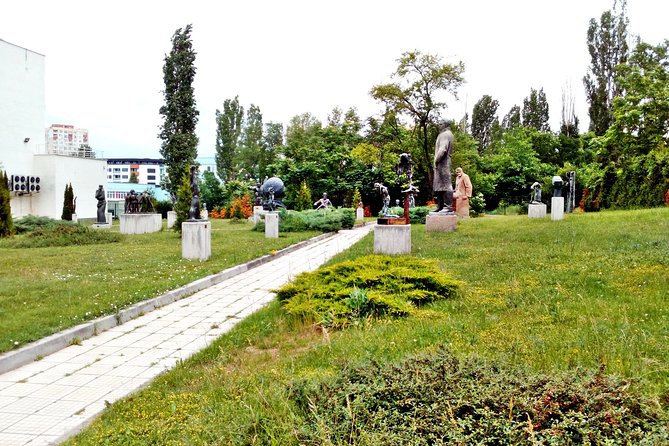
The outdoor grounds are the heart of the experience. More than 70 socialist sculptures give you room to walk, pause, compare, and look again. The open setting also provides a break from Sofia’s city streets, especially if you want a slower stop rather than another packed indoor attraction.
The scale matters. One statue can be interesting, but a large group of works lets you spot repeated patterns. You may find similar heroic poses, formal expressions, idealized bodies, and official subjects. Even without a long explanation beside every piece, comparison helps you see how the visual language of the period worked.
The grounds also change the way you experience the art. You are not only moving from one small display to another. You are walking through an outdoor collection where the surrounding space gives the sculptures room to feel monumental. That setting can help you understand why public art was so effective as a political tool.
Take your time here. The experience is self-guided, so you can spend several minutes with a work that catches your attention and move quickly past one that does not. If you have only one hour, focus on the pieces that best show political subjects and socialist realism. With two or three hours, you can make a slower circuit and return to works that need more thought.
A practical point: the outdoor setting may not suit every mood or weather condition, but the supplied information does not give details about shelter or facilities. Plan the visit around the museum’s opening hours and allow enough time to walk the grounds without rushing.
Socialist realism and political messages
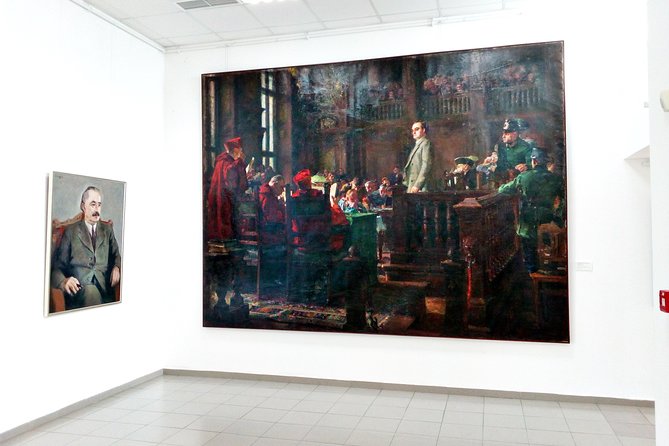
Socialist realism was designed to present life and society in a clear, approved, and often idealized way. The goal was not usually ambiguity. The art could honor labor, military service, leadership, national strength, or the future promised by the political system.
At this museum, you can use the sculptures as evidence of that approach. Look at who is shown, how they are positioned, and what qualities the work appears to praise. Strength, discipline, unity, and loyalty are often more important in official art than private doubt or ordinary weakness.
The museum is therefore valuable for both art lovers and history-minded visitors. You do not need to know every artist or political date to gain something from the collection. The broad questions are accessible: Who is being celebrated? Who is missing? What kind of citizen does this art ask people to admire?
The e-guide should help you make those connections. Still, I would check the guide’s length and content before assuming it provides a full lecture. The supplied description promises personalized information for self-paced use, but one critical review says the material amounted to a PDF of two and a half pages. That warning is important because the quality of the guide affects the value of the entire purchase.
More Museum Visits in Sofia
- Admission Ticket to the Museum of Illusions in Sofia
★ 5.0 · 659 reviews - From Sofia: Rila Monastery and Optional Museum, Cave or Spa
★ 4.6 · 270 reviews - Rakia Museum Entrance Ticket
★ 5.0 · 27 reviews - Art Gallery Sightseeing Tour in Sofia
★ 5.0 · 15 reviews
Archival footage adds a different layer
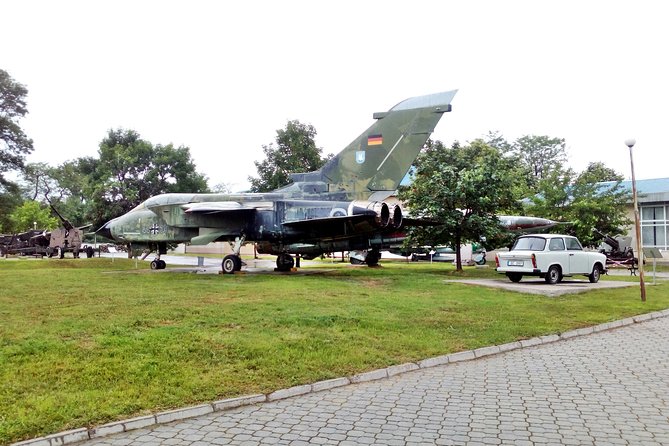
The museum also includes archival footage from the socialist era. This matters because moving images can show the period’s public language in action. Speeches, ceremonies, parades, or official presentations may communicate tone and atmosphere in a way a sculpture alone cannot.
The available information does not specify how long the footage runs or how it is presented. You should therefore see it as an additional part of the visit, not a guaranteed full film program. If the footage is available during your visit, give it time. It may help connect the still images in the grounds with the larger political culture that produced them.
This mix of sculpture, political art, and archival material is stronger than a collection made up of statues alone. A sculpture shows the final public image. Archival footage can show how official images were used and repeated. Together, they can make the museum’s central idea easier to grasp.
How the e-guide changes the visit
A self-guided format is useful when you prefer independence. You can arrive during the published hours, load the e-guide on your device, and move through the collection without a scheduled group. That makes the experience easy to fit around other plans in Sofia.
I also like the control over timing. Some visitors want a quick look at the main sculptures. Others want to read, compare works, and think about the political setting. The one to three hour estimate gives you enough room for either approach.
There is a tradeoff. A live guide can answer questions, adjust explanations, and point out connections as they come up. Here, the value depends on the written material you receive and on your own willingness to examine the art closely.
The guide is described as personalized and usable on all your devices, but the supplied information does not name an individual guide. Do not expect a live person waiting at the meeting point. This is an independent museum visit supported by digital information.
If you want the best result, read the e-guide before entering, if access allows it. That can give you a framework for the collection instead of leaving you to read everything while standing outdoors. You can then use the visit to test the guide’s ideas against the actual sculptures.
The real cost: $8.33 plus admission
The advertised price is $8.33 per person, but that does not cover entry to the museum. You pay the admission fee on the spot. One supplied review gives a useful price comparison: the guide cost about €7.20, while museum admission was about €3.
Prices can change, and the listing gives no official current admission amount beyond that review, so treat the €3 figure as a past reference rather than a guarantee. The important point is that your total cost is higher than the headline price.
That makes this experience a question of guide value. If the e-guide gives clear background on the sculptures, political context, and archival material, the extra cost may be reasonable for a visitor who wants more than a casual walk. If it is only a very short PDF, buying the museum ticket directly and exploring independently may be the better bargain.
I would not book this mainly to save money. The museum itself is the attraction, while the paid element is the digital information. Before you commit, check what format you will receive and how much material it contains if that information is available.
The average booking point is 16 days ahead, which suggests that some people plan this visit as part of a Sofia itinerary. You do not need to copy that timing. The museum has regular hours, and the cancellation policy allows a full refund if you cancel at least 24 hours before the start time. Changes or cancellations inside that window are not accepted for a refund.
Who will get the most from this visit
I would recommend the museum to you if you enjoy political history, public art, or twentieth-century Europe. It is also a good choice if you want a quiet, independent stop and do not need a live guide to keep the visit moving.
The visit suits:
- History-focused visitors who want insight into Bulgaria’s socialist period.
- Art lovers interested in socialist realism and political sculpture.
- Independent sightseers who prefer choosing their own arrival time and pace.
- Repeat visitors to Sofia looking for a subject beyond the city’s most famous monuments.
- Short-stay visitors who can spare one to three hours for a focused museum stop.
I would be cautious if you expect a long guided lecture, a named expert, or a large amount of written interpretation. The available information does not promise those things, and the short-PDF complaint raises a fair concern.
Most people can participate, and the group limit is 15. In practice, that maximum matters less than it would on a conventional guided tour because the experience is self-guided. Still, a smaller crowd could make it easier to study the works at your own pace.
A simple way to plan your visit
Allow at least one hour if you want more than a quick walk through the grounds. Two hours gives you a more comfortable pace for the sculptures, the indoor material, and any archival footage available during your visit.
Before leaving, confirm three things:
- The day is Tuesday through Sunday.
- Your arrival falls between 10:00 a.m. and 5:30 p.m.
- You have a device ready for the e-guide and money for admission.
At the museum, begin with a broad walk around the sculpture grounds. This first pass helps you see the collection as a whole. Then return to the works that best express the themes of power, labor, national identity, and public duty.
Use the e-guide as a tool, not as a substitute for looking. Read the background, then spend time with the actual sculpture. Notice the pose, scale, facial expression, clothing, and relationship between the figure and the open space.
The visit ends back at the meeting point, so you do not need to arrange a separate return location. Since the museum is one stop, it is easy to combine with other Sofia plans, although the supplied information does not provide transport details or estimated travel time from other parts of the city.
Should you book the Museum of Socialist Art tour?
Book it if you want a flexible introduction to Bulgaria’s socialist past and you value the chance to examine more than 70 sculptures at your own speed. The collection, outdoor grounds, political themes, and archival footage give the visit real substance.
Think twice if you are mainly buying the e-guide for detailed interpretation. The admission fee is extra, and the report of a two-and-a-half-page PDF is a serious warning about value. If you choose to go, compare the digital guide’s cost with the museum’s direct admission price and keep your expectations modest.
My call: the museum visit is worth your time, especially for history and art fans. The paid self-guided package is worth booking only if the e-guide contains enough material to justify its separate cost.
FAQ
Where does the self-guided tour start?
It starts at the Museum of Socialist Art, g.k. Iztok, ul. Lachezar Stanchev 7, 1756 Sofia, Bulgaria.
Where does the activity end?
The activity ends back at the meeting point, at the Museum of Socialist Art.
What are the museum’s opening hours?
The museum is open Tuesday through Sunday from 10:00 a.m. to 5:30 p.m.
Is the museum admission included?
No. The entrance fee is not included, and you pay it at the museum.
How long does the visit take?
The approximate duration is one to three hours.
What does the self-guided package include?
It includes a personalized e-guide with information that you can use at your own pace and during your chosen visiting time. The guide can be loaded onto all your devices.
Can I cancel for a full refund?
Yes. You can cancel at least 24 hours before the experience start time for a full refund. Cancellations or changes made less than 24 hours before the start time are not accepted for a refund.
More Self-Guided Tours in Sofia
- Sofia: City Monuments Guided Walking Tour with Audio Guide
★ 4.5 · 825 reviews - Rila Monastery and 7 Rila Lakes Self-Guided Shared Trip from Sofia
★ 5.0 · 280 reviews - Sofia: Rila Monastery & Boyana Church – Audio guided tour
★ 4.6 · 91 reviews - From Sofia: Plovdiv with audio guide + free pick-up
★ 4.9 · 48 reviews
Recently added around Sofia
- Veliko Tarnovo & Arbanasi Full day tour★ 5.0 · 5 reviews
- Private Winter Day Trip to the Rila Mountain★ 4.5 · 3 reviews
- Private transfer from Sofia to Plovdiv or vice versa★ 5.0 · 8 reviews
- Zemen Monastery, Boyana Church and National History Museum Tour★ 5.0 · 2 reviews
- Sofia Hidden Gems: Small-Group Walking Tour with Tram Ride★ 5.0 · 7 reviews
- Catacomb Tour in Sofia guided by a Local★ 4.5 · 3 reviews
- Tour to Koprivshtitsa and the Buzludzha monument incl the Seuthes Thracian Tomb★ 3.5 · 3 reviews
- From Sofia: The gorges of Trun and Dragovski stone trail★ 5.0 · 6 reviews
Communist History Tours, compared.
Museum of Socialist Art and Buzludzha Monument Tour
Read our review →
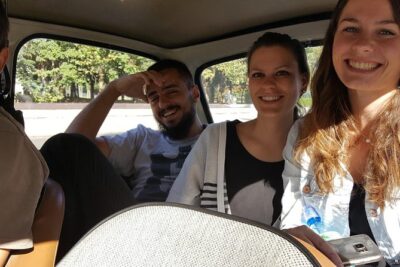
Sofia Communist History 2-Hour Tour in a Classic Trabant
Read our review →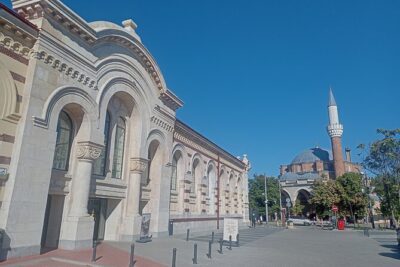
Sofia Food & Tasting Tour with Communist-Era Tram Ride
Read our review →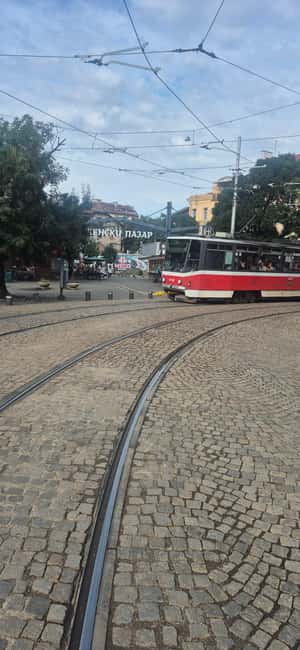
5-Stop Food & Culture Tour by Communist-Era Tram
Read our review →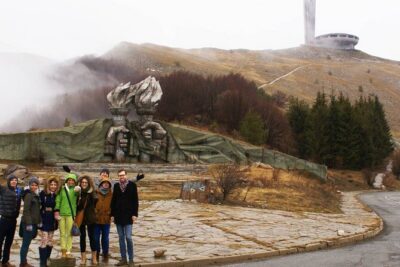
Buzludzha Monument and The Rose Valley Day Tour From Sofia 13 hrs
Read our review →Browse the lists this tour appears in