
Review · THRACIAN & ROMAN HERITAGE
Plovdiv: Perperikon, Haskovo and Thracian Tomb Full-Day Trip
Perperikon rewards the curious. This full-day trip takes you from Plovdiv into Bulgaria’s East Rhodope Mountains, where Thracian sanctuaries, medieval ruins, Ottoman-era history, and modern Haskovo fit into one long but worthwhile day. I like the unusual mix of sites, and I like that a guide helps make sense of Perperikon, where signs are still limited. The main drawback is the demanding walk up to the archaeological site, so good shoes and water matter.
I also like the small-group format, limited to eight people, which allows room for questions and sometimes becomes a private tour if nobody else books. Guides such as Ivo and Daniel have been praised for their strong command of Bulgarian and Balkan history, but the day is still ten hours long, with substantial driving between stops.
In This Review
- Key details to know before booking
- Why this East Rhodope day trip is worth your time
- Climbing through the stones of Perperikon
- Haskovo, lunch, and the enormous Virgin Mary statue
- The unusual mosque and church at Uzunzhovo
- The painted chambers of Alexandrovo
- How the ten-hour schedule feels
- The guide can shape the entire experience
- Is $104 a fair price?
- Who should book this tour?
- FAQ
- What time does the tour begin?
- How long does the experience last?
- What language is the tour conducted in?
- How many people can join the group?
- Is lunch included?
- What is included in the price?
- Can I cancel the booking?
- Should you book the Perperikon and Haskovo tour?
Key details to know before booking
- Perperikon is the day’s main event: Explore a Thracian sanctuary, palace complex, and fortress high in the Rhodope Mountains.
- The route covers several eras: You move from ancient Thrace to the medieval period, Ottoman history, Bulgarian religious life, and modern Haskovo.
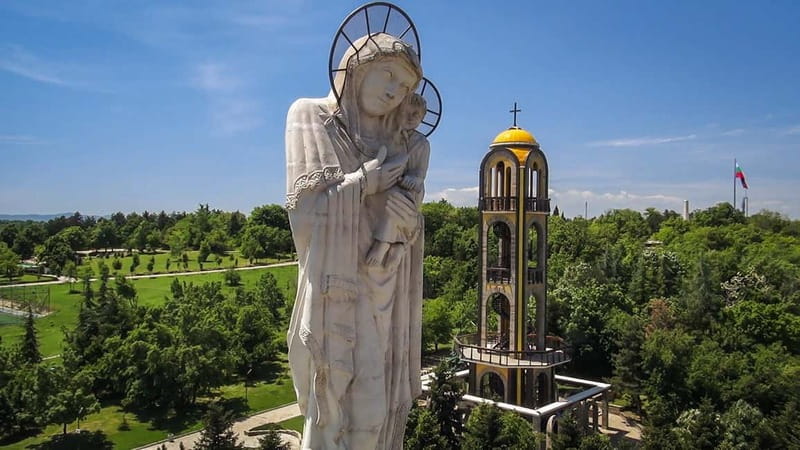
- Haskovo has a record-breaking monument: See the huge Virgin Mary and Infant Jesus statue, certified by Guinness World Records as the tallest of its kind.
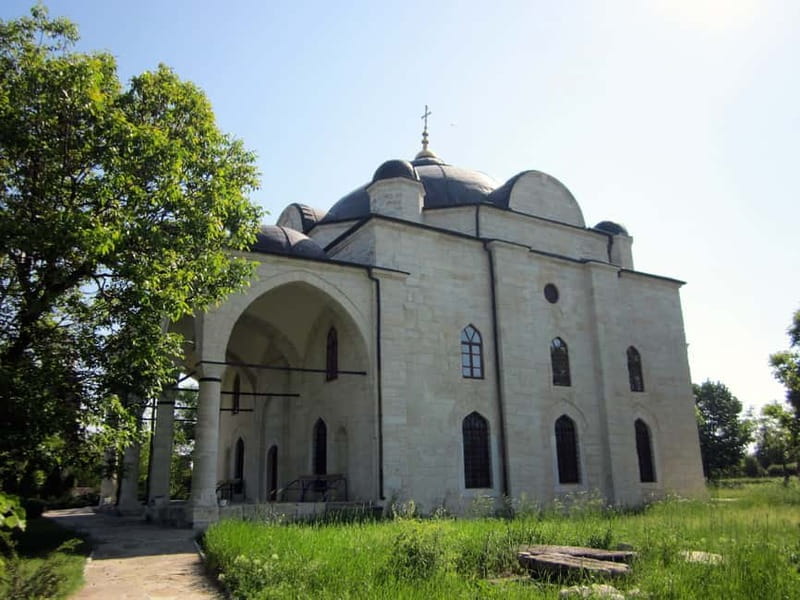
- Uzunzhovo offers a rare religious conversion story: An Ottoman mosque was turned into an Orthodox Christian church, with part of its old caravanserai still visible.
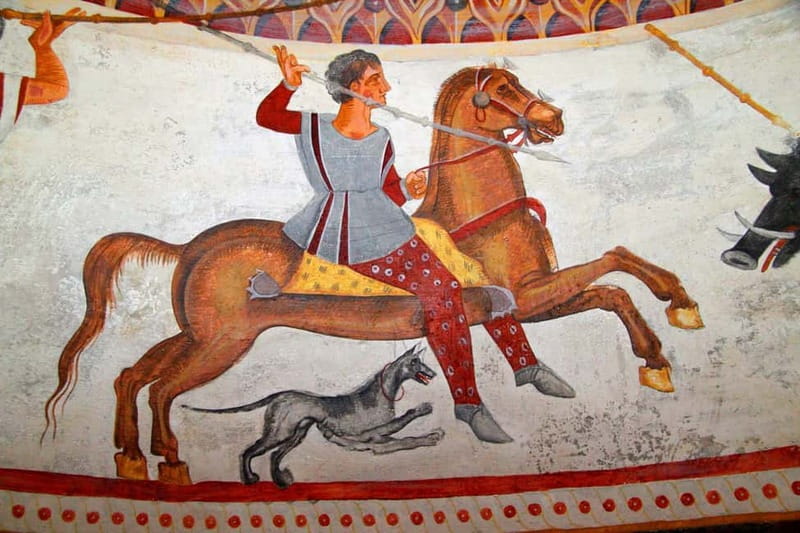
- Alexandrovo preserves Thracian art: The tomb’s wall paintings show daily life and religious ceremonies from around the 3rd or 2nd century BC.
- The price includes the essentials: At $104 per person, you get transport, hotel pickup and drop-off, admission fees, and an English-speaking guide, but not lunch.
Why this East Rhodope day trip is worth your time
Plovdiv is one of Bulgaria’s best bases for ancient sites, but the most memorable places are not all close to the city. Perperikon and Alexandrovo require a longer outing, and arranging transport between them on your own would be awkward. This tour handles the route in a single day, with pickup from your Plovdiv hotel or accommodation at 8:00 a.m.
I see the tour’s greatest strength in its range. You are not spending ten hours looking at similar ruins. Instead, you get a high mountain archaeological site, a city stop, a giant religious monument, a converted mosque, and a decorated Thracian tomb. The result is a useful introduction to the eastern part of the Rhodope region.
The day is best for you if ancient history interests you more than a relaxed schedule. It also suits anyone who wants to see a lesser-visited part of Bulgaria without renting a car. The drive itself adds to the experience, with mountain scenery along the route, but you should expect a full day rather than a quick excursion.
More Day Trips in Plovdiv
- Plovdiv: Valley of the Thracian Kings Guided Day Trip
★ 4.9 · 25 reviews - Day trip to The Marvelous Bridges and the unique Rhodope cuisine
★ 5.0 · 15 reviews - From Sofia: Plovdiv and Rila Monastery tour in one day
★ 3.5 · 13 reviews
Climbing through the stones of Perperikon
Perperikon is the clear highlight for many people on this route, and it is easy to see why. The site spreads across a rocky height and includes a palace complex, sanctuary, fortress, stone passages, courtyards, and large carved structures. Its use stretches from the Thracian period, roughly the 5th century BC to the 5th century AD, into the medieval era.
The Thracians used Perperikon as a political, economic, and religious center. The sanctuary is linked with rituals and prophecy, while the later Byzantine presence gave the place a military role. You can see how the same high position served both spiritual and defensive purposes over many centuries.
I would not treat this as an easy stroll among tidy ruins. The site is high up, and one booking described it plainly as unsuitable for anyone unprepared for uphill walking. Wear firm shoes, bring water, and consider a walking stick if you normally use one on uneven ground. The walk is part of the reward, but it can be tiring, especially in warm weather.
A guide matters here. The archaeological area does not yet have many explanatory signs, so the stones can seem confusing without help. A good guide points out the purpose of different structures and explains how archaeologists connect the ruins with Thracian and medieval life.
Ivo has led several departures and is described as a trained historian with a relaxed manner and a wide command of Balkan culture. Daniel has also guided the route and handled detailed questions well. The exact guide depends on the departure, but the company’s strongest asset appears to be its human element. You can ask about a carved stone, a religious practice, or a broader question about Bulgaria, rather than simply walking past unnamed walls.
Recent archaeological work may also change what you see. One departure coincided with the discovery of a new tomb at Perperikon, a reminder that this is an active excavation site rather than a finished museum display. Do not expect every corner to be fully explained or restored. That unfinished quality is part of its appeal, though it requires imagination.
Haskovo, lunch, and the enormous Virgin Mary statue
After Perperikon, the route continues toward Haskovo, one of the larger regional cities in the area. The planned lunch stop is in the city center, and lunch is not included in the $104 price. That arrangement gives you some freedom, but you should budget separately for the meal.
One particularly strong account of the day praised the Haskovo lunch as one of the best meals that person had eaten in Bulgaria. That does not guarantee a specific restaurant or menu, since the information can vary by departure, but it suggests the stop is more than a rushed sandwich break. Ask your guide what is available that day.
The city’s most striking sight is the monument to the Virgin Mary and the Infant Jesus. It has been certified by Guinness World Records as the tallest statue of the Virgin Mary with the Infant Jesus in the world. The Virgin Mary is Haskovo’s traditional patron saint, giving the monument local meaning beyond its record.
The statue is a quick but memorable contrast with the ancient sites. Perperikon asks you to picture a vanished Thracian center; Haskovo gives you a very visible modern symbol of Bulgarian Christian identity. You also get a short break from ruins and mountain roads before the final historical stop.
Haskovo has another religious landmark, the Church of the Holy Mother of God. Built between 1832 and 1837 during Bulgaria’s National Revival period, it was the first modern-era cathedral built in the city. The itinerary emphasizes the giant statue, but this church adds useful context to Haskovo’s religious past.
The unusual mosque and church at Uzunzhovo
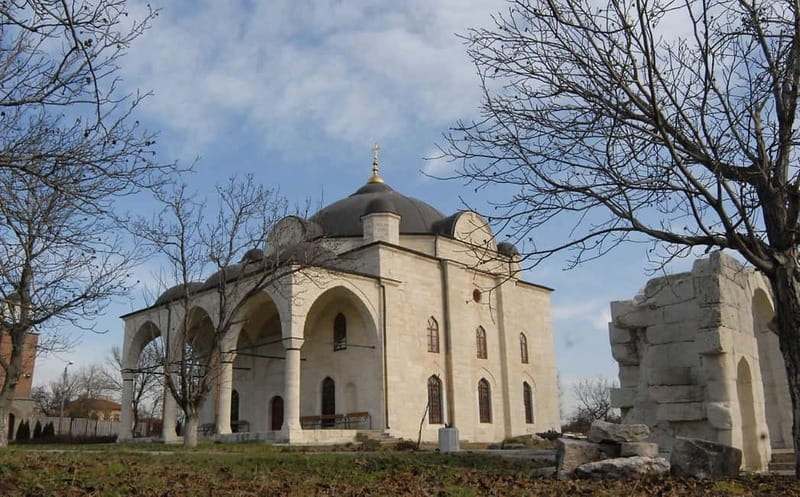
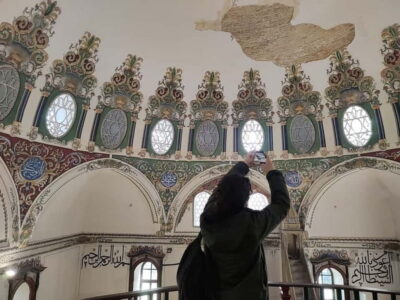
Uzunzhovo offers one of the most unusual stops because the building changed religious purpose over time. The mosque once served the large Uzunzhovo fair, one of the biggest commercial fairs in the Ottoman Empire. At the beginning of the 20th century, it was converted into an Orthodox Christian church.
Part of the old caravanserai remains visible beside the church. A caravanserai was a place where merchants and their animals could rest during long journeys, so this small stop opens a window onto trade as well as faith. You are looking at a building shaped by the movement of merchants, imperial rule, and later Bulgarian religious life.
I like this visit because it avoids presenting Bulgaria’s past as a single, simple story. Ancient Thracian culture, Byzantine defense, Ottoman commerce, and Bulgarian Christianity all appear on the same route. Uzunzhovo may not take as much time as Perperikon, but it gives the day a needed human and social dimension.
The drawback is that the stop’s exact interpretation depends heavily on the guide. Without explanation, you may see an attractive old church and a few remaining structures. With context, you understand why the building is unusual and why the surrounding caravanserai mattered.
More Thracian & Roman Sites in Plovdiv
- Kazanlak-Rose Valley-Valley of the Thracian Kings – private tour from Plovdiv
★ 5.0 · 15 reviews - Plovdiv Walking Tour To Old Town And Ancient Roman Landmarks
★ 5.0 · 13 reviews - Roman Plovdiv, Self-Guided Tour and Urban Quest Game
★ 5.0 · 6 reviews - A Day trip to the Thracian Kings, The Valley of Roses & Buzludzha
★ 5.0 · 6 reviews
The painted chambers of Alexandrovo
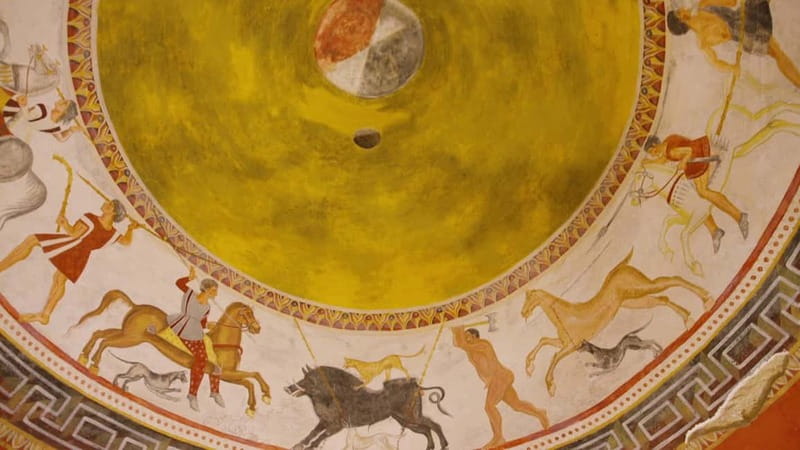
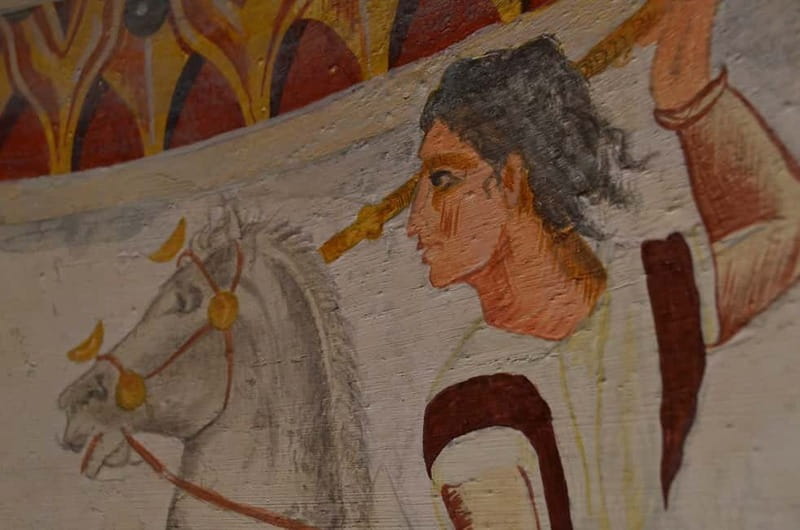
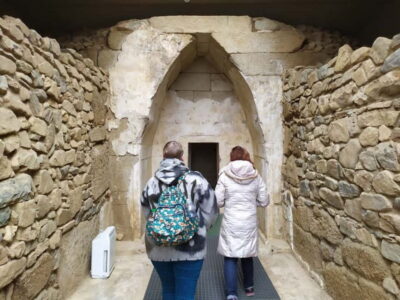
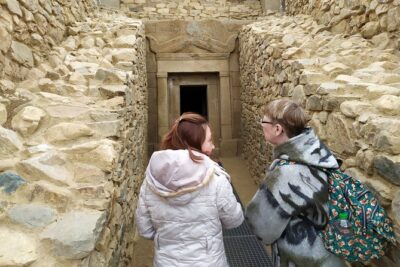
The final major stop is the Thracian Tomb of Alexandrovo, near the village of Alexandrovo in Haskovo Province. Found in 2000, the tomb dates to the Hellenistic period, around the 3rd or 2nd century BC. It is cut into rock and contains a central chamber with two side chambers.
The tomb is especially important for its frescoes. The paintings show scenes from daily life and religious ceremonies, offering clues about Thracian customs, beliefs, clothing, and social activity. These are not just decorative marks. They are some of the finest surviving examples of Thracian art and give the ancient people behind the ruins a more recognizable human presence.
Alexandrovo makes a strong companion to Perperikon. At Perperikon, you see the scale of a mountain sanctuary and fortified center. At Alexandrovo, you encounter a smaller, more intimate space where painted scenes preserve details that stone alone cannot provide.
You should expect the tomb to be a serious historical stop rather than a theatrical attraction. Its value lies in the art and the chance to examine an ancient burial monument with a guide who can explain what the images may mean. The visit also comes late in a long day, so you may feel tired by the time you reach it. Still, it is an excellent final stop because it adds detail and color to the larger story of Thrace.
How the ten-hour schedule feels
The schedule begins at 8:00 a.m. with hotel or accommodation pickup in Plovdiv and ends with a return to the same accommodation. The day lasts about ten hours, so you should keep your evening fairly open. A late dinner plan or a fixed evening performance could be risky.
The small group is limited to eight participants. That is a useful size for a route with several historical explanations, since you can usually hear the guide and ask questions without speaking to a crowd. If no one else books, the outing can become a private tour, as happened on one departure.
Transport is included, along with all entrance fees and taxes. That is important here because the sites are spread across the region and are not connected by a simple tourist bus network. You are paying for more than admission: you are also buying the convenience of a full route from Plovdiv and back.
The driving time is a tradeoff. You will spend part of the day in the vehicle, but the road links places that would otherwise be hard to combine. Mountain views help, and the journey gives you a look at a less familiar part of Bulgaria rather than keeping you in the country’s main city centers.
The guide can shape the entire experience
This tour works best when you want interpretation, not just transportation. The strongest guide accounts describe long, detailed conversations about Bulgarian history, Balkan culture, archaeology, and daily life. Ivo, in particular, is known for explaining even small stones and structures along the route, while also adjusting the amount of information to suit the group.
That last point matters. Some people want a full university-style history lesson. Others want the main facts, a few memorable stories, and time to look around quietly. The available information suggests that the guides can adapt, but you should still say what level of detail you prefer.
English is the stated tour language. The guide is professional, and the driving has been praised as careful. Because so much of the value comes from explanation, I would choose this trip over an unguided visit if your interest is historical rather than purely scenic.
Is $104 a fair price?
At $104 per person, the tour is not the cheapest way to spend a day in Bulgaria. It is, however, a reasonable price for a ten-hour small-group outing that includes pickup and drop-off from Plovdiv, a professional English-speaking guide, entrance fees, and taxes.
Lunch is extra, so add that to your budget. Still, you avoid the cost and effort of arranging a rental car, fuel, parking, navigation, and separate admission payments. More importantly, Perperikon and Alexandrovo make much more sense with someone who can explain what you are seeing.
The value is strongest for solo visitors, couples, and small groups who want a focused history day without driving. If you already have a car and enjoy researching archaeological sites in advance, you may prefer to travel independently. But you will need to manage the long route yourself, and Perperikon’s limited signage makes a guide especially useful.
Who should book this tour?
I would recommend it to adults who enjoy archaeology, ancient religions, and the complicated layers of Balkan history. It is also a good choice if you have already seen Plovdiv’s central sights and want to spend a day beyond the usual city circuit.
You should be comfortable with a long schedule and an uphill walk. Perperikon is not a polished, flat attraction, and the route includes several hours of transport. Families with older children interested in history may enjoy it, but younger children could find the ruins and driving tiring.
The tour is less suitable if you want a slow day, extended time in Haskovo, or a food-focused outing. Lunch is a practical break, not the main purpose of the trip. The real rewards are the archaeological sites, the guide’s explanation, and the chance to see a part of Bulgaria that many short city visits miss.
FAQ
What time does the tour begin?
Pickup begins at 8:00 a.m. from your hotel or accommodation in Plovdiv.
How long does the experience last?
The tour lasts approximately 10 hours, including the return drive to Plovdiv.
What language is the tour conducted in?
The live tour guide speaks English.
How many people can join the group?
The tour is limited to 8 participants. If no one else books, it may operate as a private tour.
Is lunch included?
No. Lunch is not included, so you should pay for your meal separately during the stop in Haskovo.
What is included in the price?
The $104 price includes hotel pickup and drop-off, a professional guide, all fees, and all taxes.
Can I cancel the booking?
You can cancel up to 24 hours in advance for a full refund. You can also reserve now and pay later.
Should you book the Perperikon and Haskovo tour?
Book it if you want a full, history-heavy day with expert explanation and several unusual stops. Perperikon is the main reason to go, but Alexandrovo’s painted tomb and Uzunzhovo’s converted mosque make the route much more varied than a simple ruin visit.
Skip it if you dislike long drives or uneven uphill paths. For everyone else, the combination of small-group transport, strong guides such as Ivo and Daniel, included admission fees, and access to the East Rhodope makes $104 a fair spend. Bring sturdy shoes, water, curiosity, and enough room in your evening to recover from a very full Bulgarian day.
Recently added around Plovdiv
- Veliko Tarnovo – Arbanassi – Shipka Memorial Church – private tour from Plovdiv★ 4.5 · 6 reviews
- Tour from Plovdiv to Bachkovo,Asen Fortress and Wonderful Bridges★ 5.0 · 4 reviews
- Thracian Valley wine tasting – private day tour from Plovdiv★ 5.0 · 4 reviews
- Roman Plovdiv, Self-Guided Tour and Urban Quest Game★ 5.0 · 6 reviews
- Transfer Plovdiv to Sofia airport/city with a car 3+1★ 5.0 · 3 reviews
- Plovdiv Roman Sights Self-Guided★ 4.5 · 3 reviews
- Plovdiv – Buzludzha and the Thracian kingdom valley★ 5.0 · 3 reviews
- Plovdiv Exquisite Wine Tasting★ 5.0 · 2 reviews
Thracian & Roman Heritage, compared.
Kazanlak-Rose Valley-Valley of the Thracian Kings – private tour from Plovdiv
Read our review →
Plovdiv Walking Tour To Old Town And Ancient Roman Landmarks
Read our review →

E-Motorcycle Tour in Old Rock Monastery and Old Roman Fortress
Read our review →Browse the lists this tour appears in