
Review · WALKING TOURS
Plovdiv: 2-Hour Sightseeing Walking Tour
Plovdiv rewards a good pair of walking shoes. I like the way this small-group tour joins Roman ruins, Bulgarian Revival houses, and the Three Hills in one compact route, and I like that it finishes on the city’s long pedestrian street, where cafes and shops give you time to feel Plovdiv’s easygoing mood. The main catch is that two hours can feel tight, especially if you want to enter museums or linger at each sight.
You meet in front of the Ramada Trimontium hotel and walk with an English-speaking guide in a group limited to 10 people. A guide named Monika has earned especially warm praise for being friendly and well informed, while one less positive account points to the importance of staying close to the group and speaking up if you cannot hear. The tour may run from two to two and a half hours, so plan a little breathing room afterward.
In This Review
- Key points at a glance
- Why this short Plovdiv walk works
- Meeting at Ramada Trimontium
- Up the Three Hills into the Old Town
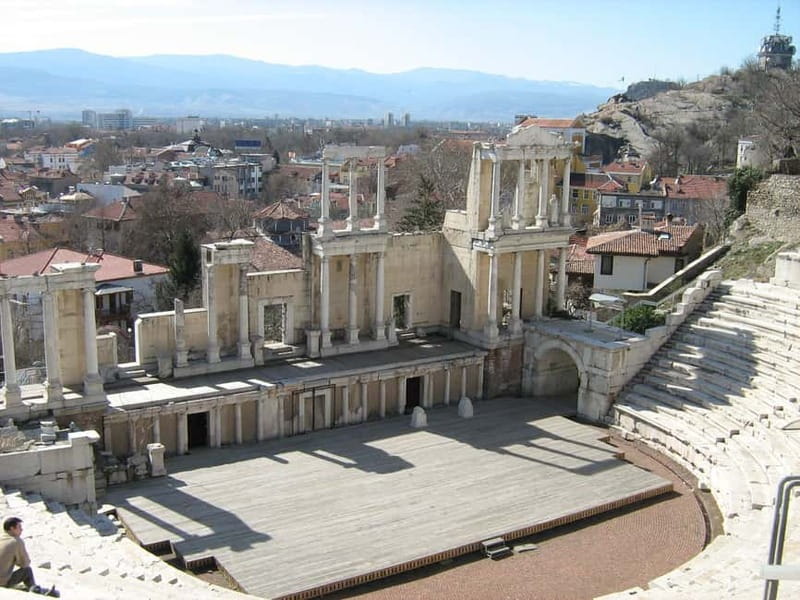
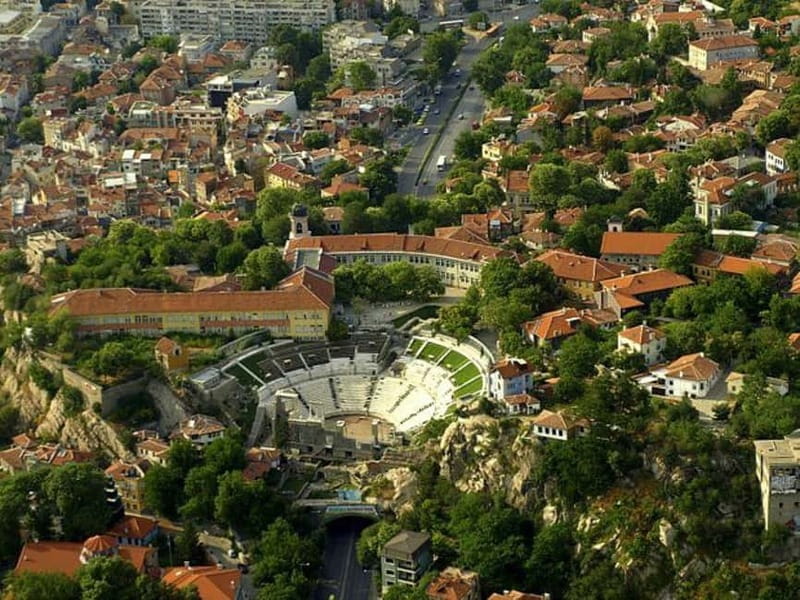
- The second-century Roman theatre
- Down to the Roman Stadium
- Djumaya Mosque and the city’s changing character
- Finishing on the long pedestrian street
- Is $70 a fair price?
- Who should book this walking tour?
- Final verdict: a strong first look at Plovdiv
- FAQ
- How long does the Plovdiv sightseeing tour last?
- Where does the tour begin?
- What language is the tour offered in?
- How large is the group?
- Does the tour include food?
- Can I cancel for a full refund?
Key points at a glance
- Three Hills setting: Walk through Plovdiv’s Old Town, an architectural and historical reserve built across the city’s Three Hills.
- Roman theatre visit: See the restored second-century theatre, still used for performances and festivals.
- Layered city history: Move from Bulgarian National Revival houses and churches to the Roman Stadium and fourteenth-century Djumaya Mosque.
- Europe’s longest pedestrian street: End along Plovdiv’s main commercial promenade, rebuilt extensively in 2014 and lined with cafes and shops.
- Small group format: With no more than 10 participants, the tour should feel more personal than a large coach outing.
- Good short-stay choice: The route covers Plovdiv’s headline sights in two hours, making it useful when your time in town is limited.
Why this short Plovdiv walk works
Plovdiv is a city where the past does not sit in one tidy museum district. Roman remains appear beside later religious buildings, and painted Bulgarian Revival houses climb the Old Town’s hills. This tour makes sense because it connects those pieces on foot instead of treating them as separate stops.
I particularly like the route’s contrast. You begin among narrow cobbled streets and traditional houses, then reach a Roman theatre with a broad view over the city. From there, the walk descends toward the Roman Stadium and Djumaya Mosque before opening onto the modern pedestrian center.
That variety gives you a useful first orientation. You see how Plovdiv’s ancient core, historic neighborhoods, and present-day shopping street fit together. You also avoid spending the whole visit on ruins alone, which can make a short city tour feel flat.
The group limit of 10 is another practical advantage. A small group makes it easier to ask questions and keep the guide within earshot. Still, do not assume every guide will handle the group in the same way. One account praised Monika’s friendly approach, while another described a guide who spoke too softly, walked ahead, and sometimes began explanations before everyone had gathered.
For that reason, I would stay near the guide from the start. If you cannot hear, say so at once. On a walking tour, a few missed sentences can quickly become a missed chapter of the city’s story.
More Walking Tours in Plovdiv
- Private city walking tour of Plovdiv
★ 5.0 · 65 reviews - Plovdiv: Guided Walking Tour
★ 4.3 · 41 reviews - Food Walk: Bulgarian Food and Culture Tour in Plovdiv
★ 5.0 · 35 reviews
Meeting at Ramada Trimontium
The starting point is in front of the Ramada Trimontium hotel. That gives you a clear place to begin, but you should still allow enough time to arrive before the scheduled departure. The activity does not include transportation, so this is a walking experience from the first minute.
The tour is offered in English with a live guide. You should expect commentary as you move through the city rather than a long indoor presentation. That style suits Plovdiv, where the streets, ruins, and views are part of the lesson.
The advertised duration is two hours, but the walk can last two and a half hours depending on the group. That extra half hour matters if you have a train, restaurant reservation, or museum visit planned immediately afterward. I would keep the rest of your schedule loose.
Food is not included. That is not a serious drawback because the route ends among cafes and shops, but it means you should not expect a snack stop built into the tour. Save your appetite for the pedestrian street, where you can choose your own pause after the guided walk.
Up the Three Hills into the Old Town
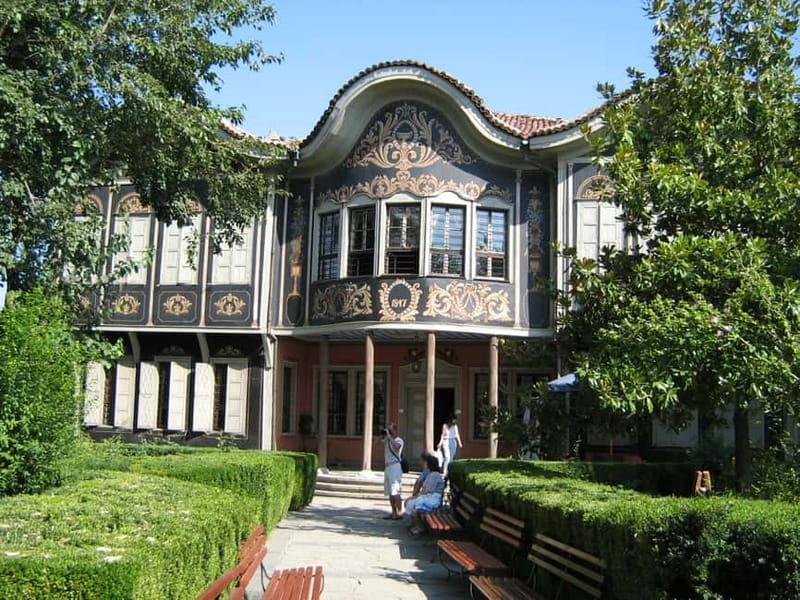
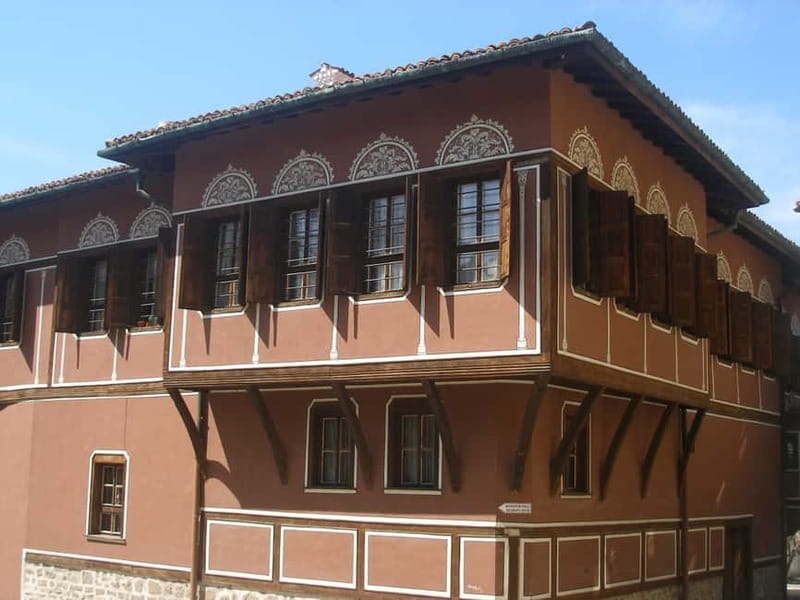
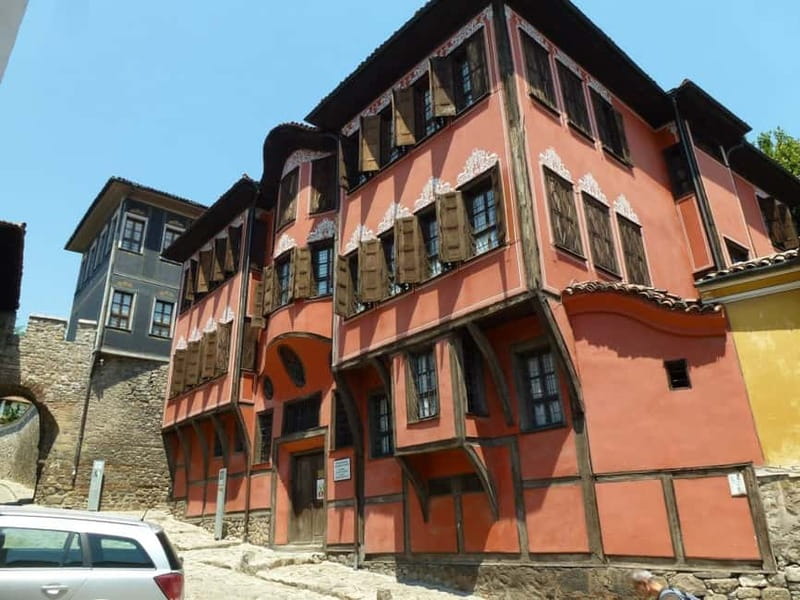
The Old Town is the tour’s most atmospheric section. Its narrow cobbled streets climb across the Three Hills, and the route brings you close to houses from Bulgaria’s National Revival period, along with older ruins and Bulgarian Renaissance churches.
The three-hill setting is more than a scenic backdrop. It explains why the walk has slopes, uneven paving, and changing views. You will not be covering a long distance in a straight line, but you will be walking over historic streets that can take more effort than a flat city promenade.
The traditional houses give this part of Plovdiv its strongest visual character. Their presence beside ancient remains helps you read the city as a place built in layers. One stop does not erase the next. Roman foundations, later churches, and Revival-era homes all occupy the same compact area.
I like this section for orientation as much as for beauty. A guide can point out how the Old Town relates to the lower commercial center, which is useful if you plan to return on your own. You also get a panoramic view from the hills, one of the tour’s best rewards for making the climb.
The route is not presented as a museum crawl. You are mainly seeing the exterior setting and hearing the story as you walk. If your main goal is to spend time inside historic houses or museums, two hours may not give you enough freedom. A previous booking included a complaint that the guide did not get the group to some indoor museums before closing, so you should treat this as a sightseeing walk first.
The second-century Roman theatre
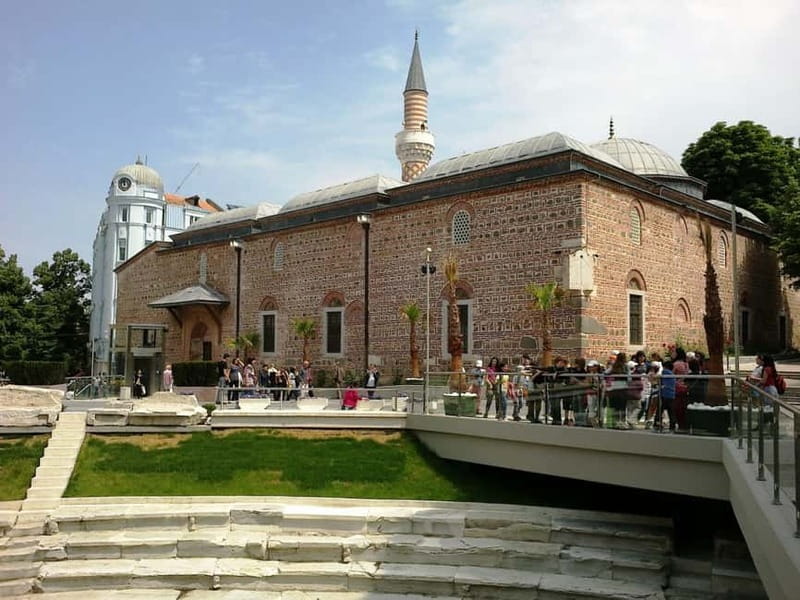
The Roman theatre is the tour’s headline ancient monument. Built in the second century, it has been restored and is still used for performances and festivals. That modern use gives the site a sense of purpose beyond its age.
The theatre also provides one of the clearest links between Plovdiv’s Roman past and its present life. You are not only looking at stones protected behind a barrier. The restored structure remains part of the city’s cultural calendar.
Its position on the Three Hills adds to the appeal. After walking through the Old Town, you reach a place where the ruins and the wider city view work together. This is one of the points where I would want the guide to pause and give a full explanation, rather than rush toward the next stop.
Because the tour is short, the time spent here may depend on the group and guide. If performances or festivals are taking place, the atmosphere could feel especially lively, though the tour information does not promise a performance or a special event. You are booking the chance to see the theatre and understand its place in Plovdiv, not a ticket to a show.
Elsewhere in Bulgaria, a very different sort of day:
- Plovdiv: Bachkovo Monastery, Asen Fortress, & Bridges Tour
★ 5.0 · 56 reviews - Wonderful Bridges-Bachkovo Monastery-Assen’s Fortress – day tour from Plovdiv
★ 5.0 · 32 reviews - Plovdiv guided walking tour
★ 5.0 · 31 reviews - Bachkovo Monastery & Asen’s Fortress – day tour from Plovdiv
★ 5.0 · 28 reviews
Down to the Roman Stadium
After the theatre and hilltop streets, the route continues downward to the partly uncovered Roman Stadium. The change in setting is useful: you leave the quieter Old Town and begin moving toward the city’s central pedestrian area.
The stadium is partly visible rather than presented as a fully open archaeological complex. Keep that in mind when setting expectations. You will see an important Roman remnant integrated into the modern city, but this is a short sightseeing stop, not an extended archaeological visit.
That compact presentation is also part of the charm. Plovdiv lets you encounter antiquity during an ordinary city walk. You can look at the remains, hear their context, and then continue into the active center without changing neighborhoods or taking transport.
I find this kind of stop especially helpful for a first visit. The guide can connect the theatre on the hill with the stadium below, giving you a clearer sense of the Roman city’s scale and location. The experience is strongest when you pay attention to how the ruins fit into the streets around them.
Djumaya Mosque and the city’s changing character
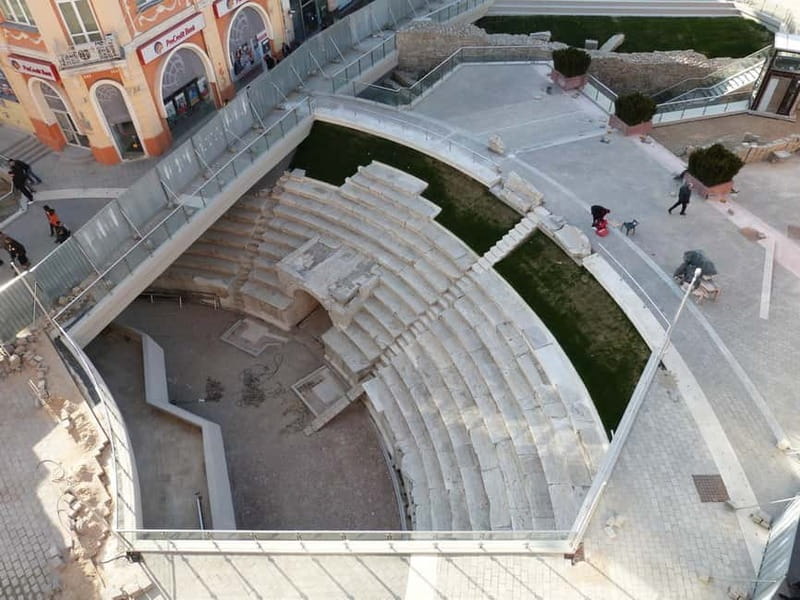
The walk also includes the fourteenth-century Djumaya Mosque. Its presence adds another historical layer to the route and keeps the tour from being only a Roman and Bulgarian Revival story.
The mosque appears after the Roman Stadium, so the sequence shows how different periods overlap in central Plovdiv. Ancient remains, a later religious building, and modern shops all sit within a short walk of one another.
The available information does not promise an interior visit, so I would plan to see Djumaya Mosque as part of the guided route rather than count on a separate indoor tour. That distinction matters if you want detailed architectural access. The guide’s explanation and the surrounding setting are the reliable parts of this stop.
This is also where the tour’s pace can become important. The guide needs to keep a group together while explaining several layers of history in a busy central area. Stay close and listen carefully, especially if the group spreads out.
Finishing on the long pedestrian street
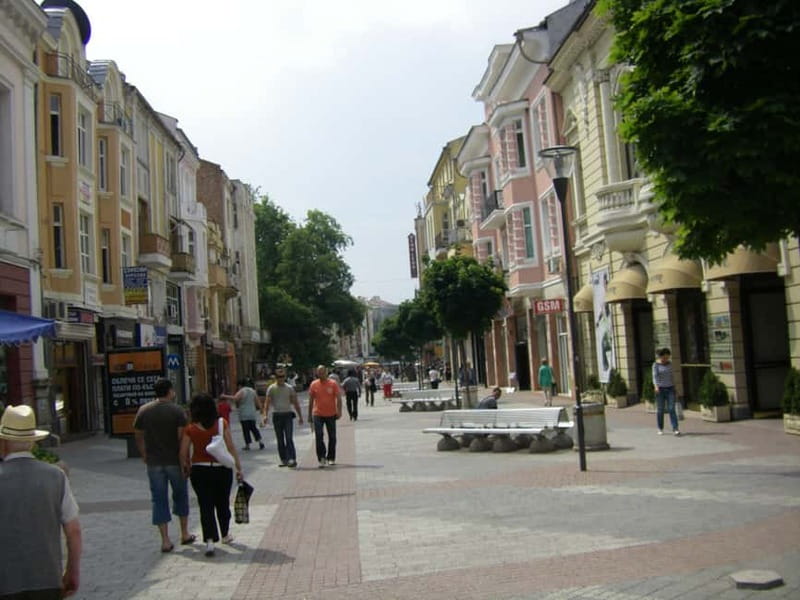
The final stretch is Plovdiv’s main pedestrian commercial street. After extensive reconstruction in 2014, it is described as the longest pedestrian street in Europe. It is lined with cafes and shops, making it a relaxed place to finish a history-heavy walk.
I like this ending because it lets you shift gears naturally. You begin with hills, cobbles, and ancient stones, then end where local life is more visible in everyday form. You can continue walking, stop for food at your own expense, or use the street as a base for further exploring.
The promenade also gives you practical value after the tour. You can return later for a slower stroll, browse the shops, or choose a cafe without needing to work out where the central area is. The tour leaves you in a useful part of town rather than sending you back to the starting point by vehicle.
Do not confuse the street’s length with the tour’s walking time. The experience only covers it as the final part of the route. You will not walk every section of the entire pedestrian area in two hours, and the tour does not include a meal or shopping time.
Is $70 a fair price?
At $70 per person, this is not the cheapest way to see Plovdiv. The value depends on what you want from a guide. You are paying for an English-speaking host, a small group of no more than 10 people, and a carefully connected route through the city’s major historic areas.
The price makes more sense if you have only a short stay or want a clear introduction before exploring alone. In two to two and a half hours, you cover the Old Town, Three Hills, Roman theatre, Roman Stadium, Djumaya Mosque, and main pedestrian street. Recreating that route without context is possible, but you would need to research the sites and work out the order yourself.
The value is weaker if you prefer to move slowly, enter museums, or spend a long time photographing each stop. A private guide or a longer historical tour would give you more time, but that is not what this booking promises.
The small group helps justify the cost. Ten people is still enough to create a group feel, but it is far more manageable than a large city tour. The guide can usually answer questions more easily, although the mixed feedback about speaking volume means the experience may depend on the individual guide assigned that day.
Who should book this walking tour?
I would recommend it to first-time visitors who want a quick introduction to Plovdiv’s main historic sights. It also suits anyone staying for only a day, since the route gives you a useful overview without taking up an entire morning or afternoon.
It is a good fit if you enjoy walking through old neighborhoods, listening to city stories, and seeing major sights from the outside. The route has enough variety to keep the two hours moving: hill streets, a theatre, Roman remains, a mosque, and a commercial promenade.
You should think twice if uneven cobbles and hills are a concern. The walk takes place in the Old Town and across the Three Hills, so it is not a flat city-center stroll. The supplied information does not provide detailed accessibility guidance, so ask the provider before booking if that is important for you.
I would also be cautious if you need guaranteed indoor access. The tour focuses on sightseeing, and the information does not promise entry to museums or a performance at the Roman theatre. You will get the most from it if you see the guided walk as an orientation, then return to the places you want to study in greater detail.
Final verdict: a strong first look at Plovdiv
I would book this tour if I wanted to get my bearings quickly and understand why Plovdiv feels so layered. The route packs a lot into a short time, and the contrast between the Three Hills, Roman theatre, Djumaya Mosque, and pedestrian street gives you a well-shaped introduction.
The main caution is pace. Two hours is enough for an overview, not for long museum visits or unhurried exploration. Stay near the guide, speak up if you cannot hear, and leave extra time afterward in case the walk runs to two and a half hours.
For a short stay, the $70 price can be reasonable because you receive a small-group English tour through the city’s most important areas. For a slower, more detailed historical visit, use this as your starting point and keep exploring Plovdiv on your own afterward.
FAQ
How long does the Plovdiv sightseeing tour last?
The advertised duration is two hours, but the walk may take between two and two and a half hours depending on the group.
Where does the tour begin?
The meeting point is in front of the Ramada Trimontium hotel.
What language is the tour offered in?
The tour is led in English by a live English-speaking guide.
How large is the group?
The group is limited to 10 participants.
Does the tour include food?
No. Food is not included in the tour price.
Can I cancel for a full refund?
Yes. You can cancel up to 24 hours in advance for a full refund.
More 2-Hour Experiences in Plovdiv
- Sofia Highlights 2 Hour Sightseeing Walking Tour
★ 5.0 · 442 reviews - Sofia Communist History 2-Hour Tour in a Classic Trabant
★ 5.0 · 45 reviews - Borovets: 2-Hour Cross Country Ski Taster with Instructor
★ 4.7 · 6 reviews - Private 2 Hours Sofia Street Art and Graffiti Tour
★ 5.0 · 3 reviews
Recently added around Plovdiv
- Veliko Tarnovo – Arbanassi – Shipka Memorial Church – private tour from Plovdiv★ 4.5 · 6 reviews
- Tour from Plovdiv to Bachkovo,Asen Fortress and Wonderful Bridges★ 5.0 · 4 reviews
- Transfer Plovdiv to Sofia airport/city with a car 3+1★ 5.0 · 3 reviews
- Thracian Valley wine tasting – private day tour from Plovdiv★ 5.0 · 4 reviews
- Roman Plovdiv, Self-Guided Tour and Urban Quest Game★ 5.0 · 6 reviews
- Plovdiv Roman Sights Self-Guided★ 4.5 · 3 reviews
- Plovdiv – Buzludzha and the Thracian kingdom valley★ 5.0 · 3 reviews
- Plovdiv Exquisite Wine Tasting★ 5.0 · 2 reviews
Walking Tours, compared.
City Monuments Guided Walking Tour with Audio Guide
Read our review →
Sofia Highlights 2 Hour Sightseeing Walking Tour
Read our review →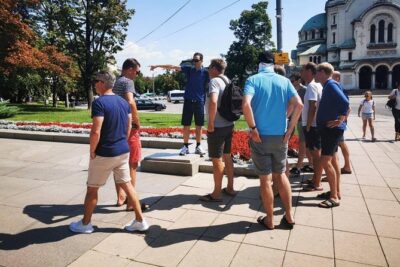
Seven Rila Lakes Snowshoe Walk & Thermal Spring Pools
Read our review →Browse the lists this tour appears in