
Review · CITY TOURS
Sofia: Full-Day City Tour including UNESCO Boyana Church
Sofia rewards curious walkers. This seven-hour tour brings together the National History Museum, UNESCO-listed Boyana Church, and the city center in one well-planned day. I especially like the mix of ancient, medieval, and communist-era sights, and I like that transport is included for the outlying sites. The main drawback is the pace: seven hours with museum visits and a city walk may feel tiring, especially if you have mobility limits.
The tour also has a human touch. Guides named Billie and Chris have been singled out for adding useful context about Bulgarian history, geography, and culture. You should bring an ID card or passport, wear solid walking shoes, and expect no meal break included in the price.
In This Review
- Key points before you book
- Why this tour gives Sofia useful shape
- The National History Museum in Todor Zhivkov’s former residence
- Boyana Church and its remarkable medieval frescoes
- Sofia’s center, where Roman ruins meet modern government
- National Palace of Culture and Sofia’s everyday streets
- What the $113 price really covers
- Who will get the most from this day
- Should you book the Sofia full-day tour?
- FAQ
- How long does the Sofia city tour last?
- What language is the tour conducted in?
- Where is the meeting point?
- Is transportation included?
- Are entrance fees included?
- Does the tour include food or drinks?
- What should I bring?
- Is the tour suitable for people with mobility impairments?
- Can I cancel the tour for a refund?
Key points before you book
- Boyana Church is the artistic highlight: Its medieval frescoes help explain why this small church has worldwide importance.
- The National History Museum fills in the big picture: You see Bulgaria’s story presented inside the former residence of communist ruler Todor Zhivkov.
- Sofia’s center is compact and packed with contrasts: Roman ruins, Orthodox churches, government buildings, shopping streets, and communist architecture all sit within the walking route.
- A modern air-conditioned vehicle handles the transfers: This matters because Boyana Church and the museum are outside the central walking area.
- The guide makes or breaks the day: Billie and Chris are named as especially strong guides, with praise for clear historical and cultural explanations.
- The $113 price covers the main costs: Transport, an English-speaking guide, and entrance fees are included, but food, drinks, and personal spending are not.
Why this tour gives Sofia useful shape
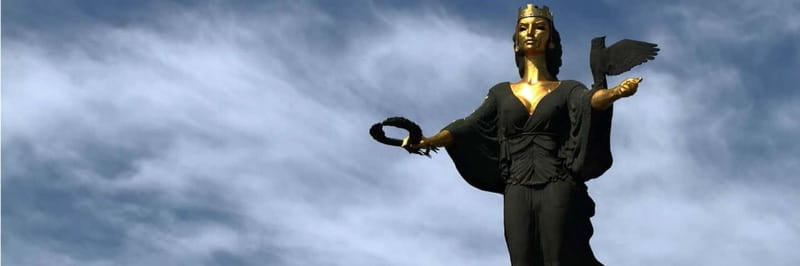
Sofia can seem like several cities placed on top of one another. Thracian Serdi founded the settlement, Rome made it the capital of the province of Inner Dacia in 29 A.D., and later Byzantine, Bulgarian, and Ottoman rulers left their mark. Modern Sofia became Bulgaria’s capital in 1879, when the city had only about 12,000 people.
That long timeline is the reason I like this tour. You are not simply driven from one monument to the next. The day moves from national history to medieval art, then into the capital’s streets, where the changes in power and style become easy to see.
The afternoon walk is especially useful for first-time visitors. Sofia has many important sights close together, but the meaning of each place is not always clear when you pass it alone. A guide can connect the churches, state buildings, Roman remains, and communist-era landmarks into one readable story.
This is not a food tour, a nightlife tour, or a slow photography outing. It is a solid orientation day for you if you want the major historical sights explained by an English-speaking guide.
A few more Sofia trips worth comparing
- From Sofia: The Seven Rila Lakes Full-Day Hiking Tour
★ 4.7 · 923 reviews - Rila Monastery and Boyana Church Full-Day Tour
★ 4.5 · 918 reviews - From Sofia: Full-Day Tour to Rila Monastery with Options
★ 4.5 · 479 reviews
The National History Museum in Todor Zhivkov’s former residence
The day begins with a short transfer to the National History Museum on the outskirts of Sofia. The museum occupies the former residence of Todor Zhivkov, the communist ruler of Bulgaria, which gives the visit an immediate layer of political history before you even reach the displays.
Inside, the guided visit focuses on key dates, facts, and important objects from Bulgaria’s past. That structure is useful because the country’s story covers a very long period, and an unguided visit could feel scattered. Instead, you get a framework for understanding the places you will see later in the city.
The museum helps set up the rest of the tour in two ways. First, it introduces the civilizations and political changes that shaped Bulgaria. Second, its location in a former communist leader’s residence places national history beside the more recent memory of the 20th century.
I appreciate that the tour does not treat the museum as a quick stop for a few photographs. The guide gives the collection a clear focus, drawing attention to dates and exhibits rather than leaving you to read every label on your own.
You should still keep your expectations practical. This is a guided museum visit within a packed day, not an entire afternoon for detailed study. If you like museums and want to inspect every display at length, the group schedule may feel brisk. If you want a useful introduction before exploring Sofia on your own, the format works well.
Boyana Church and its remarkable medieval frescoes
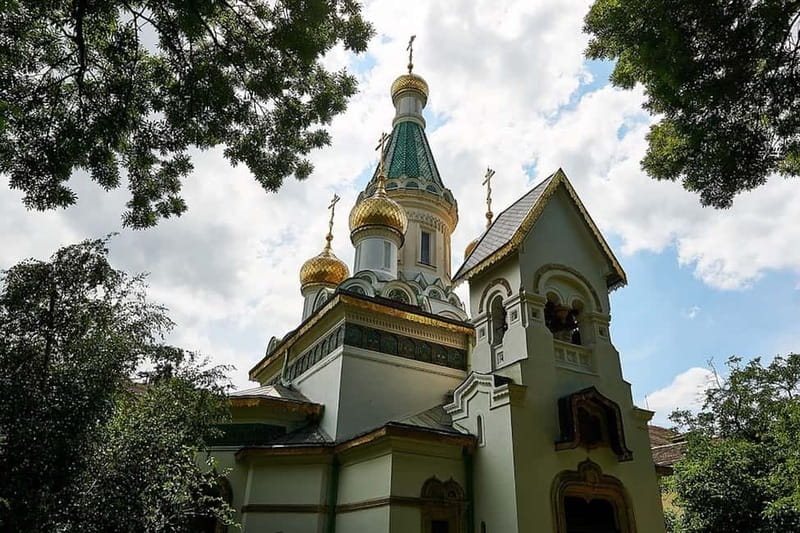
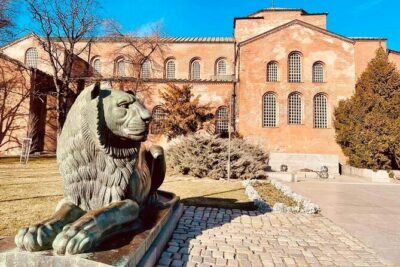
Near the museum is Boyana Church, the tour’s UNESCO-listed centerpiece. The church is small, but its importance is far greater than its size suggests. Its proto-Renaissance frescoes are the reason it has international status, and the visit gives you a chance to see an important stage in European medieval art.
The frescoes matter because of their treatment of human faces, expressions, and individual character. You are looking at religious art, but the figures feel less rigid than much earlier medieval examples. A guide can point out why the paintings are considered so significant instead of leaving you with the vague impression that they are simply old and beautiful.
The setting also changes the rhythm of the day. After the museum’s broad national story, Boyana Church narrows your attention to one carefully preserved place. It is a good contrast: a large museum followed by an intimate church where the artwork carries the main weight.
Transport is particularly helpful here. Boyana Church is not part of the central walking cluster, and the tour uses a private, modern vehicle with air conditioning for the transfers. That saves time and energy, leaving more of your day for the city center.
The church visit may be less comfortable for anyone with mobility problems. The tour specifically says it is not suitable for people with mobility impairments, and you should take that warning seriously. Comfortable shoes are recommended for the wider walking tour, but footwear alone will not solve every access issue.
Sofia’s center, where Roman ruins meet modern government
The afternoon is given to a gentle walking tour through central Sofia. The word gentle is useful, but do not read it as effortless. You will cover several sights on foot, so expect a full day on your feet after the museum and Boyana Church.
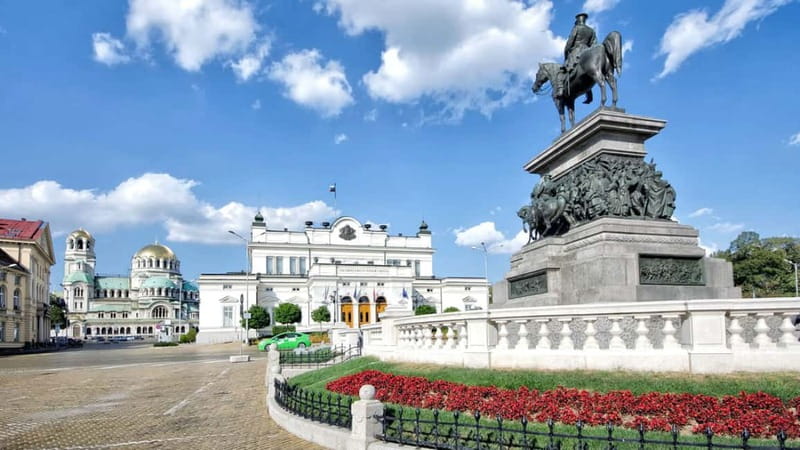
The route includes the National Library and Sofia University, two places that help show Sofia as a national cultural and educational center. You also see the Parliament, where modern Bulgarian public life takes physical form, and the broad ceremonial setting around St. Alexander Nevsky Patriarchal Cathedral.
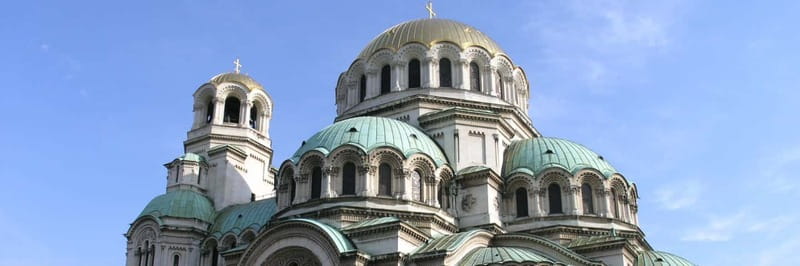
The cathedral is one of the city’s major landmarks and a natural anchor for the central walk. It gives you a sense of Bulgaria’s Orthodox identity and national scale. Nearby, St. Sofia Church offers a different mood, with older roots and a more restrained presence.
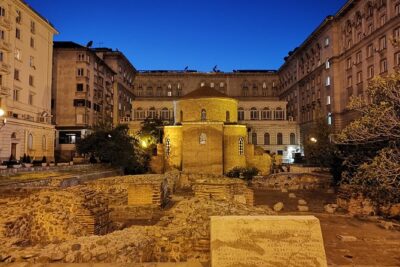
You will also see St. George Rotunda, described as Sofia’s oldest building. This is one of the city’s best examples of how history works here. A Roman-era structure survives amid later streets and buildings, so the ancient past is not locked away in a distant archaeological park.
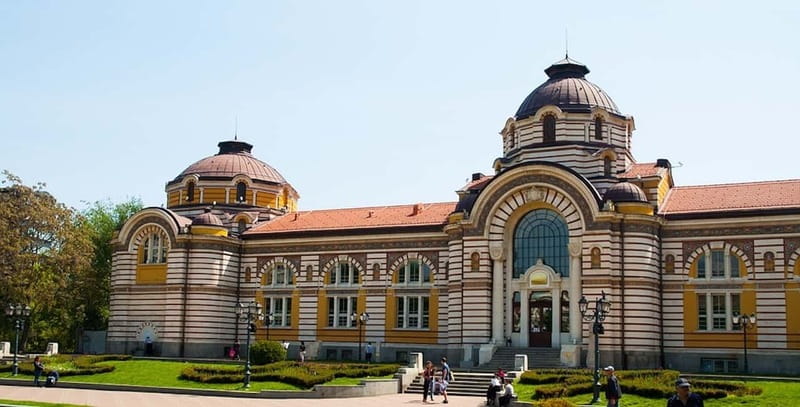
The ruins of Serdika, dating from the 5th and 6th centuries, make that point even clearer. Sofia’s Roman center appears beneath and beside the modern capital. The ruins are not just an isolated attraction. They help you understand why the city developed where it did and how the modern street plan overlaps with the ancient one.
The walk continues past the houses of the Council of Ministers and the president, along with the former headquarters of the communist party. These buildings give you a direct look at the political changes that shaped Sofia during the 20th century.
That contrast is one of the tour’s strongest features. You can move from an ancient rotunda to Orthodox churches, then to government buildings and communist architecture, all within a relatively compact part of town. The tour does not hide the rougher parts of Sofia’s past. It shows how older buildings and later political projects share the same city.
Elsewhere in Bulgaria, a very different sort of day:
- From Sofia: Rila Monastery & Boyana Church Day Tour
★ 4.7 · 5,107 reviews - From Sofia: Must-See Rila Monastery & Boyana Church Day Tour
★ 4.6 · 3,322 reviews - From Sofia: Guided Day Tour of Plovdiv’s Must-See Sights
★ 4.6 · 1,688 reviews - From Sofia: 7 Rila Lakes and Rila Monastery Extended Trip
★ 4.7 · 1,189 reviews
National Palace of Culture and Sofia’s everyday streets
The itinerary also includes the National Palace of Culture and Sofia’s principal shopping streets. These stops keep the tour from becoming a parade of sacred and government buildings.
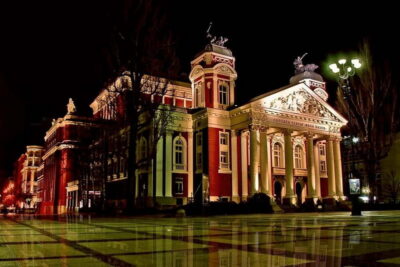
The National Palace of Culture represents a different period and purpose. Its scale reflects the confidence of the communist era, when monumental public buildings were used to project state power and cultural ambition. Seeing it alongside older churches and Roman remains makes the city’s changing architectural language easier to read.
The shopping streets give you a more ordinary side of central Sofia. You see where people shop, meet, and move through the city today, rather than viewing the capital only through official monuments. That is a small but important part of a city tour: you need some present-day streets to balance the historic stops.
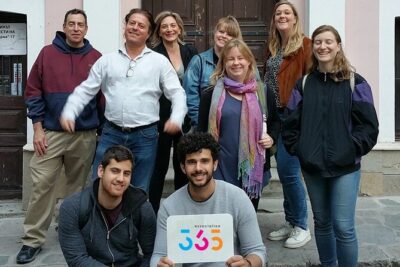
The walking tour is described as unhurried, which should help you take in the details instead of rushing between photo stops. Chris is named as a guide who added useful history and geography to the walk, while Billie is praised for explaining Bulgarian culture and history throughout the day.
A good guide matters here because the buildings do not always explain themselves. The former communist party headquarters, the president’s residence, the cathedral, and the Roman ruins all carry different meanings. The tour’s value rests partly on how well those meanings are explained as you move through the city.
What the $113 price really covers
At $113 per person, this is not the cheapest way to see Sofia. It is also not an unreasonable price for a seven-hour private-vehicle-and-walking day when you count the included services.
The fee includes an English-speaking guide throughout the tour, transportation in a modern air-conditioned vehicle, and entrance fees for Boyana Church and the National History Museum. Those inclusions remove several small decisions and expenses that can add up during a day of sightseeing.
The strongest value comes from combining sites that are awkward to link independently. The museum and Boyana Church are outside the central route, while the afternoon sights are best handled on foot. Having one guide and one transport plan for all of them saves planning time.
You need to budget separately for meals and drinks. No food is included, and the supplied details do not name a restaurant or scheduled meal stop. I would plan to eat before the start or carry what you need, while keeping enough flexibility for the walking portion.
Personal expenses are also separate. That includes anything you buy during the day. The price is best understood as covering sightseeing, guiding, transport, and entry, not as an all-inclusive day out.
The option to reserve now and pay later adds flexibility, and cancellation is free up to 24 hours before the tour for a full refund. Starting times depend on availability, so check the schedule before you commit to other Sofia plans.
Who will get the most from this day
I would choose this tour for a first visit to Sofia, especially if you want a historical overview without arranging several separate visits. It suits you if you prefer explanation and context over wandering from one sight to another.
It is also a good match for anyone interested in the overlap of Roman, Orthodox, Ottoman, Bulgarian, and communist-era history. The day gives each period a physical place in the city.
You may want a different plan if you prefer a slow museum visit, independent exploration, or long café breaks. Seven hours is a lot of structure, and the itinerary covers plenty of ground.
The tour is not suitable for people with mobility impairments. Even with vehicle transfers, the central portion involves walking, and comfortable shoes are essential. Bring a passport or ID card, as requested in the tour information.
Traventuria also links this activity to its Tours with a Cause initiative and has received a Business Which Supports Biodiversity certification from the Bulgarian Biodiversity Foundation. That does not change the sightseeing itself, but it may matter to you if responsible local tourism is part of your booking choice.
Should you book the Sofia full-day tour?
Book it if you want Sofia explained as a connected story, not just a checklist of monuments. The best parts are the combination of Boyana Church’s frescoes, the museum’s national collection, and a central walk that brings Roman ruins, Orthodox churches, government buildings, and communist architecture into one day.
The value is strongest when you factor in the included entries, air-conditioned transport, and a guide for the full seven hours. I would skip it only if you need a highly flexible schedule, cannot manage a full walking day, or want to focus on food and local life rather than history.
For most first-time visitors with a reasonable fitness level, this is an efficient and thoughtful introduction to Sofia. Bring your ID, wear comfortable shoes, plan for your own food and drinks, and let the guide handle the city’s complicated timeline.
FAQ
How long does the Sofia city tour last?
The tour lasts seven hours.
What language is the tour conducted in?
The tour includes a live English-speaking guide.
Where is the meeting point?
Meet at the Vasil Levski Monument, by the Embassy of Slovakia.
Is transportation included?
Yes. Transportation is provided in a modern vehicle equipped with air conditioning.
Are entrance fees included?
Yes. Entrance fees for Boyana Church and the National History Museum are included.
Does the tour include food or drinks?
No. Meals and drinks are not included.
What should I bring?
Bring a passport or ID card. Comfortable walking shoes are also recommended.
Is the tour suitable for people with mobility impairments?
No. The tour is listed as unsuitable for people with mobility impairments.
Can I cancel the tour for a refund?
Yes. You can cancel up to 24 hours in advance for a full refund.
Recently added around Sofia
- Veliko Tarnovo & Arbanasi Full day tour★ 5.0 · 5 reviews
- Private Winter Day Trip to the Rila Mountain★ 4.5 · 3 reviews
- Private transfer from Sofia to Plovdiv or vice versa★ 5.0 · 8 reviews
- Zemen Monastery, Boyana Church and National History Museum Tour★ 5.0 · 2 reviews
- Sofia Hidden Gems: Small-Group Walking Tour with Tram Ride★ 5.0 · 7 reviews
- Catacomb Tour in Sofia guided by a Local★ 4.5 · 3 reviews
- Tour to Koprivshtitsa and the Buzludzha monument incl the Seuthes Thracian Tomb★ 3.5 · 3 reviews
- From Sofia: The gorges of Trun and Dragovski stone trail★ 5.0 · 6 reviews
City Tours, compared.
City Monuments Guided Walking Tour with Audio Guide
Read our review →
Sofia by Night: Panoramic City Tour and Folklore Dinner
Read our review →
Browse the lists this tour appears in