Review · SOFIA TOURS
Orthodox Heraldry in Sofia
Symbols tell Sofia’s story. This private two-hour walk connects four important religious and royal sites, from the gold-domed Alexander Nevsky Cathedral to the Roman remains beneath St. Sofia. I especially like the icon gallery in the cathedral crypt and the chance to compare three different Orthodox traditions in one compact route.
I also like the tour’s small, private format, which should make it easier to ask questions about symbols, worship, and Bulgarian history. The main consideration is pace: two hours covers a lot, and the tour requires a strong level of physical fitness.
In This Review
- Key points to know before booking
- Why this short Sofia walk has real value
- Alexander Nevsky Cathedral: Sofia’s grand opening
- St. Sofia Church and the city beneath it
- The Russian Church and Saint Seraphim’s crypt
- Alexander I Battenberg’s mausoleum and modern Bulgaria
- How the four stops work together
- Private format, walking demands, and timing
- Is $54.44 per person a fair price?
- Who should book Orthodox Heraldry in Sofia?
- Should you book it?
- FAQ
- How long does Orthodox Heraldry in Sofia last?
- Where does the tour begin?
- Where does the activity end?
- Is the tour private?
- What admissions are included?
- Can I cancel for a full refund?
Key points to know before booking
- The Alexander Nevsky crypt holds an icon gallery covering Bulgarian Orthodox painting from the Middle Ages through the 19th century.
- St. Sofia Church reveals ancient Serdica underground, with a museum focused on the Roman period and the rise of Christianity.
- The Russian Church adds a different Orthodox tradition, including the crypt of Saint Seraphim.
- The final stop is a royal mausoleum, dedicated to Alexander I Battenberg, Bulgaria’s first monarch after liberation.
- This is a private English-language tour, so only your own group takes part.
- The $54.44 price includes admissions to the cathedral crypt and St. Sofia underground museum, with free cancellation up to 24 hours before departure.
Why this short Sofia walk has real value
Sofia’s center is unusually generous with major sights. Four significant buildings and monuments sit within a walkable area, yet each belongs to a different period and serves a different purpose. This experience gives you a clear thread through them: Orthodox symbols, sacred art, national identity, and the city’s older Roman foundations.
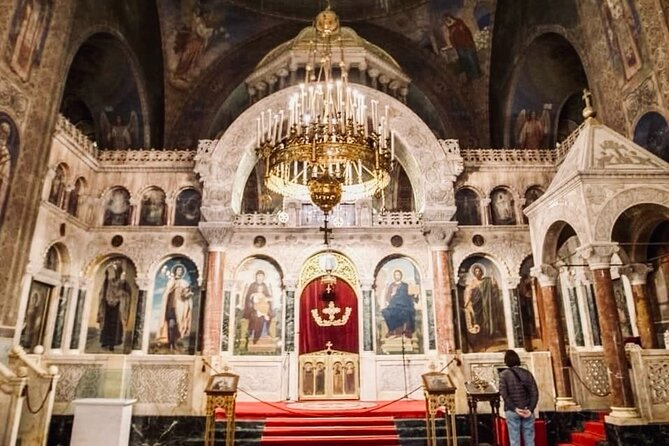
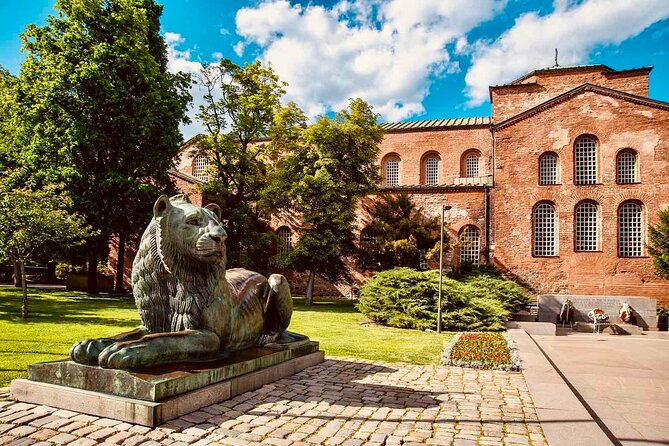
I like that the route does not stop at the most famous exterior. Alexander Nevsky’s domes are easy to admire from the square, but the crypt adds the art and religious meaning. St. Sofia is more than a red-brick church beside the cathedral, because its underground museum brings the ancient city of Serdica into the story.
The private setup matters here. Religious art can raise detailed questions, and you can ask for clarification without slowing down a large group. The tour is offered in English, and group discounts may be available. At $54.44 per person, the cost is not bargain-basement, but it includes two admission tickets and a guide for a focused cultural walk.
The timing also keeps the experience manageable. Two hours is long enough to add context without turning the visit into an all-day lecture. Still, you should expect a steady route and several indoor visits. The physical fitness requirement is worth taking seriously.
A few more Sofia trips worth comparing
- From Sofia: Rila Monastery & Boyana Church Day Tour
★ 4.7 · 5,107 reviews - From Sofia: Must-See Rila Monastery & Boyana Church Day Tour
★ 4.6 · 3,322 reviews - From Sofia: Guided Day Tour of Plovdiv’s Must-See Sights
★ 4.6 · 1,688 reviews
Alexander Nevsky Cathedral: Sofia’s grand opening
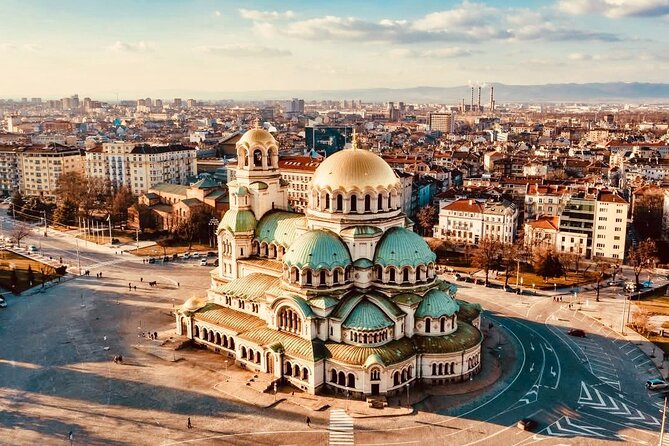
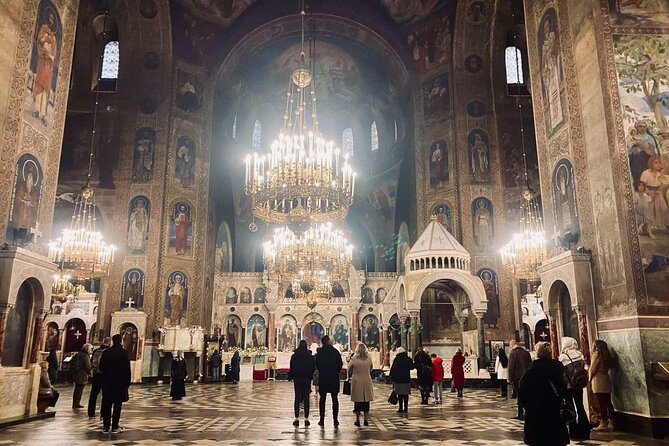
The tour begins at the Patriarchal Cathedral St. Alexander Nevsky, at Sofia Center’s Saint Alexander Nevsky Square. This is the natural place to start. The cathedral is the largest Orthodox church on the Balkan Peninsula, and its scale gives the tour an immediate sense of importance.
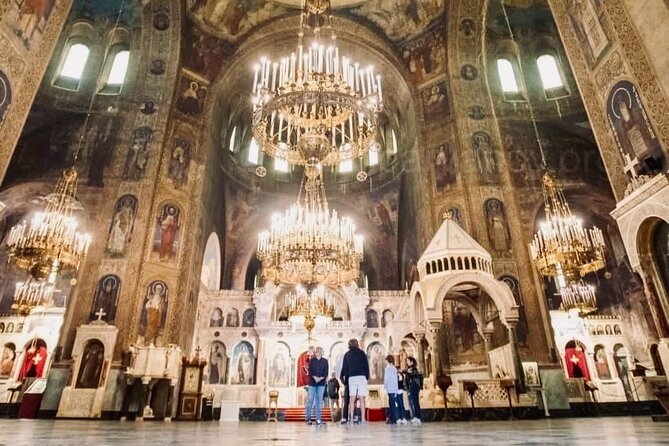
Your guide explains the construction of the cathedral and the ideas behind Bulgarian Orthodox heraldry. Here, heraldry refers to the visual language of religious identity: symbols, figures, colors, and sacred scenes that communicate belief and tradition. You are not just looking at a grand building. You are learning how Orthodox communities use images to express faith and memory.
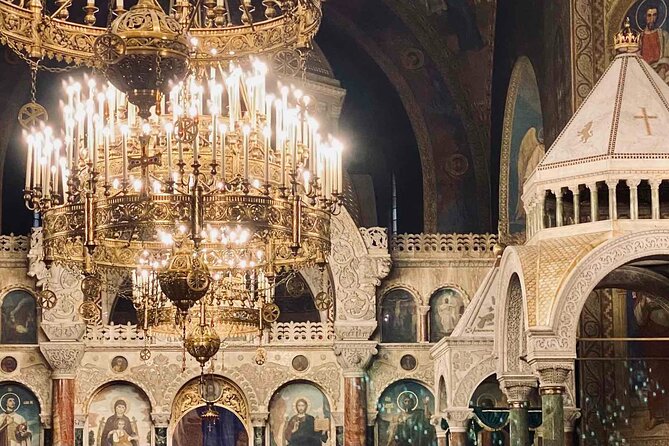
The cathedral’s golden domes are the obvious attraction, but the interior and crypt are where this experience earns its keep. You visit the icon gallery in the crypt, where Bulgarian Orthodox icons trace a path from the Middle Ages to the end of the 19th century.
The gallery gives you a way to look at icons with more purpose. Instead of treating them as decorative paintings, you can consider their style, religious role, and changing place in Bulgarian culture. The tour description does not promise a fixed selection of individual icons, so the value lies in the guide’s explanation of the collection as a whole.
You have about 30 minutes here, with admission included. That is enough for an introduction and a focused look, but not enough for an unhurried art study. If icon painting is your main interest, pay close attention and ask questions early.
The cathedral is also a useful lesson in contrast. Its scale and gold domes communicate national confidence and public ceremony. The next stop, St. Sofia Church, offers a much older and quieter view of religious history.
St. Sofia Church and the city beneath it
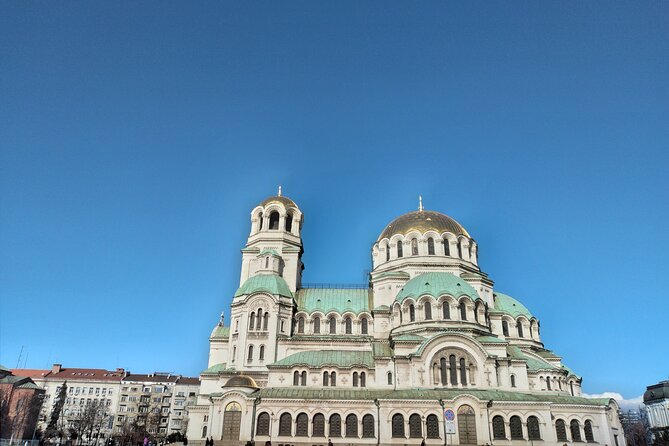
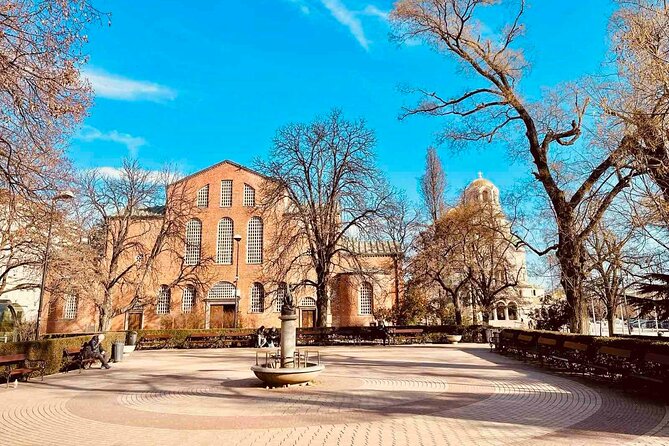
St. Sofia Church is only next to Alexander Nevsky, but its story reaches much farther back. The tour uses the two sites to compare a modern temple-monument with a late antique basilica.
That comparison is one of the strongest parts of the route. At Alexander Nevsky, the visual message is monumental and national. At St. Sofia, the focus shifts to the early Christian period and the ancient city of Serdica.
You enter the museum beneath the church, where archaeological remains help explain the Roman period and the acceptance of Christianity. The underground setting is important because it shows that Sofia’s religious center was built over earlier layers of the city. You can connect the present church with the Roman urban world below it.
The visit lasts about 30 minutes, and admission is included. As with the cathedral crypt, this is a concentrated visit rather than a long archaeological session. The guide’s explanation helps you place the remains in time and understand why St. Sofia matters beyond its simple exterior.
I like this stop because it prevents the tour from becoming a parade of churches. You are given a historical comparison: one building tied to Bulgaria’s modern national identity, another tied to late antiquity and the spread of Christianity.
The museum may be less immediately dramatic than the cathedral’s domes, but it adds the context that makes the whole walk worthwhile. You see Sofia not as one period, but as a city repeatedly rebuilt around old sacred ground.
The Russian Church and Saint Seraphim’s crypt
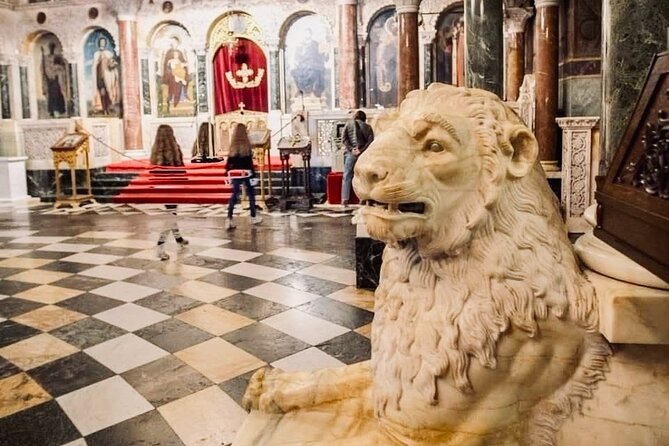
The third religious stop is the Church of Saint Nicholas, commonly known as the Russian Church. It introduces the distinctive features of Russian Orthodoxy and gives the route a different cultural angle.
This church is a useful counterpoint to the Bulgarian sites. The tour does not treat Orthodox Christianity as one uniform tradition. Instead, you learn how Russian Orthodoxy has its own visual and devotional character.
The visit includes the crypt of Saint Seraphim. Locals descend there to address their wishes to the saint on pieces of paper. That small detail gives the stop a personal and living quality. It connects formal church history with a continuing act of devotion.
Admission to this church is free, and the visit lasts about 20 minutes. That shorter time suits the stop. You get the essential explanation and a chance to see the crypt without shifting the focus away from the larger theme of Orthodox traditions in Sofia.
This is also the point where the experience feels most connected to present-day religious practice. The cathedral and underground museum explain institutions, art, and history. The Saint Seraphim crypt shows how people still use a sacred place to make personal requests.
You should approach this stop respectfully. It is a functioning place of devotion, not simply another display room. The tour’s emphasis on symbols and religious meaning makes the setting easier to understand without turning private faith into a spectacle.
Elsewhere in Bulgaria, a very different sort of day:
- From Sofia: 7 Rila Lakes and Rila Monastery Extended Trip
★ 4.7 · 1,189 reviews - Sofia: Communist Walking Tour
★ 4.9 · 1,106 reviews - From Sofia: The Seven Rila Lakes Full-Day Hiking Tour
★ 4.7 · 923 reviews - Rila Monastery and Boyana Church Full-Day Tour
★ 4.5 · 918 reviews
Alexander I Battenberg’s mausoleum and modern Bulgaria
The final stop is the tomb of Alexander I Battenberg, the first Bulgarian monarch after liberation. The visit lasts about 20 minutes and focuses on his deeds and contribution to the Bulgarian people in the late 19th century.
This ending changes the subject from church tradition to national monarchy, but it fits the route. Sofia’s monuments do not separate religion, politics, and national identity as neatly as a modern museum might. The mausoleum lets you consider how the newly liberated Bulgarian state presented its leaders and remembered its early monarch.
The stop is also a good finish because it gives the tour a clear chronological direction. You begin with Orthodox art and the cathedral’s construction, move through late antique Christianity, compare Bulgarian and Russian traditions, then arrive at the political story of modern Bulgaria.
Admission to the mausoleum is free. The activity ends back at the starting point, so you can continue exploring the central area afterward without arranging a separate pickup.
The information provided does not give the exact interior layout or visiting conditions at the mausoleum. You should think of it as a short historical stop rather than the main attraction of the walk. Its importance comes from the story attached to it.
How the four stops work together
The route succeeds because each stop answers a different question.
- Alexander Nevsky asks how Bulgaria presents Orthodox faith and national identity.
- The icon gallery shows how religious ideas were expressed through painting.
- St. Sofia explains the Roman city and the spread of Christianity.
- The Russian Church shows a related but distinct Orthodox tradition.
- Battenberg’s mausoleum links sacred Sofia with the political birth of modern Bulgaria.
That is a lot for two hours, but the route is not random. It follows a useful arc from symbols and architecture to archaeology, living devotion, and monarchy.
The experience is especially well suited to you if you want cultural context rather than a simple photo walk. It also fits a first visit to Sofia because the route introduces several major central landmarks in one session.
If you prefer to explore every church at leisure, this may feel quick. The 30-minute visits at the two main museums and the 20-minute stops at the Russian Church and mausoleum leave limited time for lingering. You will get the framework, then need to return on your own for longer study.
Private format, walking demands, and timing
Only your group participates, which is a major advantage for a subject that can become detailed. You can ask about an icon, a symbol, or a historical period without waiting for a large group to catch up.
The tour is offered in English and begins at the cathedral. It is near public transportation, making the meeting point practical within central Sofia. The activity returns to the same meeting point at the end.
The route is described as requiring a strong physical fitness level. The information does not specify the total walking distance, number of stairs, or exact accessibility arrangements, so ask the provider before booking if those details matter to you.
The tour is booked an average of 71 days ahead. That figure suggests that advance planning is sensible, especially if you have fixed dates or want a private time slot. Confirmation arrives when you book, and mobile tickets are supported.
Free cancellation is available if you cancel at least 24 hours before the start time. Changes or cancellations made less than 24 hours ahead are not accepted, and the cutoff follows Sofia’s local time.
Is $54.44 per person a fair price?
The answer depends on how much you value explanation. You are paying for a private English-language guide, a two-hour route, and admission to the Alexander Nevsky crypt with its icon gallery and the St. Sofia underground museum. The Russian Church and Battenberg mausoleum do not add admission charges.
For a solo visitor, $54.44 is a fairly substantial price for two hours. For a couple or small group, the private format can make the cost easier to justify, particularly if group discounts apply. You are not paying only to enter buildings. You are paying for a connected explanation of places that could otherwise feel unrelated.
The tour is also good value if you have limited time in Sofia. Instead of researching the four sites separately, you receive one organized walk through the historic center. The main tradeoff is depth. You get a carefully selected introduction, not a full art-history seminar or a long archaeological visit.
I would compare the price with your own interests. If you care about Orthodox traditions, icon painting, Roman Sofia, or the country’s late 19th-century monarchy, the route covers several worthwhile subjects. If you mainly want grand architecture and photographs, you may not need a private guide.
Who should book Orthodox Heraldry in Sofia?
I would recommend this experience to you if you enjoy history, religious art, architecture, and the way national identity is built through monuments. The route has enough variety to appeal to more than one kind of culture-focused visitor.
It is also a good fit if you want a guide to explain Orthodox symbolism in plain terms. The icon gallery and Saint Seraphim’s crypt are the two most distinctive elements, since they offer more than exterior sightseeing.
You should be comfortable walking and moving through several religious and museum spaces in a short period. Dress and behavior should suit visits to active churches, especially at the Russian Church.
Families with older children may find the route useful if the children can manage the pace and show interest in history. The private format gives you more control than a large scheduled group, though the physical fitness requirement still applies.
Should you book it?
Book Orthodox Heraldry in Sofia if you want a focused introduction to the city’s Orthodox identity, ancient foundations, and early modern monarchy. The best reasons are the cathedral crypt’s icon gallery, the Roman remains beneath St. Sofia, and the private English-language setting.
Skip it if you want a slow, self-guided visit with lots of time for photographs or detailed museum study. Two hours moves quickly, but it gives you a strong framework for exploring Sofia’s center on your own afterward.
At $54.44 per person, the tour makes the most sense for a small group that values interpretation and convenience. Reserve ahead if your schedule is fixed, and ask about the walking demands before you commit.
FAQ
How long does Orthodox Heraldry in Sofia last?
The tour lasts approximately two hours.
Where does the tour begin?
It begins at the Patriarchal Cathedral St. Alexander Nevsky in Sofia Center, at Saint Alexander Nevsky Square.
Where does the activity end?
The activity ends back at the starting meeting point.
Is the tour private?
Yes. Only your own group participates in this private tour or activity.
What admissions are included?
Admission is included for the Alexander Nevsky crypt with its icon gallery and the St. Sofia underground museum. Visits to the Alexander Nevsky Cathedral, St. Sofia Basilica, Saint Nicholas Church, and the Alexander I Battenberg mausoleum are included in the route. The Russian Church and Battenberg mausoleum have no admission fee listed.
Can I cancel for a full refund?
Yes. You can cancel at least 24 hours before the experience start time for a full refund. Cancellations or changes made less than 24 hours before the start time are not accepted.
Recently added around Sofia
- Veliko Tarnovo & Arbanasi Full day tour★ 5.0 · 5 reviews
- Private Winter Day Trip to the Rila Mountain★ 4.5 · 3 reviews
- Zemen Monastery, Boyana Church and National History Museum Tour★ 5.0 · 2 reviews
- Sofia Hidden Gems: Small-Group Walking Tour with Tram Ride★ 5.0 · 7 reviews
- Private transfer from Sofia to Plovdiv or vice versa★ 5.0 · 8 reviews
- Catacomb Tour in Sofia guided by a Local★ 4.5 · 3 reviews
- Tour to Koprivshtitsa and the Buzludzha monument incl the Seuthes Thracian Tomb★ 3.5 · 3 reviews
- From Sofia: The gorges of Trun and Dragovski stone trail★ 5.0 · 6 reviews
Sofia Tours, compared.
Must-See Rila Monastery & Boyana Church Day Tour
Read our review →
7 Rila Lakes and Rila Monastery Extended Trip
Read our review →