
Review · FOOD & DRINK
Experience Bulgarian Yogurt Tasting and Cultural History
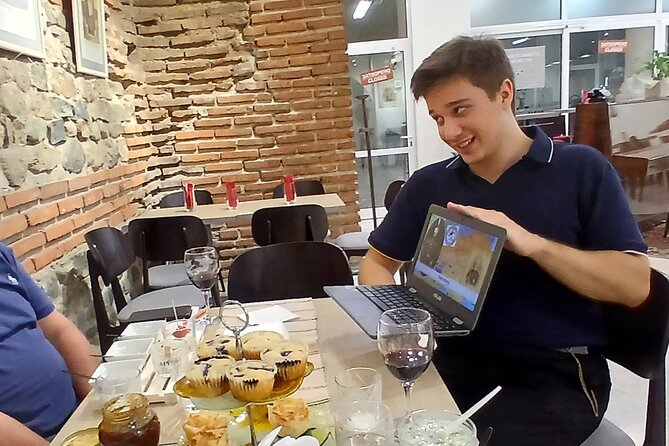
Yogurt beneath Roman stones makes Sofia memorable. This one-hour tasting pairs four kinds of Bulgarian yogurt with bread, honey, jam, and homemade sweets inside the ancient ruins of Serdica. I like the unusual setting and the way the tasting connects food to Bulgarian history, from Thracian customs to Lactobacillus bulgaricus. I also like the warm family touch, with hosts such as George and John adding personal stories rather than delivering a dry lecture.
The main drawback is the narrow focus. If you cannot eat dairy or gluten, this is not a good fit, and the tasting may feel light if you want a full meal. The group can reach 32 people, so the experience may feel less intimate than the family-style welcome suggests.
In This Review
- Four Bulgarian yogurts, one Roman setting
- Why yogurt belongs on your Sofia itinerary
- Meeting at the Eastern Gate of Serdika
- What the one-hour tasting feels like
- Comparing cow, sheep, goat, and buffalo yogurt
- The history behind Lactobacillus bulgaricus
- Homemade pastries and the family welcome
- Is the $29.57 price fair?
- Who will enjoy this most?
- Practical details that affect your choice
- Should you book the Serdika yogurt tasting?
- FAQ
- Where does the Bulgarian yogurt tasting begin?
- What time does the experience start?
- How long does the experience last?
- Which yogurt varieties are included?
- Is food included with the yogurt?
- Is the tasting suitable for lactose or gluten intolerance?
Four Bulgarian yogurts, one Roman setting
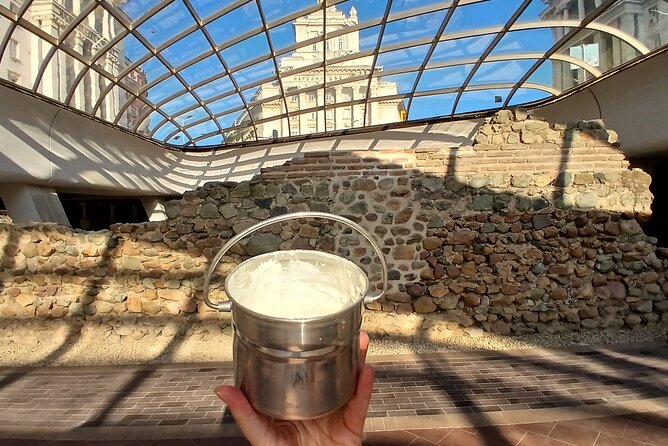
- Roman ruins under central Sofia: Meet at the Eastern Gate of Serdika, at underpass level, for a tasting surrounded by ancient stonework.
- Four distinct milk types: Compare cow, sheep, goat, and buffalo yogurt side by side.
- Ayran starts the tasting: This salty yogurt drink gives you a quick taste of a familiar Bulgarian staple.
- Food paired with local flavor: Expect sourdough bread, honey, walnuts, seasonal toppings, jams, and homemade pastries.
- History told during the meal: A young historian links yogurt to Thracian traditions and the discovery of Lactobacillus bulgaricus.
- Simple one-hour format: The 4:00 pm start fits neatly into an afternoon in Sofia, with the activity ending where it begins.
Why yogurt belongs on your Sofia itinerary
Bulgaria’s yogurt is more than a breakfast food. It is one of the country’s best-known cultural products, and this tasting gives you a way to understand it through smell, texture, and taste instead of only reading about it in a museum.
The experience takes place in the remains of ancient Serdica, the Roman settlement beneath modern Sofia. That setting matters. You are not sitting in a standard restaurant with a plate placed in front of you. You are tasting a food associated with Bulgarian identity while looking at the remains of the city that existed long before today’s capital.
I like this combination because neither part overwhelms the other. The ruins provide atmosphere, while the yogurt gives the history a practical focus. You can listen to the story of the food, then test the differences for yourself.
This is also a good choice if you have limited time in Sofia. The activity lasts about one hour, so it will not consume an entire afternoon. At the same time, it offers more substance than a quick food sample at a market. You get a guided explanation, several pairings, and a small look at Bulgarian family traditions.
More Food Tours in Sofia
- Sofia: Wine & Cheese Tasting Experience
★ 4.9 · 674 reviews - Wine Tasting in Heart of Sofia
★ 5.0 · 545 reviews - Sofia: Guided Tasting of Local Wines and Cheeses
★ 4.6 · 181 reviews
Meeting at the Eastern Gate of Serdika
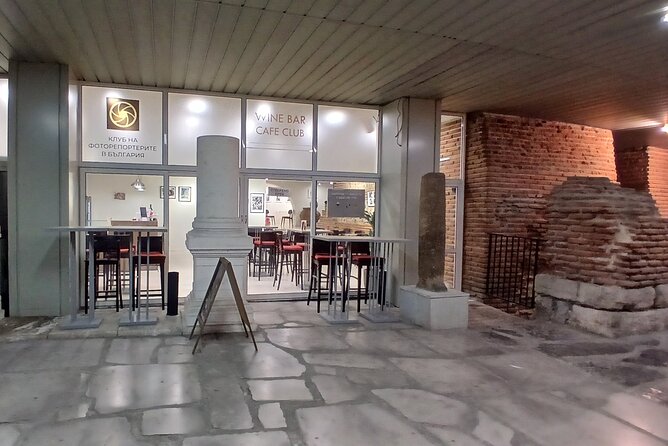
The meeting point is the Eastern Gate of Serdika, at underpass level, in central Sofia. The address is pl. Nezavisimost 1000, and the location is close to public transportation.
Give yourself enough time to locate the underpass and the correct level. Ancient remains and modern streets share this part of Sofia, so a first-time visitor may need a moment to get oriented. The clear meeting point is helpful, but you should still arrive early rather than rushing in at 4:00 pm.
The activity begins and ends at the same place. That makes planning easy. You do not need to arrange a taxi from a distant neighborhood or figure out where the final course will leave you. Once the tasting is finished, you are already in the old city center, close to more sightseeing, shops, and transport connections.
The mobile ticket is useful for this kind of short city activity. Keep it ready on your phone, and remember that confirmation is provided when you book.
What the one-hour tasting feels like
The format is part tasting and part cultural talk. A local host guides you through the food while a young historian explains the story behind it. You should expect the experience to move at a steady pace, with each yogurt serving acting as both a sample and a reason to discuss Bulgarian customs.
The tasting begins with ayran, a refreshing yogurt drink mixed with a pinch of salt. It is a simple introduction, but it gives you an immediate sense of how yogurt is used in everyday Bulgarian food. Ayran is not presented as a sweet dessert. Its salty flavor prepares you for the broader range of yogurt-based foods that follow.
You then move through four yogurt types:
- Cow’s milk yogurt with honey and walnuts
- Sheep’s milk yogurt with sourdough bread
- Goat’s milk yogurt with savory toppings
- Buffalo milk yogurt with homemade jam
The pairings are important because plain yogurt can make subtle differences difficult to notice. Honey and walnuts bring sweetness and crunch to the cow’s milk version. Sourdough gives the sheep’s milk sample a more substantial, bread-and-dairy character. The savory toppings with goat’s milk take the tasting away from the dessert table. Buffalo yogurt finishes the main comparison with homemade jam.
The serving order may help you notice changes in body and flavor, but you should not expect a technical cheese course. This is a friendly cultural tasting, not a professional dairy workshop. You will learn the broad character of each milk type and hear why yogurt matters in Bulgaria.
Comparing cow, sheep, goat, and buffalo yogurt
The four varieties are the heart of the experience. They give you a useful comparison that you would be unlikely to make during an ordinary café stop.
Cow’s milk yogurt is the most familiar starting point for many people. Served with honey and walnuts, it becomes a sweet, approachable dessert. This pairing is easy to understand and likely to appeal to anyone who prefers mild flavors.
Sheep’s milk yogurt is paired with sourdough bread. That choice highlights the yogurt as a food in its own right, not just a topping or sweet course. The bread also helps balance the dairy and gives the sample a more rustic feel.
Goat’s milk yogurt comes with savory toppings inspired by Bulgarian tradition. This is the point where the tasting can become more challenging for some palates. Goat’s milk often has a more distinct character than cow’s milk, and the savory additions make it less familiar if you normally eat yogurt with fruit or sugar.
Buffalo milk yogurt is served with homemade jam. Buffalo milk is often associated with a fuller, creamier texture, and the jam keeps the final sample bright and easy to enjoy. The sweet topping also makes a satisfying close to the main tasting.
I appreciate that the four yogurts are not served with the same garnish. Different pairings help you understand how Bulgarians use dairy in both sweet and savory ways. You are tasting ingredients, but you are also seeing how a local family might build a small table around them.
More History Tours in Sofia
- Full-day Nis and Serbian History Tour from Sofia
★ 4.5 · 90 reviews - Sofia: History and Heritage – Small Group City Tour
★ 5.0 · 84 reviews - Sofia Communist History 2-Hour Tour in a Classic Trabant
★ 5.0 · 45 reviews - Rila Monastery and St. Ivan Cave History & Nature Trip from Sofia
★ 4.5 · 25 reviews
The history behind Lactobacillus bulgaricus
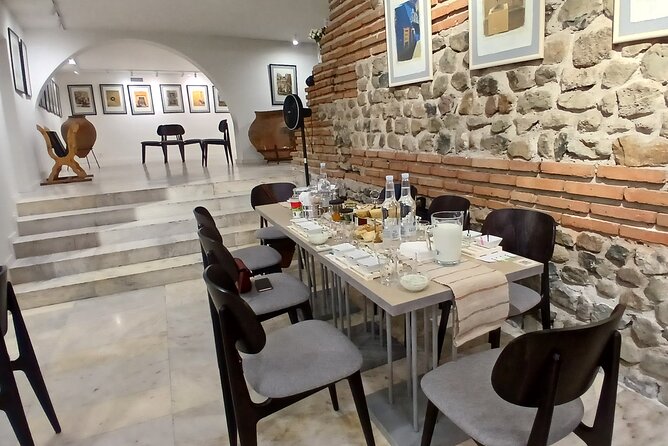
The cultural talk reaches back to Thracian traditions and continues through the discovery of Lactobacillus bulgaricus, the bacteria linked with Bulgarian yogurt’s international reputation.
That story gives the tasting a useful sense of place. Many countries eat fermented dairy, but Bulgaria has a strong connection between yogurt and national identity. Learning about the bacteria while eating the food makes the science easier to remember. You are not simply hearing a name in a lecture. You are tasting the product that made the name famous.
The activity also includes discussion of Bulgarian history beyond yogurt. The supplied details describe a talk that included Bulgarian reunification, so you may hear the food story placed within a wider account of the country’s past. This can add welcome context, though the exact balance between yogurt and broader history may depend on the host and the questions asked.
The best part of this format is its informality. Host responses signed by George and John have a warm, conversational tone, and the family-run character comes through clearly. That personal approach is likely to appeal to you if you prefer a small cultural encounter over a polished commercial presentation.
Homemade pastries and the family welcome
The tasting includes homemade sweet bites made from family recipes passed down through generations. These are described as a warm gesture from one family to another, and that wording reflects the tone of the experience.
The pastries are not the main reason to book, but they add something that packaged food cannot. They make the tasting feel connected to a household tradition rather than only to Bulgaria’s national food image. You get a sense of how recipes can carry memory from one generation to the next.
Homemade jams also appear with the buffalo yogurt, and various seasonal toppings accompany the other samples. Seasonal ingredients can change, so you should not expect exactly the same garnish on every date. That is a small advantage, since the meal remains tied to what is available rather than relying on a fixed international menu.
The food provided is best viewed as a generous tasting with snacks, not a replacement for dinner. Sourdough bread and pastries add substance, but the tour lasts only about an hour. If you are hungry after a day of sightseeing, plan another meal in Sofia afterward.
Is the $29.57 price fair?
At $29.57 per person, the price is reasonable if you value the setting and the guided explanation. You are paying for four yogurt varieties, traditional pairings, ayran, sweet bites, a local host, and access to an unusual historical space. The Roman ruins give the activity a character that a regular café tasting would not provide.
The value is strongest for people who want context with their food. If you only want to eat yogurt, you can buy it cheaply in Bulgaria. If you want to compare four milk types while hearing about the food’s cultural and scientific background, the price is easier to justify.
The group size can reach 32 people. That is not a tiny private tasting, and you may not receive much one-to-one attention in a full group. Still, the one-hour length keeps the format manageable, and the family presentation should make it feel more personal than a large coach excursion.
No hotel pickup or drop-off is included. That is not a serious problem because the meeting point is in central Sofia and near public transportation, but you need to make your own way there. Additional food and drinks are also not included, and gratuities are optional.
Who will enjoy this most?
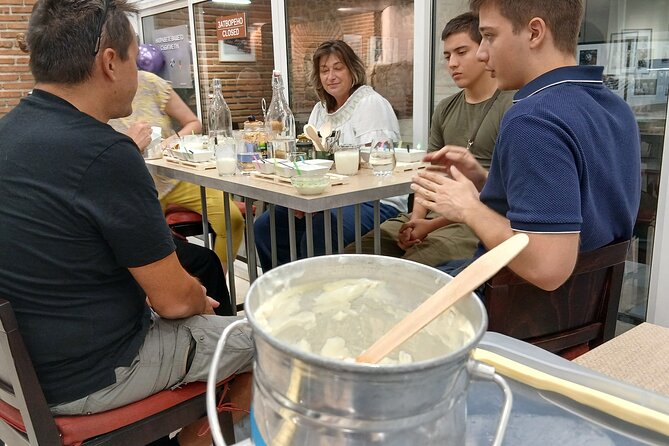
I would recommend this tasting to food lovers, history fans, and curious first-time visitors who want an experience tied closely to Sofia. It is especially useful early in a trip, because the stories about yogurt and Bulgarian traditions can give you a better frame for later meals.
Families may also find the format appealing, provided everyone can eat dairy and gluten. The sweet toppings, bread, jam, and pastries make the tasting approachable, while the ruins give children something visual to focus on during the talk.
It suits solo visitors and couples who prefer a short organized activity rather than a long food tour. The central location and fixed one-hour schedule make it easy to add before dinner or after an afternoon visit to Sofia’s city center.
You should think twice if you have lactose intolerance or gluten intolerance. The menu centers on four dairy yogurts, ayran, sourdough bread, and pastries. The available information does not promise substitutions, so do not assume dietary changes can be arranged.
The experience may also disappoint you if you expect a full meal, a large number of savory dishes, or a long walking tour. This is a seated tasting with storytelling, not a broad survey of Sofia’s restaurants.
Practical details that affect your choice
The scheduled start time is 4:00 pm. That is a useful hour for a relaxed afternoon, though you should plan your earlier sightseeing carefully so you can reach the Eastern Gate without a last-minute dash.
Seats are limited inside the ruins, even though the maximum group size is 32. If the atmospheric setting is a major reason for booking, reserve ahead rather than assuming you can walk in.
Most people can participate, and the activity is near public transportation. No hotel transfer is provided, so central accommodation is convenient but not required.
Free cancellation is available if you cancel at least 24 hours before the start time. Cancellations made less than 24 hours in advance are not refunded, and changes inside that same window are not accepted. Cutoff times follow Sofia’s local time, which matters if you are booking from another country.
Should you book the Serdika yogurt tasting?
Book it if you want a compact Sofia experience that combines local food, family hospitality, and ancient surroundings. The four-milk comparison is the strongest reason to go, while the Roman setting and the story of Lactobacillus bulgaricus make it more memorable than a standard yogurt sample.
Skip it if dairy or gluten is a problem, or if you need a full dinner. Also consider the group size: a maximum of 32 people means this is not guaranteed to be a quiet private encounter.
For most food-curious visitors, the $29.57 price is fair because it covers more than the ingredients. You get a taste of Bulgaria’s food culture, a short lesson in its past, and an atmospheric hour beneath central Sofia. Reserve it when you want your sightseeing to include something you can eat, not just something you can photograph.
FAQ
Where does the Bulgarian yogurt tasting begin?
It begins at the Eastern Gate of Serdika at underpass level, in Sofia’s old city center at pl. Nezavisimost 1000.
What time does the experience start?
The tasting starts at 4:00 pm.
How long does the experience last?
It lasts approximately one hour and ends back at the meeting point.
Which yogurt varieties are included?
The tasting includes cow, sheep, goat, and buffalo yogurt.
Is food included with the yogurt?
Yes. Traditional pairings include sourdough bread, honey, seasonal toppings, homemade jam, walnuts, ayran, and homemade sweet bites.
Is the tasting suitable for lactose or gluten intolerance?
It is not recommended for people with lactose intolerance or gluten intolerance because the experience includes several dairy products, sourdough bread, and pastries.
Recently added around Sofia
- Veliko Tarnovo & Arbanasi Full day tour★ 5.0 · 5 reviews
- Private Winter Day Trip to the Rila Mountain★ 4.5 · 3 reviews
- Private transfer from Sofia to Plovdiv or vice versa★ 5.0 · 8 reviews
- Zemen Monastery, Boyana Church and National History Museum Tour★ 5.0 · 2 reviews
- Sofia Hidden Gems: Small-Group Walking Tour with Tram Ride★ 5.0 · 7 reviews
- Catacomb Tour in Sofia guided by a Local★ 4.5 · 3 reviews
- Tour to Koprivshtitsa and the Buzludzha monument incl the Seuthes Thracian Tomb★ 3.5 · 3 reviews
- From Sofia: The gorges of Trun and Dragovski stone trail★ 5.0 · 6 reviews
Food & Drink, compared.



Special History And Wine Tour including Wine Tasting
Read our review →
Sofia Afternoon Walking Tour with Wine and Food Tasting
Read our review →
Food Walk: Bulgarian Food and Culture Tour in Plovdiv
Read our review →
Sofia Food & Tasting Tour with Communist-Era Tram Ride
Read our review →Browse the lists this tour appears in