
Review · PRIVATE TOURS IN SOFIA
Sofia: Private Orthodox Heraldry Tour with Entry Tickets
Three churches tell Sofia’s story. This private two-hour walk links the grand Alexander Nevsky Cathedral, the ancient St. Sophia Basilica, and the Russian Church of St. Nicholas in one focused route. I like the mix of church art and Roman archaeology, and I like that the guide explains Orthodox beliefs rather than simply pointing out domes and dates. The main concern is pace: two hours is short for three sacred sites, crypts, museums, and a royal tomb.
I also appreciate the small-group format. You can ask questions about Bulgarian Christianity, Russian Orthodoxy, royal politics, or the meaning of icons without trying to hear a guide over a large crowd. The one clear limitation is physical: this tour is not suitable for people with mobility impairments, and religious buildings may include steps or areas that are not easy to reach.
In This Review
- Key points to know before you book
- Why this two-hour route works in central Sofia
- Alexander Nevsky Cathedral and its golden domes
- The crypt icon gallery and Bulgarian Orthodox art
- St. Sophia Basilica and the Roman city beneath
- The Russian Church of St. Nicholas and St. Seraphim’s crypt
- Alexander I Battenberg and Bulgaria after liberation
- What the guide adds to the church visits
- Is $70 per person a fair price?
- Who should book this Orthodox Sofia walk?
- Should you book it?
- FAQ
- How long does the Orthodox heraldry tour last?
- What language is the tour conducted in?
- Where is the meeting point?
- Is this a private tour?
- What churches are included?
- Are entry tickets included?
- What should I bring and wear?
- Can I cancel the booking?
Key points to know before you book
- Alexander Nevsky Cathedral is the visual centerpiece, with huge golden domes and an icon gallery beneath the church.
- The crypt icon gallery covers Bulgarian Orthodox art from the Middle Ages through the late 19th century.
- St. Sophia Basilica offers a sharp contrast to Nevsky, with an ancient church above a museum connected to Roman-era Serdica.
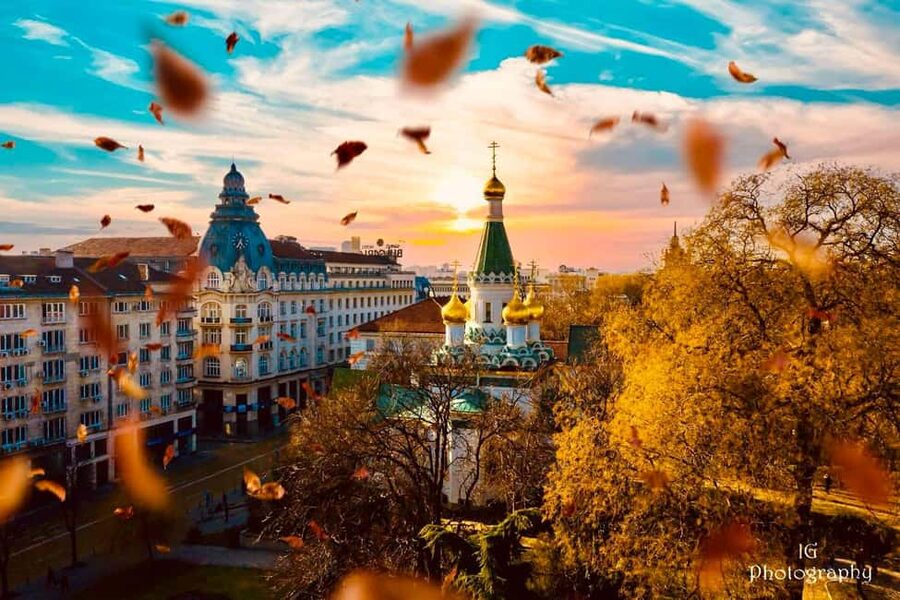
- The Russian Church of St. Nicholas introduces Russian Orthodox traditions and the crypt of St. Seraphim.
- Alexander I Battenberg’s tomb adds a royal and political chapter to the religious route.
- The private English tour costs $70 per person, with entry tickets included and free cancellation up to 24 hours before the start.
Why this two-hour route works in central Sofia
Sofia is a city where centuries sit close together. A modern street can lead to Roman remains, an early Christian basilica, a grand 20th-century church, and a royal memorial within a short walk. This tour makes that layering the main subject rather than treating each building as an isolated sight.
You meet in front of Saint Alexander Nevsky Cathedral. Look for the guide holding a sign marked Sofia tour. There is no transportation component, so you should arrive ready to walk between the sites. Comfortable shoes are not just a polite suggestion here. They are the practical choice.
The private format matters most in churches. You may want to pause over an icon, ask why Orthodox churches use a particular layout, or clarify the differences between Orthodox and Catholic practice. On a fixed group tour, those questions can feel like a delay. With a private guide, they are part of the point.
The tour is conducted in English. A 5 out of 5 rating from a verified booking described it as very informative and an excellent cultural experience. That praise fits the tour’s design: it is less about rushing through famous façades and more about giving those façades a religious, artistic, and political setting.
More Private Tours in Sofia
- Private city walking tour of Sofia
★ 5.0 · 141 reviews - Sofia Walking Private City Tour
★ 5.0 · 127 reviews - Private Day Trip to Boyana Church and Rila Monastery
★ 5.0 · 108 reviews
Alexander Nevsky Cathedral and its golden domes
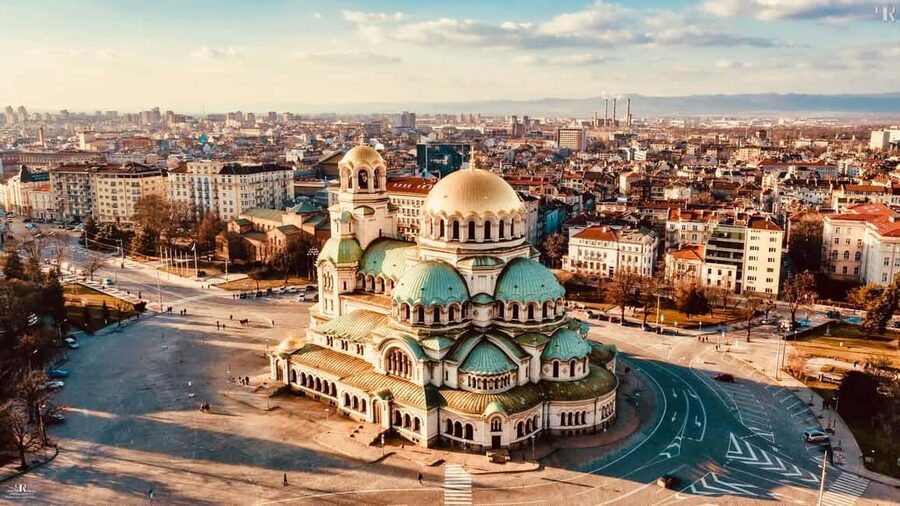
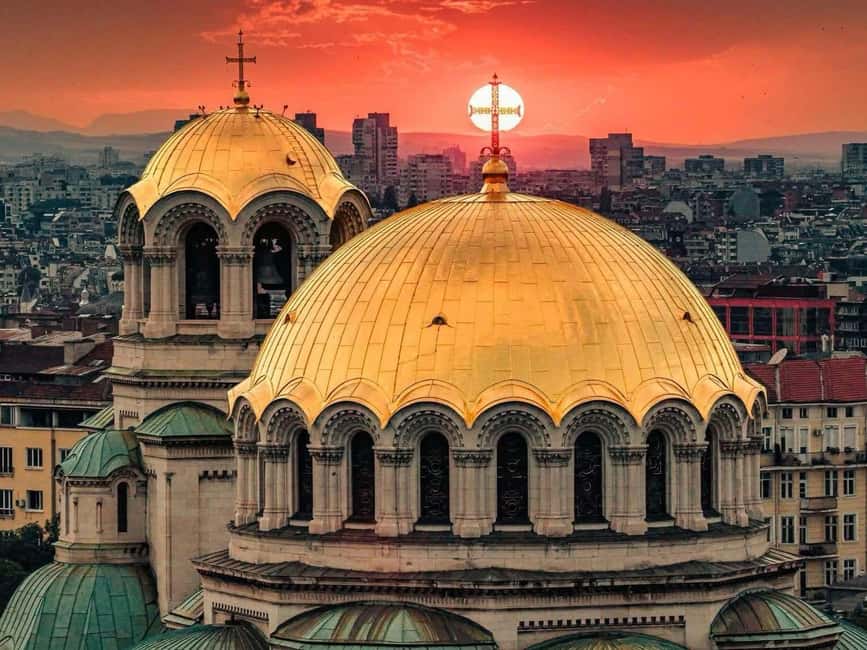
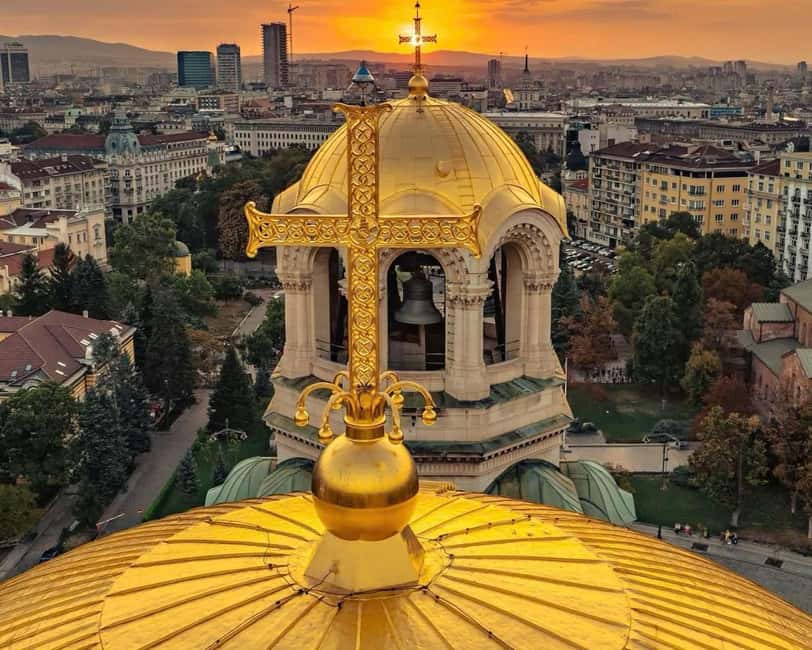
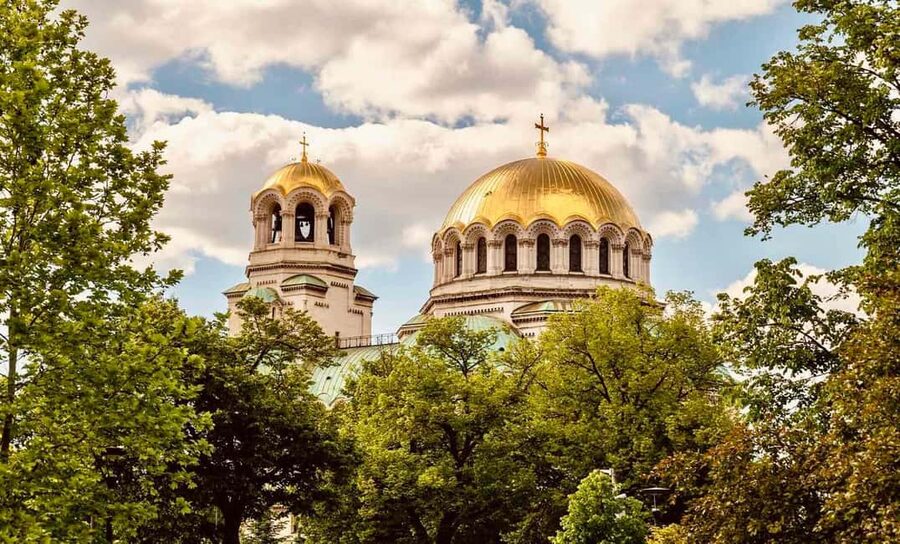
Alexander Nevsky is the grand opening act. Its golden domes make it one of Sofia’s most recognizable buildings, and the scale is immediately different from the older churches nearby. The cathedral is presented as a temple-monument and is described as the grandest Orthodox church on the Balkan Peninsula.
Your guide uses the building to explain the story behind its construction and its place in Bulgarian public life. The church is closely tied to the period after Bulgaria’s liberation from five centuries of Ottoman rule, so this is not only a stop for architecture fans. It also introduces the way religion, national memory, and state identity overlap.
The exterior gives you the broad visual impression: pale stone, sweeping forms, and domes that catch the eye from across the surrounding square. Inside, the tone changes. The grandeur becomes quieter, with sacred images and a more reflective atmosphere.
You should dress respectfully. Photography may be restricted in some areas, so keep your camera ready but do not assume every interior or object can be photographed. Your guide can help you understand when it is appropriate to take pictures.
The cathedral can easily absorb a full visit on its own. That is the first tradeoff of this experience. Since the whole route lasts two hours, you will receive an organized introduction rather than an unhurried architectural study. If your main goal is to examine every detail of the cathedral, you may want additional free time after the tour.
The crypt icon gallery and Bulgarian Orthodox art
The icon gallery beneath Alexander Nevsky is one of the strongest parts of the route. Here, the focus shifts from the cathedral’s size to the patient craft of religious art.
The collection presents Bulgarian Orthodox iconography from the Middle Ages through the late 19th century. That span lets you see how religious images served as objects of devotion, teaching tools, and works of art. Your guide explains the significance of the icons and the ideas that shape Orthodox visual culture.
For many people, icons can look similar at first. The value of a guide is that you are given a way to look. You can learn why certain figures appear, how the images communicate Christian stories, and why an icon is not treated simply as a decorative painting.
This is also where the tour’s title makes more sense. Orthodox heraldry is not only about crests or royal symbols. It includes the visual language of churches, saints, rulers, sacred figures, and national memory. You are encouraged to read those signs within Bulgaria’s religious story.
The crypt setting adds atmosphere, but it can also make the stop feel enclosed and quiet. Photography restrictions may apply. Stay aware of the group’s limited time, since the gallery is likely to be the place where art-minded visitors want to linger longest.
St. Sophia Basilica and the Roman city beneath
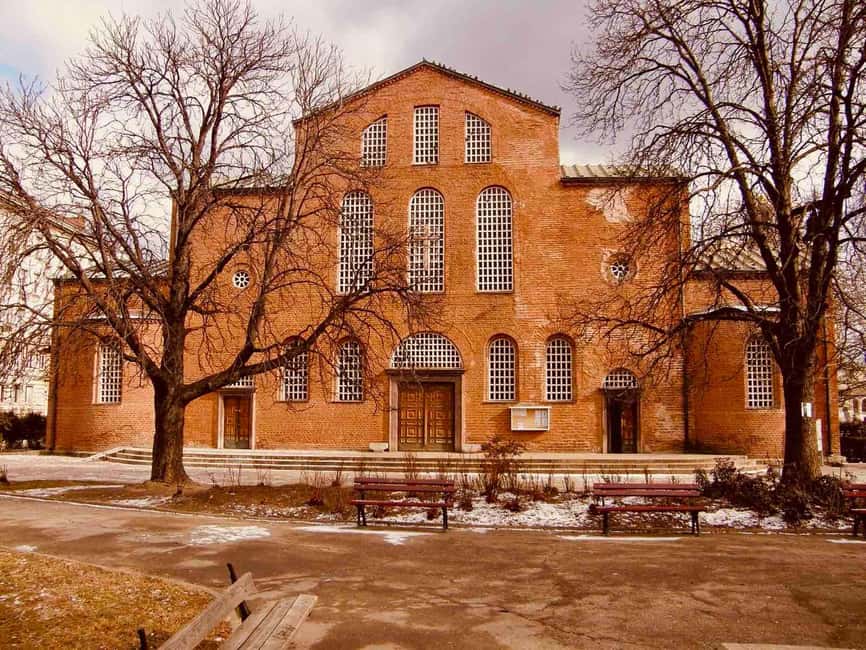
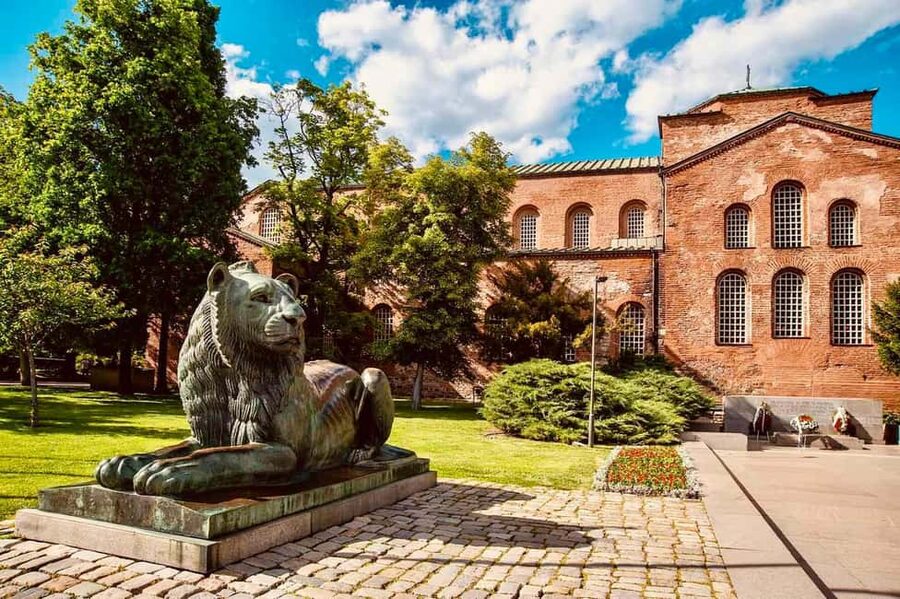
St. Sophia Basilica provides the best contrast with Alexander Nevsky. Instead of a monumental church associated with modern Bulgarian national identity, you encounter an ancient basilica linked to the Roman-era city of Serdica.
The contrast is the heart of the visit. Alexander Nevsky shows how Bulgaria expressed Orthodox identity after liberation. St. Sophia takes you back much further, toward the early development of Christianity and Sofia’s Roman past.
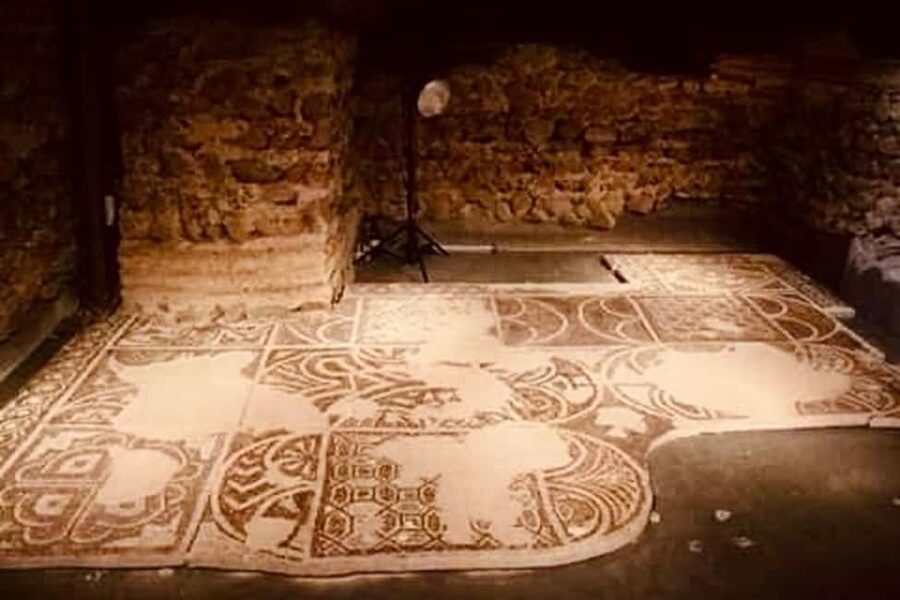
The museum beneath the church helps connect the sacred building to the ancient city below it. You can expect the guide to explain how Christian worship developed and how the site fits into the earlier history of Serdica. The result is a useful lesson in layers: the church you see today is part of a much longer sequence of urban and religious change.
St. Sophia also gives the tour a welcome change of scale. After the broad, ceremonial presence of Nevsky, the older basilica feels more restrained. That does not make it less important. In fact, the simplicity helps you focus on age, continuity, and the survival of Christian places of worship through changing political eras.
If you prefer archaeology to grand interiors, this may be your favorite stop. If you want a long museum visit, the two-hour schedule will feel tight. The museum adds depth, but it is one part of a route that still has two more churches and the royal tomb to cover.
A few more Sofia trips worth comparing
- From Sofia: Rila Monastery & Boyana Church Day Tour
★ 4.7 · 5,107 reviews - From Sofia: Must-See Rila Monastery & Boyana Church Day Tour
★ 4.6 · 3,322 reviews - From Sofia: Guided Day Tour of Plovdiv’s Must-See Sights
★ 4.6 · 1,688 reviews - From Sofia: 7 Rila Lakes and Rila Monastery Extended Trip
★ 4.7 · 1,189 reviews
The Russian Church of St. Nicholas and St. Seraphim’s crypt
The third sacred site is the Russian Church of St. Nicholas. It gives the tour a chance to compare Bulgarian and Russian Orthodox traditions without treating Orthodoxy as one uniform practice.
Your guide explains distinctive features of Russian Orthodoxy and places the church within the wider religious story. That comparison is helpful if you know little about the differences among Orthodox communities. It also prevents the churches from blending into one sequence of domes, icons, and candles.
The church is smaller in scale than Alexander Nevsky, which changes the mood again. You move from national monument to ancient basilica to a more intimate Russian Orthodox setting. The route works because each stop answers a different question: how does a country express faith, how old is Christian worship in this city, and how do Orthodox traditions vary across cultures?
Below the church is the crypt of St. Seraphim. People descend to share wishes with the saint by writing them on paper. This is a personal devotional practice, not just another historical display. You may find the atmosphere more intimate than at the larger churches, with visitors approaching the crypt quietly and respectfully.
The crypt can be meaningful even if you are not Orthodox. It offers a direct look at living religious practice, rather than only at architecture or museum objects. As always, respectful behavior matters. Keep your voice low, follow local instructions, and do not photograph where it is restricted.
Alexander I Battenberg and Bulgaria after liberation
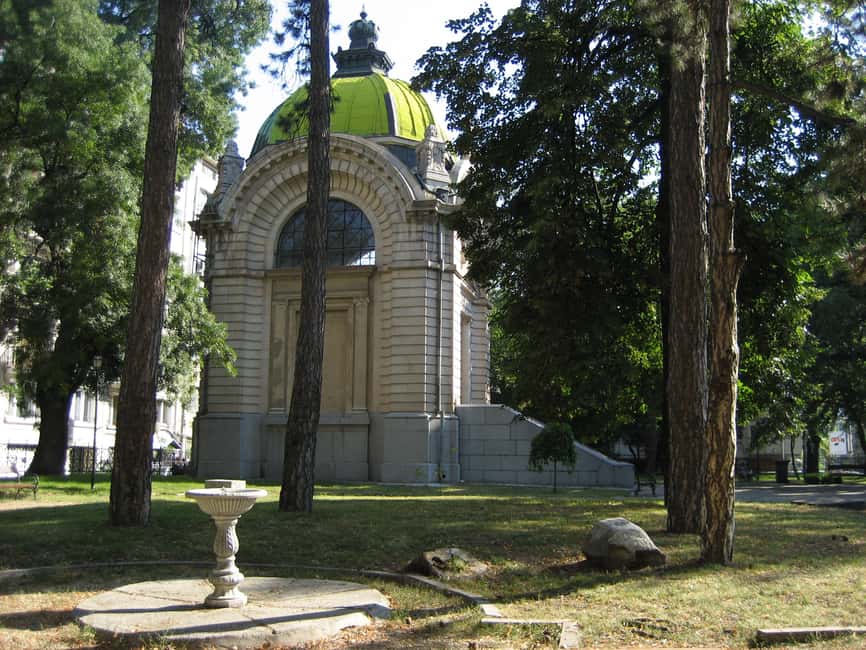
The tour closes with the tomb of Alexander I Battenberg, Bulgaria’s first king and the first monarch of the Third Bulgarian Kingdom after liberation. His story gives the religious route a political finish.
You hear about his life and deeds during the late 19th century, a period when Bulgaria was rebuilding its identity and institutions after five centuries of Ottoman rule. The tomb is not merely an extra stop added to fill the final minutes. It connects the churches to the people and political changes that shaped modern Bulgaria.
Battenberg’s place in the tour is especially useful because visitors often see post-liberation Bulgaria through monuments without knowing the people behind them. Here, you get a short introduction to the first ruler of the new kingdom and the difficult work of establishing a state after liberation.
This final visit also helps balance the religious focus. You begin with a national cathedral, pass through ancient and Russian Orthodox sites, and finish with a monarch tied to Bulgaria’s modern political beginning. It is a compact way to connect faith, culture, and statehood.
Do not expect a full royal biography in the available time. The tomb is a focused historical stop, not a separate palace tour. Still, it gives the day a clear ending and adds context that a church-only route would miss.
What the guide adds to the church visits
The tour’s strongest practical feature is the live English guide. The subject can be difficult to read on your own because Orthodox churches use symbols, layouts, saints, and rituals that may not be obvious to first-time visitors.
The guide explains the evolution of Christianity, along with key differences between Orthodox and Catholic traditions. That comparison is useful when you are trying to understand why churches look different, how worship is organized, and why icons carry such weight in Orthodox practice.
You should treat the guide as the main source of value. Entry tickets are included, but the buildings themselves are accessible to independent visitors in some form. What you are paying for is the connection among the sites, the explanations, and the ability to ask questions in a private setting.
The available praise focuses on the tour being informative and culturally worthwhile. I would give that emphasis to the guide’s interpretive role. The route is not designed as a quick photo walk. It is for you if you want the objects and buildings explained in plain context.
Is $70 per person a fair price?
At $70 per person, this is not the cheapest way to see central Sofia’s churches. The price makes more sense if you value a private group, an English-speaking guide, and admission to the listed museums and crypt areas.
You are paying for two hours, so the cost per hour is relatively high compared with a large group walking tour. But a private tour can be a good choice for couples, families, or friends who want to set the level of detail and ask questions freely.
The entry tickets also matter. The route includes the Alexander Nevsky Cathedral, the crypt icon gallery, the St. Sophia museum, the Russian Church of St. Nicholas, and St. Seraphim’s crypt. You should confirm what is open on your chosen date, since religious sites can have changing access rules, but the advertised structure includes entry access rather than only exterior commentary.
I see the best value for people who have limited time in Sofia and want a coherent introduction to Orthodox culture. If you already know Bulgarian church art well, or prefer to wander at your own pace, the price may feel less attractive.
Free cancellation up to 24 hours before the start and a reserve-now, pay-later option reduce the financial risk of fitting this into a changing schedule. Those policies are useful, but they do not change the central question: do you want interpretation, or do you mainly want to see the buildings?
Who should book this Orthodox Sofia walk?
I would choose this tour if you are visiting Sofia for a short stay and want several major religious sites covered in one appointment. It also suits anyone curious about the difference between Bulgarian and Russian Orthodoxy, the meaning of icons, or the connection between Christian worship and Bulgarian national identity.
It is a good fit for art lovers because of the crypt gallery. It works for history fans because of Roman Serdica and Alexander I Battenberg. It can also help first-time visitors who want an organized introduction before exploring Sofia independently.
You may want to skip it if you need step-free access, dislike walking, or prefer spending an hour at each church. The activity is specifically not suitable for people with mobility impairments, and two hours leaves little room for long personal pauses.
Wear respectful clothing and comfortable shoes. Keep in mind that photography may be limited. A quiet, attentive approach will serve you better than trying to collect a photograph of every altar and dome.
Should you book it?
Book this tour if you want a compact cultural lesson, not simply a checklist of Sofia sights. The combination of Alexander Nevsky’s scale, the icon gallery, St. Sophia’s Roman setting, the Russian church, St. Seraphim’s crypt, and Battenberg’s tomb gives you a broad introduction in a short time.
I would be most likely to recommend it to first-time visitors, couples, and small private groups who appreciate clear explanations. The $70 price is reasonable when the included access and private English guidance match your priorities.
Skip it if you need a slow museum visit or easy mobility. For everyone else, this is a focused way to understand why Sofia’s churches are more than beautiful buildings. They are records of faith, empire, liberation, art, and national identity, all within a walk of the city center.
FAQ
How long does the Orthodox heraldry tour last?
The tour lasts two hours.
What language is the tour conducted in?
The tour includes a live English-speaking guide.
Where is the meeting point?
Meet in front of Saint Alexander Nevsky Cathedral. The guide will hold a sign marked Sofia tour.
Is this a private tour?
Yes. The activity is organized for a private group.
What churches are included?
The route includes the Patriarchal Cathedral of Alexander Nevsky, the ancient Basilica of St. Sophia, and the Russian Church of St. Nicholas.
Are entry tickets included?
Yes. Entry access for the listed church museums, crypts, and sites is included in the activity.
What should I bring and wear?
Bring comfortable shoes for walking and wear respectful attire suitable for religious sites. Photography may be restricted in certain areas.
Can I cancel the booking?
You can cancel up to 24 hours in advance for a full refund. A reserve-now, pay-later option is also available.
Recently added around Sofia
- Veliko Tarnovo & Arbanasi Full day tour★ 5.0 · 5 reviews
- Private Winter Day Trip to the Rila Mountain★ 4.5 · 3 reviews
- Sofia Hidden Gems: Small-Group Walking Tour with Tram Ride★ 5.0 · 7 reviews
- Private transfer from Sofia to Plovdiv or vice versa★ 5.0 · 8 reviews
- Zemen Monastery, Boyana Church and National History Museum Tour★ 5.0 · 2 reviews
- Catacomb Tour in Sofia guided by a Local★ 4.5 · 3 reviews
- Tour to Koprivshtitsa and the Buzludzha monument incl the Seuthes Thracian Tomb★ 3.5 · 3 reviews
- From Sofia: The gorges of Trun and Dragovski stone trail★ 5.0 · 6 reviews
Private Tours in Sofia, compared.
Private Day Trip to Boyana Church and Rila Monastery
Read our review →
Private Premium One-way Transfer Sofia Airport to Hotel or back
Read our review →
Boyana Church & Rila Monastery Full-Day Private Tour
Read our review →Browse the lists this tour appears in