
Review · FORTRESSES & CASTLES
Skip the Line: Medieval Tuida Fortress tours
Ancient walls hide a lively past. Tuida Fortress gives you far more than a quick look at scattered stones: you can see Roman, Byzantine, and Bulgarian remains, hear the story in English, and add hands-on activities such as archery and medieval dress. I especially like the low price and the chance to connect archaeology with something playful.
I also like that the experience includes an e-guide and photo-taking, with guiding available when that option is booked. The main caution is simple: the site is much better with a guide. Without one, faded signs, scrub, and incomplete walls may make Tuida feel thin on detail.
In This Review
- Key points to know before visiting
- Why Tuida Fortress matters in Sliven
- The Roman and Byzantine fortress remains
- The Bulgarian chapter and the rebuilt aqueduct
- The basilica and unusual baptistery
- Archaeology beyond walls and pedestals
- Archery, medieval dress, and games
- What the English guide adds
- Price and what you get for $8.16
- Practical advice for a smoother visit
- Who should book this experience?
- Should you book Tuida Fortress?
- FAQ
- Where is the Medieval Tuida Fortress tour located?
- How much does the experience cost?
- Is admission to the fortress included?
- Is the tour offered in English?
- What activities can be added?
- Is a guide included?
- How large can the group be?
- Can I cancel for a refund?
Key points to know before visiting
- A fortress shaped by several empires: Tuida was rebuilt after its destruction by the Huns and later developed under Bulgarian rule.
- Hands-on medieval activities: Book the optional package for archery and period clothing, with medieval games also available at the site.
- A rare early Christian complex: Inside the walls are remains of a three-nave basilica and an unusual baptistery with murals and mosaics.
- A small price for a substantial story: The advertised cost is $8.16 per person, though admission is listed separately as free.
- Best enjoyed with English guidance: The fortifications alone can look modest, while an explanation brings the ruins into focus.
- Good for families and casual history fans: Most people can take part, and the group limit is 50.
Why Tuida Fortress matters in Sliven
Tuida Fortress sits in Sliven, in the region south of the Balkan Mountains. It covered about 40 decares, roughly 10 acres, and was more than a military outpost. The settlement included religious buildings, homes, workshops, water infrastructure, and a marketplace.
The site’s story begins in antiquity and continues through several major powers. Tuida survived the Gothic invasion of 378 AD, then fell during the Hun invasions in the fifth century. Roman Emperor Anastasius I, who ruled from 491 to 518 AD, ordered its rebuilding. The later fortification preserved older elements while making the stronghold more useful.
Tuida was destroyed again around 598 or 599 AD, probably during attacks by Avars and Slavs. That repeated cycle of destruction and rebuilding is what makes the place worth your time. You are not looking at one fixed historical moment. You are seeing a location repeatedly adapted by different communities.
The name itself is part of the archaeological puzzle. Two marble pedestals dedicated to Apollo and Zeus preserve the fortress name as Tuida or Suida. Written sources also use Tsoida. A third-century inscription describes the settlement as a marketplace, giving you a glimpse of daily commerce long before the fortress became a Bulgarian site.
More Fortress & Castle Trips in Bulgaria:
- From Sofia: Full-Day Tour to Plovdiv and Asen’s Fortress
★ 4.7 · 350 reviews - From Sofia: Plovdiv, Asen’s Fortress and Bachkovo Monastery
★ 4.8 · 270 reviews - Small group tour to Plovdiv, Asen’s Fortress and Bachkovo Monastery
★ 5.0 · 164 reviews
The Roman and Byzantine fortress remains
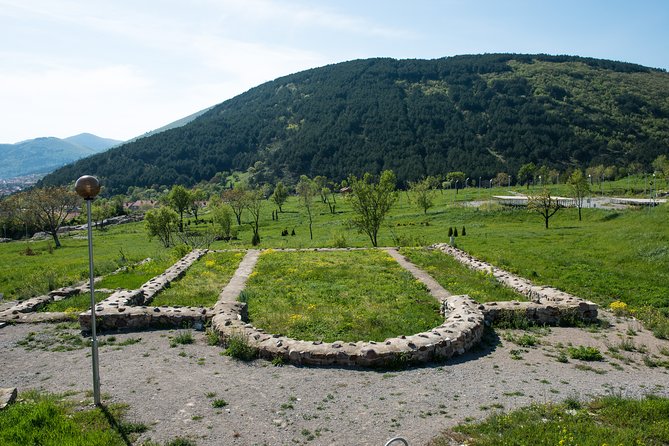
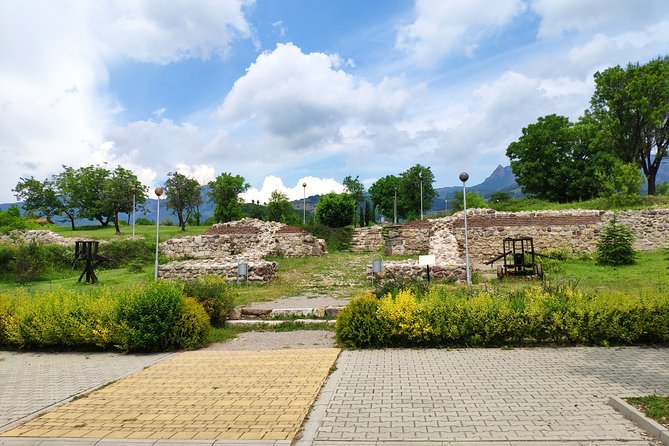
The visible walls, towers, and gates form the basic route through the visit. Do not expect a fully rebuilt citadel with complete rooms and high battlements. Tuida is an archaeological site, so much of the pleasure comes from understanding what the foundations reveal.
The Roman period is especially important. After the Huns destroyed the earlier fortress, Anastasius I rebuilt it. That work strengthened the defenses and preserved the position as a strategic settlement. The remains of towers and gates help you read the site as a working fortification rather than a decorative ruin.
A guide can explain how the walls fit into the wider settlement. This matters because the fortified area did not contain the entire community. A larger basilica was found outside the walls, suggesting that people lived, worshipped, and worked beyond the protected core.
I would give yourself time to look at the masonry and the layout before rushing to the activities. The fortress may not make a dramatic first impression from the outside. Once you understand its scale and purpose, the remains become much easier to appreciate.
The Bulgarian chapter and the rebuilt aqueduct
The area around modern Sliven became part of Bulgaria around 705 AD. Bulgarian Khan Tervel gained the Zagore region after helping Byzantine Emperor Justinian II regain the throne in Constantinople.
A Bulgarian settlement was later built at the fortress, though its original name is unknown. Archaeology connects Tuida with the First Bulgarian Empire through a lead seal belonging to Knyaz Boris I Mihail, who ruled from 852 to 889 AD.
The Bulgarians rebuilt the fortress walls and its aqueduct. They also added new buildings, some covered with marble slabs made by stone cutters in Veliki Preslav, then the Bulgarian capital. Several bricks carry an Ancient Bulgar sign resembling the characters |Y|.
These details give the visit more weight. You are not simply seeing a Roman fort that was abandoned after late antiquity. The site continued to matter under Bulgarian rule, and the changes show how buildings were reused and updated across centuries.
The basilica and unusual baptistery
One of Tuida’s most valuable remains is its Christian worship complex. Written sources indicate that the fortress was the seat of a bishop from the fourth century onward.
Inside the fortifications, archaeologists found a three-nave, one-apse Early Christian basilica. Nearby is a distinctive baptistery decorated with murals and mosaics. The complex was used from the fourth through the thirteenth century, giving you an unusually long religious timeline in one place.
The remains may not look complete to an untrained eye. That is exactly where the guiding option earns its keep. A good explanation can help you picture the building’s plan, understand where baptism took place, and recognize why mosaics and painted decoration matter.
I would not treat the basilica as a quick photo stop. Look for the shape of the building and the relationship between the worship area and baptistery. Even in ruin, the arrangement shows that Tuida was a religious center, not only a military position.
Elsewhere in Bulgaria, a very different sort of day:
- From Sofia: Rila Monastery & Boyana Church Day Tour
★ 4.7 · 5,107 reviews - From Sofia: Must-See Rila Monastery & Boyana Church Day Tour
★ 4.6 · 3,322 reviews - From Sofia: Guided Day Tour of Plovdiv’s Must-See Sights
★ 4.6 · 1,688 reviews - From Sofia: 7 Rila Lakes and Rila Monastery Extended Trip
★ 4.7 · 1,189 reviews
Archaeology beyond walls and pedestals
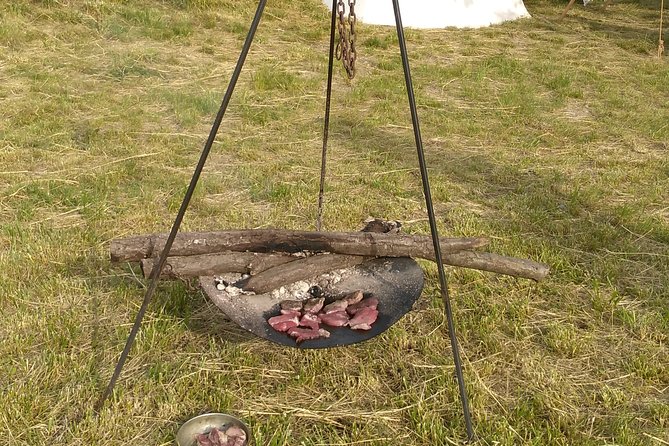
The excavations have produced a wide range of objects: iron tools, ceramic vessels, ornaments, coins, and animal bones. The bones include 14 species of wild and domesticated birds, such as Bonelli’s eagle, western capercaillie, great bustard, and common pheasant.
You probably will not see every find in place during a standard visit, so the e-guide and live explanation can help connect the objects with the ruins. The bird remains are especially useful for understanding food, hunting, and the natural setting around the settlement.
The two marble pedestals dedicated to Apollo and Zeus are also important. Their inscriptions preserve the ancient name of the site and link Tuida to religious life before the Christian complex was built.
One point deserves caution. A visitor once reported being allowed to keep a small piece of ancient ceramic. That should not be treated as a normal part of the activity. Do not remove anything from the site. Archaeological fragments belong to the record, and even a tiny piece can lose its meaning when separated from its location.
Archery, medieval dress, and games

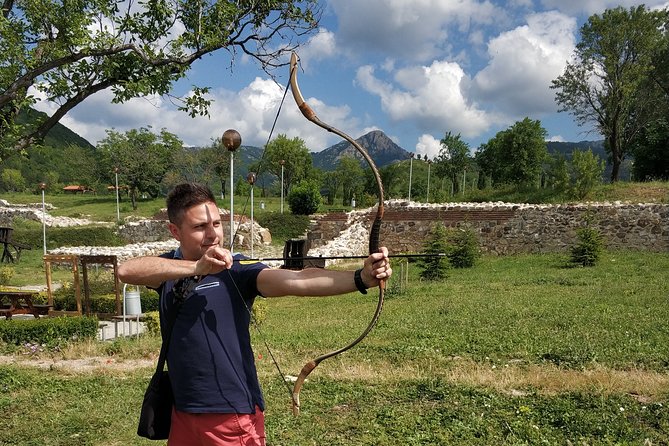
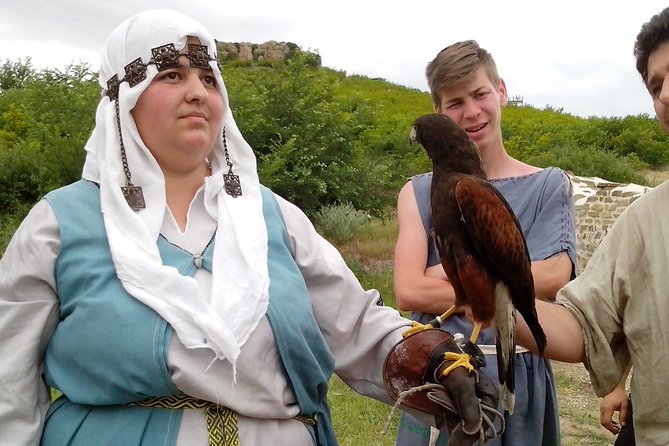
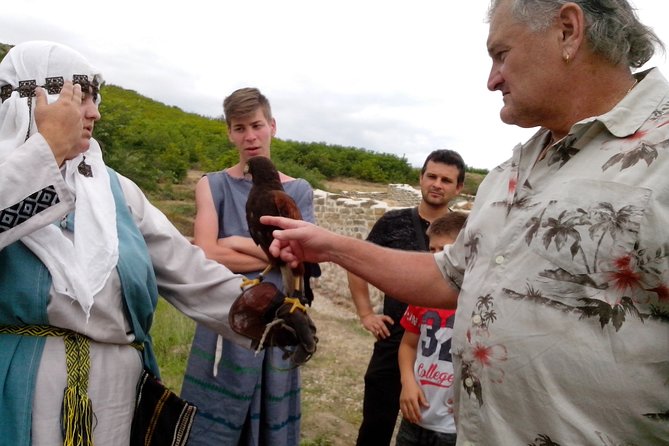
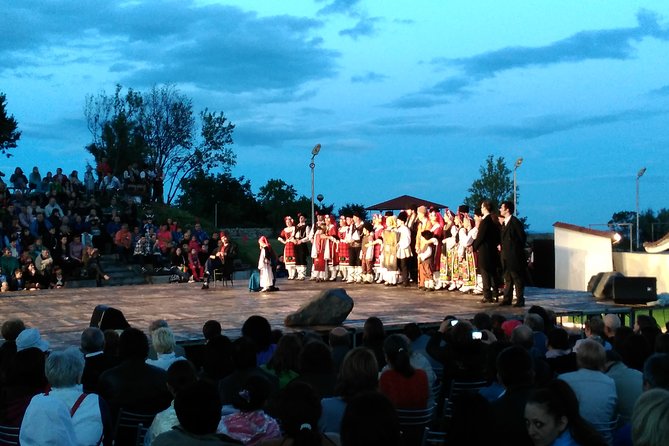
The optional activity package changes the mood of the visit. Archery and medieval clothing give children and adults something to do while the guide explains the ruins. Medieval games are also available at the fortress, making this a stronger choice for families than a purely sign-based archaeological stop.
The clothing option helps you picture the Bulgarian period in a simple, memorable way. It is not a substitute for history, but it can make names, dates, and fortification walls easier to remember. Archery adds a little competition without requiring a full-day museum attention span.
The activity package must be booked if you want archery and medieval dress included. Guiding is also listed as an option, so check your selected package rather than assuming every low-cost ticket includes a live guide.
I like this mix because it serves different kinds of interest. One person can focus on the basilica and inscriptions while another enjoys the games. It also gives younger children a reason to stay engaged when the archaeological details begin to blur.
What the English guide adds
The English option is important here. Tuida has a long and complicated chronology, and the physical remains do not explain themselves. A guide can connect the Gothic and Hun invasions, the Roman rebuilding, the later Bulgarian settlement, and the fortress’s final destruction.
The strongest praise for the experience centers on the explanations and the preserved monuments. The site has been excavated since 1982, with work resumed in 2004. That long process helps explain why you can see more than just a wall line.
The site’s presentation seems uneven without help. Some signs have been described as sun-bleached and difficult to read, and vegetation can make walking around the remains less clear. An English guide can point out what matters before you move on.
The group limit is 50 people. That is not a tiny private tour, so a full departure may feel less personal. Still, the optional guidance should make the visit easier to follow than exploring alone.
Price and what you get for $8.16
At $8.16 per person, this is an inexpensive way to add a cultural stop in Sliven. The value is strongest if the price gives you skip-the-line access, the e-guide, and the activities or guiding selected during booking.
The details list admission ticket as free, while the tour price is $8.16. That suggests the paid amount may cover the organized service or selected add-ons rather than basic entry alone. I would check the exact package before paying, especially if you only want to walk through the fortress.
Photo-taking is included, and food, drinks, and personal expenses are not. Since the visit is listed as approximately one day, the duration information is broad rather than precise. In practical terms, Tuida is one stop, so you should confirm the start time and expected visit length when booking.
The price becomes particularly good for families who want archery, medieval dress, and games alongside the history. If you skip the live guide and activities, the value depends more on your interest in reading ruins and using the e-guide.
Practical advice for a smoother visit
Wear comfortable shoes. The site contains walls, foundations, towers, gates, and areas affected by vegetation, so this is not a polished indoor attraction with level floors throughout.
Most people can participate, and service animals are allowed. The activity is offered in English, which is helpful if you want the historical explanation rather than trying to piece the site together from worn signs.
Bring your attention to the details that are easiest to miss:
- The aqueduct shows how the fortress supported life inside its walls.
- The basilica and baptistery show the site’s religious role.
- The marble pedestals preserve the ancient name Tuida or Suida.
- The lead seal connects the site with Knyaz Boris I Mihail.
- The larger basilica outside the walls shows that the settlement extended beyond the defenses.
The experience has a 4.3 rating based on six submitted ratings. That is a useful sign of generally positive interest, but it is also a small sample. I would treat the specific praise and criticism as more helpful than the number alone.
Who should book this experience?
I would recommend Tuida to anyone already visiting Sliven who wants history beyond the city center. It suits families particularly well when archery, medieval dress, and games are included.
It is also a good choice for people interested in late Roman, Byzantine, and early Bulgarian history. The site links those periods in one location, which is unusual and gives you a stronger sense of how the region changed over time.
You may be disappointed if you expect a complete castle with furnished rooms or tall, intact walls. From the outside, Tuida can look modest. The ruins reward patience, explanation, and curiosity.
If you dislike archaeological sites with partial remains, book the guide or choose the activity package. If you enjoy interpreting foundations, inscriptions, and old building plans, the e-guide may be enough, though live guidance should make the visit clearer.
Cancellation is free when you cancel at least 24 hours before the local start time. Cancellations within 24 hours are not refunded, and late changes are not accepted.
Should you book Tuida Fortress?
Yes, if you want an affordable and unusual stop in Sliven, especially with children or an interest in Bulgarian history. I would choose the English-guided option with archery and medieval dress if available, because those additions address the site’s main weakness: the ruins need context.
Book with more caution if you plan to explore without a guide and expect a grand, fully preserved fortress. Tuida is best understood as an archaeological record, not a restored castle. With the right expectations, the low price, layered history, and hands-on activities make it a worthwhile addition to a Sliven visit.
FAQ
Where is the Medieval Tuida Fortress tour located?
The experience takes place at the Medieval Tuida Fortress in Sliven, Bulgaria.
How much does the experience cost?
The listed price is $8.16 per person.
Is admission to the fortress included?
The details list the admission ticket as free. The paid experience includes features that depend on the option booked, so check your selected package.
Is the tour offered in English?
Yes. The experience is offered in English.
What activities can be added?
Archery and medieval dress are included if that option is booked. Medieval games are also available at the fortress.
Is a guide included?
Guiding is included if that option is booked. An e-guide is also listed among the inclusions.
How large can the group be?
The activity can have a maximum of 50 participants.
Can I cancel for a refund?
Yes, if you cancel at least 24 hours before the experience start time. Cancellations made within 24 hours are not refunded.
Recently added around Bulgaria
- Winter hiking to Musala peak from Sofia★ 5.0 · 2 reviews
- Veliko Turnovo-Bulgarian old capital and Arbanasi★ 5.0 · 3 reviews
- Varna Echoes: Flavors, Footsteps, Tales & Wine tasting★ 5.0 · 3 reviews
- Veliko Tarnovo & Arbanasi Full day tour★ 5.0 · 5 reviews
- UNESCO Thracian Tomb of Kazanlak and Buzludzha monument★ 5.0 · 2 reviews
- Varna: Archaeological Museum Ticket & E-Guide★ 4.8 · 8 reviews
- Monasteries and Waterfalls Tour from Veliko Tarnovo★ 5.0 · 8 reviews
- Guide and Entrance for the Mini Bulgaria Park near Veliko Tarnovo★ 5.0 · 2 reviews
Fortresses & Castles, compared.
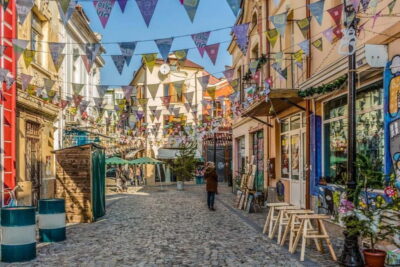
Plovdiv, Asen’s Fortress and Bachkovo Monastery
Read our review →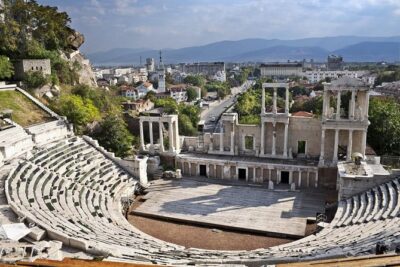
Small group tour to Plovdiv, Asen’s Fortress and Bachkovo Monastery
Read our review →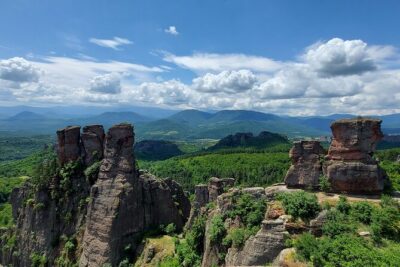
Full-Day Belogradchik Rocks and Belogradchik Fortress from Sofia
Read our review →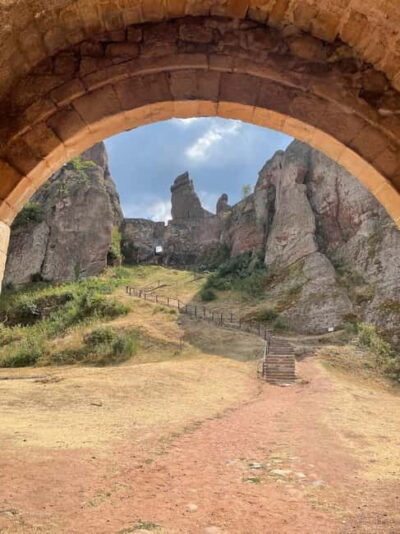
Belogradchik Fortress & Venetsa Cave 12 hrs Tour
Read our review →
Bachkovo Monastery, Asen Fortress, & Bridges Tour
Read our review →
Browse the lists this tour appears in