
Review · PLOVDIV TOURS
From Plovdiv: Sofia – A Story of an Ancient State Day Tour
Sofia packs thousands of years into one day. This nine-hour trip from Plovdiv links Roman ruins, royal Bulgaria, Communist-era monuments, and the medieval Boyana Church, giving you a useful first look at the country’s capital without arranging several separate visits. I especially like the mix of outdoor sights and museums, plus the chance to see places that sit well beyond Sofia’s central pedestrian area. The main drawback is clear: with about two hours of driving each way, the day is full and walking time in the center is limited.
I also like the small group format, limited to eight people, and the hotel pickup in Plovdiv. That makes the long road day easier than managing buses and city transport on your own. Guides Ivo and Theodore have received particularly warm praise for their English, historical explanations, good company, and willingness to adapt, though your guide may be someone else.
In This Review
- Key things to know before booking
- The long road from Plovdiv to Sofia
- Three hours in Sofia’s historic center
- Sofia History Museum and the city’s royal period
- From royal residence to National History Museum
- Boyana Church and its remarkable frescoes
- Park The Bells and Bulgaria’s Communist past
- What the $104 price really covers
- The guide can shape the whole day
- Who should book this Sofia day trip?
- Should you book the Ancient State day tour?
- FAQ
- How long is the tour from Plovdiv to Sofia?
- What time does pickup begin?
- Is hotel pickup and drop-off included?
- How long is the drive to Sofia?
- How much does the tour cost?
- What language is the tour conducted in?
- How large is the group?
- Are entrance fees included?
- Are food and drinks included?
- Which major sites are included?
- What should I bring?
Key things to know before booking
- The road follows an ancient route: The modern highway covers part of the old connection between the Silk Road and Rome, giving the drive some historical context.
- Sofia’s center is covered on foot: Plan on roughly three hours walking among Roman remains, churches, government buildings, and royal landmarks.
- The National History Museum is in a former Communist residence: Its collection covers about 13,000 years, from early civilizations to modern Bulgaria.
- Boyana Church is the artistic highlight: Its famous 13th-century frescoes make this UNESCO-listed stop more than a quick photo opportunity.
- Park The Bells adds an unusual final chapter: Its monuments recall the Cold War-era Flag of Peace initiative and meetings between children from both sides of the Iron Curtain.
- The price includes the important extras: At $104 per person, transportation, hotel pickup, a professional English-speaking guide, and entrance fees are included. Food and drinks are not.
The long road from Plovdiv to Sofia
The day begins with pickup from your hotel or address in Plovdiv at 9:00 a.m. You then spend about two hours in a modern vehicle on the highway to Sofia. That is a significant part of a nine-hour tour, but it is the tradeoff for seeing the capital without changing hotels.
The route is not presented as a simple transfer. It follows the corridor of an ancient road that connected the Silk Road with Rome, a useful reminder that Bulgaria has long sat between major worlds. You will not be walking along the old road itself, but the idea gives the drive more meaning than a routine highway ride.
I would treat the journey as part of the day rather than an annoyance. Still, pack water and wear comfortable shoes for the walking portion. Since food and drinks are not included, you should also plan to buy or carry something for the road, unless your guide arranges a meal stop. One earlier departure included lunch together and even a spontaneous museum visit, but that kind of extra should not be assumed.
A few more Plovdiv trips worth comparing
- Private city walking tour of Plovdiv
★ 5.0 · 65 reviews - Plovdiv: Bachkovo Monastery, Asen Fortress, & Bridges Tour
★ 5.0 · 56 reviews - Plovdiv: Guided Walking Tour
★ 4.3 · 41 reviews
Three hours in Sofia’s historic center
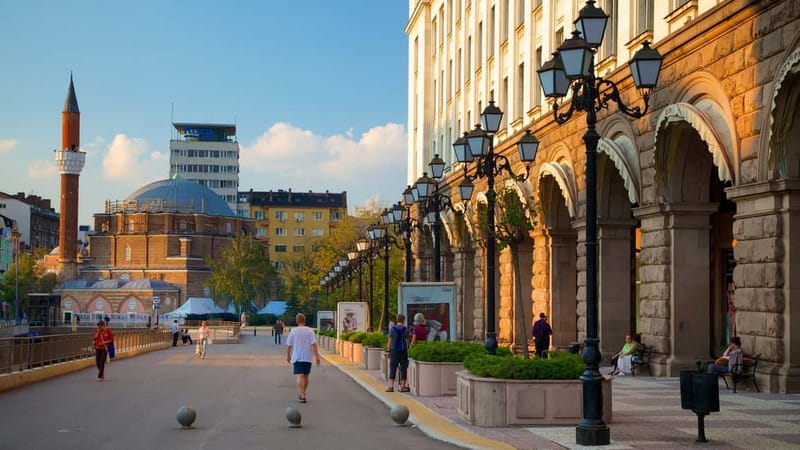
Once in Sofia, the vehicle is parked and the central portion takes place on foot. Around three hours is enough to see a striking number of landmarks, but not enough for slow, detailed visits everywhere. The value here comes from the guide connecting the sites, not simply ticking them off.
Sofia’s center brings several eras close together. The Roman city of Serdica appears through the Roman ruins, while St. Sofia Church and the Rotunda of St. George add early Christian and medieval layers. These are not isolated curiosities. Together, they show how Sofia was built over and around earlier cities.
The Rotunda of St. George is especially useful for understanding the city’s age. It is an early structure surrounded by later buildings, so you can see how Sofia’s past is not kept in one separate museum quarter. Roman, Christian, Ottoman, royal, and modern state history overlap in the same central area.
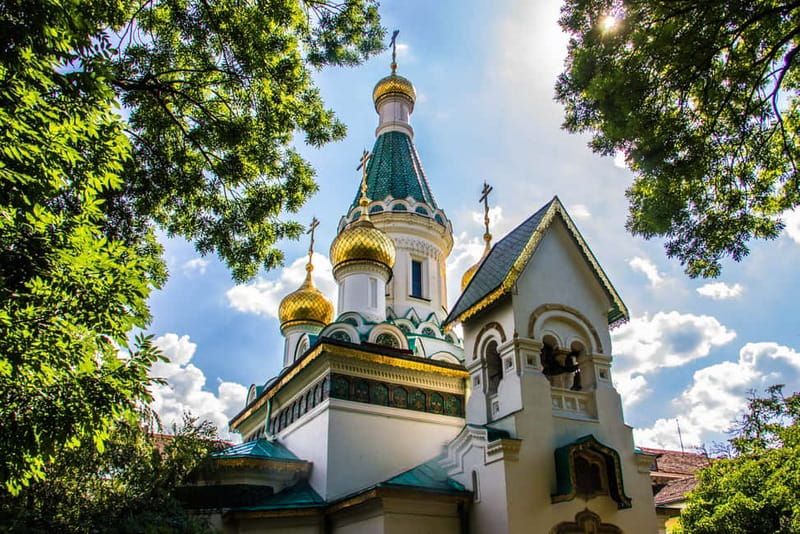
St. Sofia Church gives the city its name and helps explain the religious importance of the capital. The tour also includes Alexander Nevsky Cathedral, the city’s best-known symbol. Its scale and appearance provide a sharp contrast to the older Roman remains, while its place in the national story helps explain why it matters beyond its architecture.
You will also pass the monarchy palace, Sofia University’s main building, the Parliament, and the Communist administrative center. These stops offer a compact lesson in how political power changed hands and changed the city. The tour is at its best when your guide explains what each building meant in its own period.
The central walk may feel crowded with information. You are moving between ruins, churches, civic buildings, and monuments in a relatively short period. If you prefer to spend an hour inside one landmark, this schedule may feel rushed. If you want a broad orientation to Sofia, it works well.
Sofia History Museum and the city’s royal period
The Sofia History Museum adds a more focused look at the capital’s development, especially during the 20th-century monarchy period. This is important because Sofia was not always simply the administrative center you see today. Its role grew as Bulgaria formed its modern national institutions.
The museum helps place the central buildings into a wider story. You can better understand why the palace, Parliament, university, and other public structures were created and how Sofia became the country’s political center.
This indoor stop also gives your feet a break from the walking tour. The overall schedule moves quickly, so the museum works as a change of pace rather than another outdoor landmark. Entrance fees are included, which matters because the day already covers several paid sites.
From royal residence to National History Museum
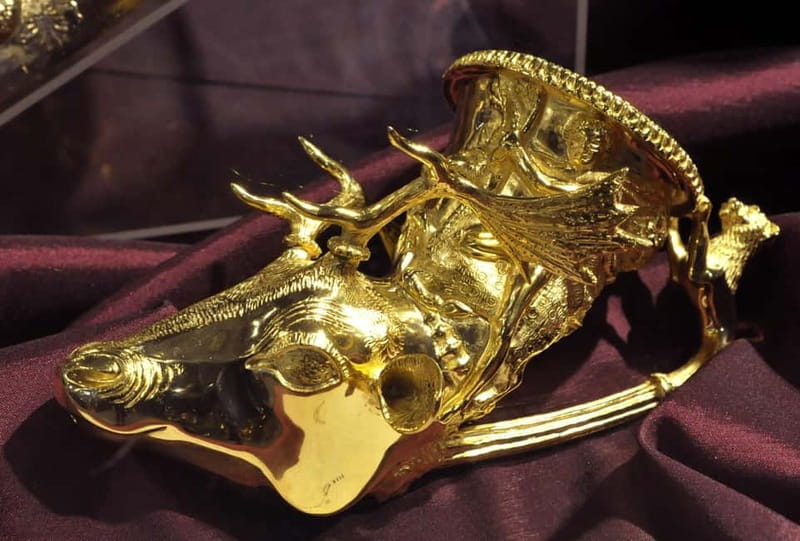
After the city center, the tour heads toward Sofia’s outskirts to visit the National History Museum. The building itself has a political past: it was formerly the main Communist residence. That setting gives the museum an extra layer, since you are learning about Bulgaria’s long past inside a place linked to its recent political era.
The museum’s collection covers about 13,000 years, from the earliest civilizations in the region through the Ottoman Empire and modern Bulgaria. You should not expect to absorb every period in one visit. Instead, think of this as a broad overview that fills in the gaps left by the city walk.
The medieval displays are a major reason to include the museum. Weapons, armor, and religious icons help explain the Bulgarian Middle Ages, including the establishment of the Bulgarian Empire and the growth of the Bulgarian Orthodox Church. Those objects make the period easier to picture than dates and names alone.
The museum is also a good counterpoint to Sofia’s central sights. In the center, you see the remains of Serdica and major national buildings. Here, the collection extends the story across centuries and gives Bulgaria a wider setting. The drawback is time. With Boyana Church and Park The Bells still ahead, you will need to keep moving rather than study every display at length.
Elsewhere in Bulgaria, a very different sort of day:
- Food Walk: Bulgarian Food and Culture Tour in Plovdiv
★ 5.0 · 35 reviews - Wonderful Bridges-Bachkovo Monastery-Assen’s Fortress – day tour from Plovdiv
★ 5.0 · 32 reviews - Plovdiv guided walking tour
★ 5.0 · 31 reviews - Bachkovo Monastery & Asen’s Fortress – day tour from Plovdiv
★ 5.0 · 28 reviews
Boyana Church and its remarkable frescoes
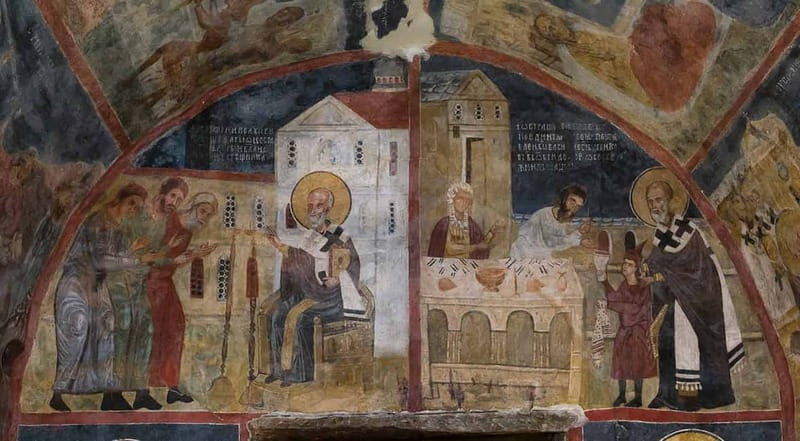
Boyana Church is the day’s most important art stop. The medieval church was built in the late 10th century, but its fame rests largely on the frescoes added in the 13th century. These paintings show scenes from the lives of saints along with portraits of Bulgarian nobles and church officials.
The church is considered one of the finest examples of medieval Balkan art, and the small scale makes the visit feel different from the grand proportions of Alexander Nevsky Cathedral. Its interior is divided into three parts: the nave, the narthex, and the apse. Each section has its own architectural and painted details.
The nave has columns and a ribbed ceiling. The semi-dome of the apse is covered with detailed frescoes, while the narthex acts as an entry space between the secular world outside and the religious setting within. These features are easy to miss if you rush in, so listen closely to the guide’s explanation.
The frescoes are the main reason this church is recognized by UNESCO. They are valuable not only for their religious subjects but also for their human portraits and artistic quality. The images give you a sense of the people and beliefs that shaped medieval Bulgaria.
You should expect this to be a focused visit rather than a long independent exploration. The tour includes the entrance fee, which is helpful, but the overall schedule leaves little room for lingering. If medieval art is your main interest, you may wish the church received more time. Even so, it is one of the strongest reasons to choose this day tour over a simple city sightseeing trip.
Park The Bells and Bulgaria’s Communist past
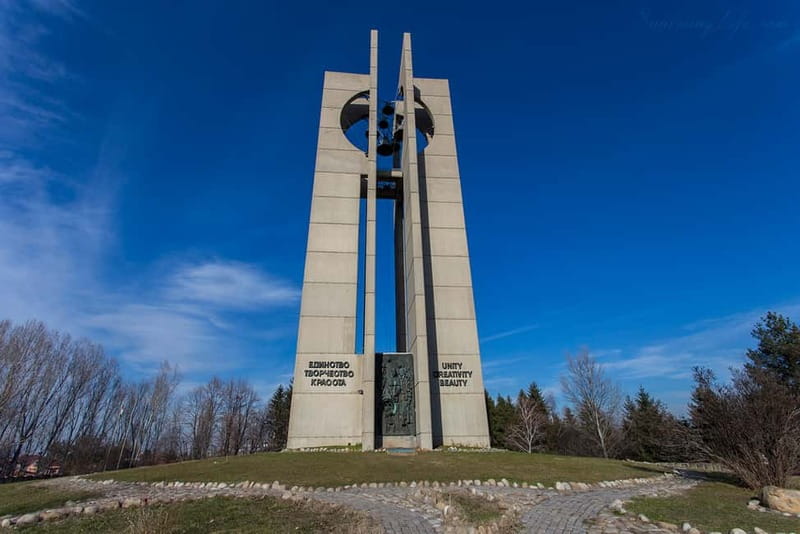
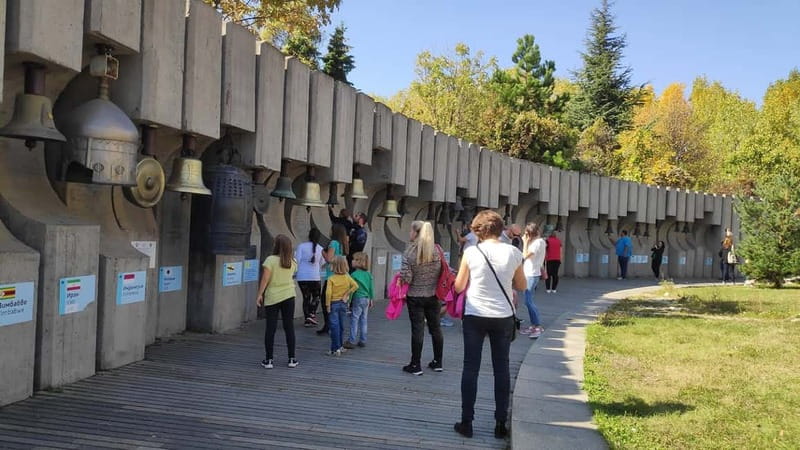
The final stop before returning to Plovdiv is Park The Bells, one of the more unusual places on the route. Built in 1979 by the daughter of Bulgaria’s last Communist leader, the park grew from the Flag of Peace initiative.
Children from both sides of the Iron Curtain met through the program and made bells that are displayed in the park. The result is a monument tied to diplomacy, youth, and Communist-era international messaging. It is a very different experience from a church or museum.
I like this stop because it complicates the usual picture of Communist history. You are not looking only at grand government buildings or stern monuments. You are also seeing an idealistic public project shaped by the politics of its time. The park may appeal most to visitors interested in the Cold War, modern Bulgarian history, or places that do not appear on every standard Sofia route.
There is also a practical point: this is the final scheduled stop, so the day ends with a change of mood before the drive back. After ancient ruins, royal buildings, and medieval art, The Bells brings the story into the 20th century.
What the $104 price really covers
At $104 per person, this is not the cheapest way to reach Sofia from Plovdiv. You are paying for more than transport, however. The price includes hotel pickup and drop-off in Plovdiv, transportation in a modern vehicle, an English-speaking professional guide, and entrance fees.
That package can offer good value if you want Sofia explained rather than simply reached. Organizing the same day yourself would mean arranging the return journey, finding the National History Museum and Boyana Church, paying separate admissions, and working out how to fit the outlying sites together.
The value is strongest for a small group. With a limit of eight participants, the guide can usually keep the walking explanation more personal than on a large coach excursion. One past departure had only one participant, and it still operated rather than being canceled. That is good news if you are booking alone, though it also means you should not count on meeting a group of fellow visitors.
Food and drinks are extra. A nine-hour day is long, so budget for those separately. The tour information does not promise a specific lunch stop, although a previous guide included lunch and accommodated a spontaneous museum request. Consider that a sign of possible flexibility, not a guaranteed part of the schedule.
The guide can shape the whole day
The strongest praise has focused on the guides. Ivo has been described as friendly, helpful, highly informed, and excellent at explaining the history of Sofia and Bulgaria. One earlier departure also praised his English and his willingness to take photographs. Theodore was praised for being both well informed and good company, which matters on a full day involving several hours in a vehicle.
You should still remember that guide assignments can vary. The published tour language is English, and the feedback indicates that communication and historical explanations have been strong. The guide is central to the experience because so many sights are encountered in a short time.
A good guide makes the Roman remains, palace, Parliament, Communist center, museum, and Boyana Church part of one story. Without that connection, the day could feel like a fast succession of unrelated buildings. The human side matters too. A friendly guide makes the long return drive easier and may help with photographs or minor changes when time allows.
Who should book this Sofia day trip?
I would recommend it most strongly if you are based in Plovdiv and want a serious introduction to Sofia without spending a night there. It suits first-time visitors who want ancient, royal, Communist, religious, and modern history in one day.
It is also a good choice for people who prefer a guide to independent research. You get context at each stop, included admissions, and transport to sites outside the center. Solo visitors may appreciate that the tour operates even with a very small number of participants.
You may want a different plan if you dislike long road days or prefer unhurried museum visits. The two-hour drive in each direction leaves a limited amount of time for Sofia itself. Visitors focused mainly on shopping, nightlife, or extended time inside Alexander Nevsky Cathedral will likely find the schedule too broad.
Comfortable shoes are essential. You will walk for about three hours in the center, with additional movement at the museum, Boyana Church, and Park The Bells. Since the day includes both indoor and outdoor stops, practical clothing and a small bag with water and snacks make sense.
Should you book the Ancient State day tour?
Book it if you want breadth, historical explanation, and easy logistics more than free time. The tour gives you a carefully connected view of Sofia, from Roman Serdica to Communist-era monuments, then adds two major outlying sites that would be awkward to combine alone.
The best reasons to choose it are the small group, included entrance fees, hotel pickup, and the strong record of guides such as Ivo and Theodore. The main compromise is the pace. You will cover a lot, but Sofia will not be yours to explore slowly.
For $104, I consider it a sound choice for a one-day introduction from Plovdiv, especially if you value a guide who can turn many separate sights into one understandable story. Pack comfortable shoes, bring money for food and drinks, and expect a full day on the road.
FAQ
How long is the tour from Plovdiv to Sofia?
The tour lasts approximately nine hours.
What time does pickup begin?
Pickup starts at 9:00 a.m. from your hotel or address in Plovdiv.
Is hotel pickup and drop-off included?
Yes. Pickup and drop-off in Plovdiv are included.
How long is the drive to Sofia?
The drive from Plovdiv to Sofia takes around two hours on a modern highway. The return journey is also part of the day.
How much does the tour cost?
The listed price is $104 per person.
What language is the tour conducted in?
The tour is conducted in English with a live English-speaking guide.
How large is the group?
The group is limited to eight participants.
Are entrance fees included?
Yes. Entrance fees are included in the tour price.
Are food and drinks included?
No. You need to pay for food and drinks separately.
Which major sites are included?
The route includes Sofia’s historic center, Roman ruins, St. Sofia Church, the Rotunda of St. George, Alexander Nevsky Cathedral, the monarchy palace, Sofia University, Parliament, the Communist administrative center, Sofia History Museum, the National History Museum, Boyana Church, and Park The Bells.
What should I bring?
Bring comfortable shoes, since the tour includes about three hours of walking in central Sofia.
Recently added around Plovdiv
- Veliko Tarnovo – Arbanassi – Shipka Memorial Church – private tour from Plovdiv★ 4.5 · 6 reviews
- Tour from Plovdiv to Bachkovo,Asen Fortress and Wonderful Bridges★ 5.0 · 4 reviews
- Thracian Valley wine tasting – private day tour from Plovdiv★ 5.0 · 4 reviews
- Roman Plovdiv, Self-Guided Tour and Urban Quest Game★ 5.0 · 6 reviews
- Transfer Plovdiv to Sofia airport/city with a car 3+1★ 5.0 · 3 reviews
- Plovdiv Roman Sights Self-Guided★ 4.5 · 3 reviews
- Plovdiv – Buzludzha and the Thracian kingdom valley★ 5.0 · 3 reviews
- Plovdiv Exquisite Wine Tasting★ 5.0 · 2 reviews
Plovdiv Tours, compared.
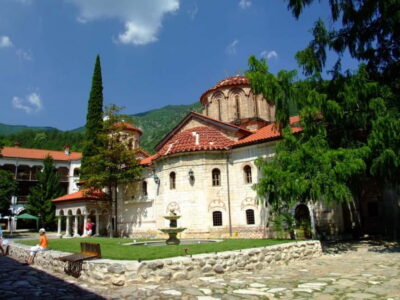
Bachkovo Monastery, Asen Fortress, & Bridges Tour
Read our review →
Food Walk: Bulgarian Food and Culture Tour in Plovdiv
Read our review →
Wonderful Bridges-Bachkovo Monastery-Assen’s Fortress – day tour from Plovdiv
Read our review →
Bachkovo Monastery & Asen’s Fortress – day tour from Plovdiv
Read our review →
Browse the lists this tour appears in